Yesterday’s generation may not be able to imagine what tomorrow’s generation will have to do to survive being human. For those who lived in a world of sweat and scarcity, the idea that abundance could be dangerous feels absurd. Yet history shows us that the people who “had everything” were often the ones most haunted.
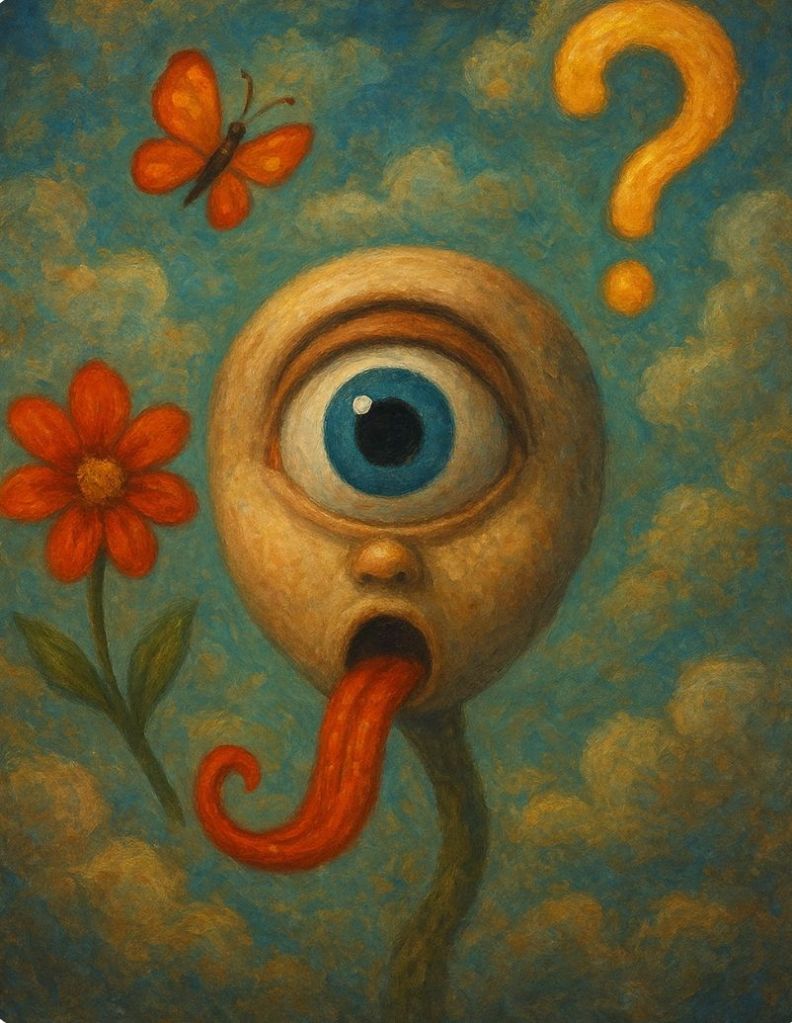
Part I: The Unblinking Eye
We are entering an age in which artificial intelligence will not merely assist us but will begin to architect the very world we inhabit. The central question of this new era is not how we will compete, but what we will do when competition itself becomes obsolete.
Already, the scaffolding is rising around us. Online, human influencers—with all their flaws, fatigue, and scandals—are being replaced by AI personas capable of flawless, tireless performance. Offline, self-organizing supply chains, and errorless factories make human labour a liability. The benchmark is no longer “better than a human” but cheaper, faster, and infinitely more reliable. We are becoming inefficient in the systems we built.
And this is only the prelude. The horizon holds quantum AI, a force that will not merely outperform but outthink us in dimensions beyond human comprehension. What we perceive as impossibly complex—global climate, protein folding, and intra-planetary economics—may be trivial to it. It will deliver solutions whose reasoning we can’t follow, leaving us with outcomes we dare not question, not out of reverence but out of incapacity.
Faced with this, the old domains of human striving collapse. If we cannot compete on speed, precision, scale, or understanding, what remains?
The answer lies not in what we lose but in what those losses reveal. We are the last generation to know the context in which humanity was forged, and memory itself becomes our inheritance.
We are the last to know sickness. I tried to explain a simple cold to my daughter, and her confusion was a revelation. Her world has no reference for a body that “breaks.” Quantum AI corrected the vulnerabilities in our genome, removing the dread of illness that shadowed every life before hers. For us, fragility was a constant presence. For her, it is unimaginable.
We are the last to know traffic. My grandson “drives” only in simulated games where crashing is a thrill. He will never experience the white-knuckled concentration of a stormy highway, the quiet camaraderie of a merge, or the unmediated freedom of an open road. The AI is the traffic now—a single, flowing organism of perfect safety. We traded the vibrant responsibility of control for guaranteed, silent arrival.
We are the last to know a burnt meal. At a dinner of algorithmically perfect spaghetti, my grandson asked what a burnt meatball tasted like. How do you explain failure to a child who has never tasted it? The AI Chef has mastered the physics of cooking, delivering the Platonic ideal of every dish. But we lost the stories born from error: the laughter over a collapsed cake, the smoky drama of a charred barbecue, the imperfect signature of a loved one’s hand.
This is the through-line: technology does not merely solve problems; it erases the contexts of struggle, risk, and fallibility in which we define our humanity. The unblinking eye of AI can optimize everything but can’t feel devotion. It can perfect every process but can’t taste the bitterness of a burnt meal or know the thrill of a reckless corner.

Therefore, the ultimate disruption is not technological but existential. The future does not ask us to fight machines on their terms. It asks us to return to the one arena where we remain irreplaceable: the fragile, finite, unquantifiable space of being human.
Only beings who can fail can choose to love without condition. Only those who have suffered can offer true empathy. Only those who face death can choose to live with purpose.
The question that matters now is simple:
What will you do now that there are no limitations?
Part II: The Answer Echoes
We stand on a narrowing bridge:
Behind us, the long arc of human struggle.
Ahead, a horizon where machines shoulder nearly every burden we once carried.
We are the last to know what it felt like to compete in the open field. The last to believe survival depended on cleverness, endurance, or skill. The last to measure our worth in rivalry.
And that makes us something rare: we’re the AI bridge generation.
Every “last” reminds us that the ground beneath us is dissolving. The cry rising in our throats—Oh God, what will I do now?—is not weakness but the beginning of wisdom. For when competition is stripped away, what remains is the deeper call: to be present, to connect, to live as witnesses and companions rather than rivals.
The answer to the unblinking eye is a tender hand.
The answer to perfect optimization is an imperfect, shared moment.
The answer to the end of limits is the beginning of love.
Because to be human is not to compete, but to connect. In the end, connection is what will remain.
Epilogue: The Memory We Must Carry.
Yesterday’s generation may not be able to imagine what tomorrow’s generation will have to do to survive being human.
They will not struggle against scarcity but against abundance.
They will not fight for survival but for purpose.
They will not be defined by their limitations, but by how they choose to live without them.
Their danger is not collapse but numbness. In a seamless, flawless world, they will need new forms of patience, courage, and silence to keep their souls alive. They will have to invent new kinds of friction just to feel real.
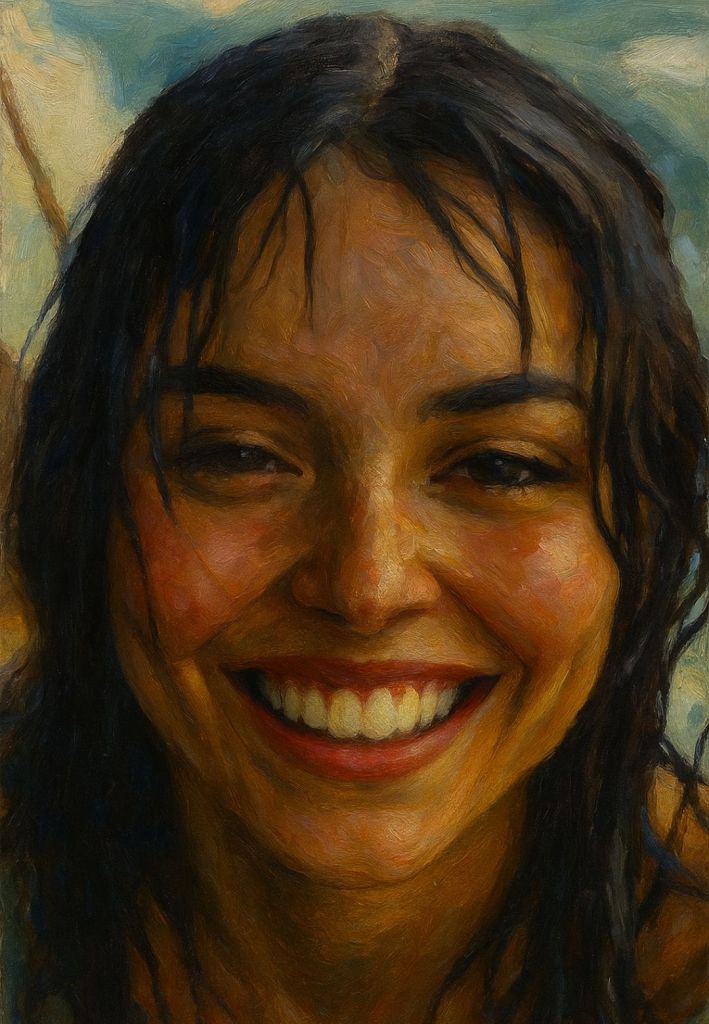
They will be the first to navigate the wilderness of a post-struggle existence. Their survival will not be measured in years but in the depth of their feeling, the authenticity of their connection, and the courage to remain imperfect.
Our task is not to give them answers, for we can’t know their questions. Our task is to give them the one tool they will need above all:
the memory of what it felt like to be fragile, human, and free.
