Category: MAYA VANCE


  • INTRODUCTION

    The garden never really lets you go.

    That’s what I learned in the three years since I walked out of the Virginia house and left Leo staring at the rain. Three years since I stood in the ashes of my certainties and decided to build something smaller. Three years of quiet gatherings, folding chairs and tea, of choosing doubt over doctrine and calling that enough.

    Three years of pretending it was.

    The work paid nothing. Rent still needed paying. Food still needed buying. So I consulted—risk assessments for companies afraid of internal rot, due diligence for law firms who wanted to know where the bodies were buried before they signed the contract. I was good at spotting fractures. I’d lived inside one.

    It kept the lights on.

    The evenings belonged to the gatherings.

    A rented room on Thursdays. No hierarchy. No manifesto. Just people who had walked out of something and weren’t sure what came next. We didn’t offer answers. We didn’t fix anyone. We sat in uncertainty together and called it progress.

    Leo came most weeks. Not the old Leo—the investor with sharp suits and sharper cynicism. This Leo moved carefully, as if his body were something recently returned to him. He helped me now. Helped others who had escaped high-control groups and didn’t know how to live without someone else’s instructions.

    He was proof that healing was possible.

    I held on to that proof harder than I should have.

    Peace is most dangerous when you start believing it will last.

    Twenty-six years old. A software engineer at a company called Nexus Dynamics, one of those Silicon Valley transplants that had taken over whole blocks of the city with their open floor plans and branded espresso machines. She’d started coming to the gatherings six months ago, referred by a friend who’d heard about us through channels I never tracked.

    Her name was Priya Chen.

    Bright. Questioning. Full of the particular energy of someone who’d spent her whole life doing what she was supposed to do and was just beginning to wonder if that was the point.

    “I feel like I’m running on someone else’s software,” she’d said one night, her voice low in the circle. “Like I’m executing code I didn’t write and can’t read. And I don’t even know who the programmer is.”

    That was exactly the kind of person the garden looked for.

    I told myself I could help her before anything found her first.

    I was wrong.

    The changes started small.

    A missed gathering. Then another. When she returned, her edges had softened. Not gone. Just streamlined.

    “I’ve started a program at work,” she said. “It’s helping.”

    A company called Integral. A wellness consultancy. One-on-one sessions. Performance clarity. Behavioral refinement.

    “Now I can just be.”

    Leo had said that once, in Virginia. Right before they hollowed him out.

    I warned her.

    She smiled the way people smile when they’ve already decided you’re behind them.

    Her boyfriend found me next.

    Marcus was young, mid-twenties, with the rumpled look of someone who spent his days in front of screens and his nights worrying. He found me after a gathering, hovering near the door until everyone else had gone.

    “She’s different,” he said. “Not worse. Better. That’s what scares me.”

    “How?”

    “She doesn’t spiral anymore. Doesn’t question. Doesn’t argue. She used to fight for things. Now she just… accepts.”

    I felt something cold settle behind my ribs.

    “Don’t meet with the consultant,” I told him. “Whatever she says, don’t go.”

    “I love her,” he said. “I just want her back.”

    So did I.

    Three days later, he was dead.

    Black ice. A stretch of road he drove every day, suddenly treacherous. The police called it tragic.

    I didn’t argue. I just started paying attention differently.

    At the funeral, Priya stood beside Marcus’s mother. Composed. Symmetrical. Unshaken.

    When I approached her, something flickered in her eyes. Recognition. Grief.

    Then it closed.

    “I’m sorry,” she said gently. “Do I know you?”

    For a moment, the world tilted. Not grief. Not rage.

    Failure.

    I stood there long after she’d gone, the rain soaking into my coat, and realized something I had refused to admit for three years.

    Peace hadn’t returned.

    It had been waiting.

    That night, I opened a folder I hadn’t touched in three years.

    Fourteen names. The Lydia Protocol. The remains of Aletheia.

    At the bottom, a journalist I’d never followed up on. Elena Vasquez. Institutionalized after publishing a partial exposé on Aletheia’s early funding structures. Diagnosed. Silenced. Contained.

    And another name I had skimmed past once.

    Daniel Cross.

    He’d been in the correspondence. Not public-facing. It’s not charismatic. Structural. Methodological. The language in his emails is colder than Creed’s. Precise. Efficient.

    Optimization protocols.

    I hadn’t followed him then.

    He’d followed me.

    My phone rang.

    Unknown number.

    “Maya Vance.”

    A man’s voice. Mid-forties. Even. Controlled.

    “My name is Daniel Cross.”

    No introduction. No hesitation.

    “I think we should talk.”

    “I don’t know you.”

    “You know my work.”

    A pause.

    “Priya Chen sends her regards.”

    The line went dead.

    Not rushed. Not threatened. Dismissed.

    He hadn’t called to intimidate me. He’d called to confirm that I understood.

    And for the first time in three years, I felt the old fear rise—not loud, not panicked. Just precise.

    He had moved a piece on the board.

    And he wanted me to see it.

    Peace does not last.

    Neither does hiding.

  • Somewhere along the way, we decided that questions are weapons.

    Ask one, and you must be attacking. Raise doubt, and you must be disloyal. Challenge a structure, and you must want to destroy it.

    But that’s not how growth works.

    Questions are not demolition charges. They are door handles.

    In the novel I’ve been writing, a system exists that prides itself on clarity. It dismantles inherited beliefs. It rebuilds identity with precision. It speaks the language of integration and stability.

    On the surface, it’s compassionate.

    But the tension doesn’t begin with violence. It begins with a quiet internal friction: “What does that actually mean?”

    When a character notices phrasing. When she replays a sentence in her mind. When she senses something slightly off in a perfectly polished explanation.

    That’s where the real story begins.

    Because the moment you ask a sincere question, you step slightly outside the frame. And frames don’t always like that.

    Here’s what we get wrong in real life: We think questioning something means we hate it. We think expressing doubt means we are betraying the group, the institution, the relationship.

    So we polarise. You’re either loyal or hostile. With us or against us.

    It’s exhausting. And it’s unnecessary.

    You can ask a question without demonising the person you’re asking. You can examine a system without calling it evil. You can say, “Help me understand this,” without implying, “You’re corrupt.”

    Curiosity is not cruelty. Inquiry is not aggression. Discernment is not disloyalty.

    In my story, the most dangerous thing isn’t open rebellion. It’s quiet pattern recognition.

    The system doesn’t fall because someone screams. It wavers because someone sees. And seeing doesn’t require hatred. It requires honesty.

    You don’t need to burn structures down to examine their foundations.

    That sentence is powerful. It creates space. And growth needs space.

    The irony? If a structure can’t withstand questions, it was never stable. If an idea collapses under scrutiny, it isn’t strong enough. If a relationship fractures because you asked for clarity, it wasn’t secure.

    Questions don’t create weakness. They reveal it.

    And if asking better questions makes you slightly inconvenient, slightly uncomfortable, slightly harder to categorise?

    Good.

    That’s usually where clarity lives.

  • Most people don’t realise they’re living in cages.

    That’s the thing about modern cages.

    They don’t rattle.
    They reassure.

    They don’t lock from the outside.
    They lock from the inside — with language.

    We call them:

    Stability
    Security
    Practicality

    “Just being realistic”
    “Looking after yourself”

    But sometimes, what we call life is a containment unit.

    And sometimes what we call protection is fear in a softer accent.

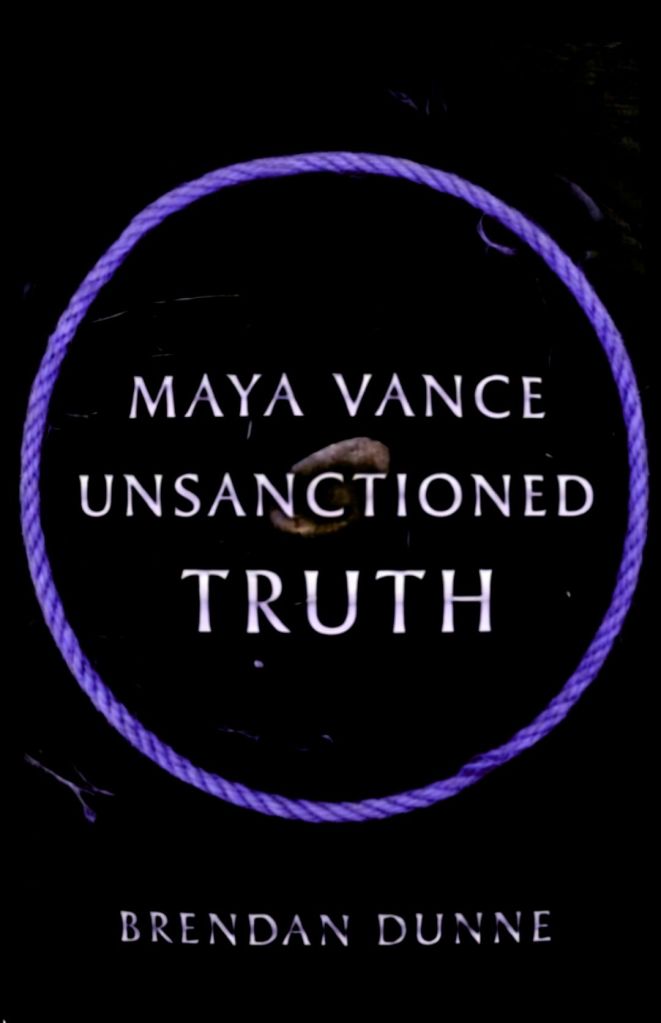
    In the story I’ve been writing, called MAYA VANCE UNSANCTIONED TRUTH, there’s a system designed to help people integrate after their beliefs are dismantled. It’s compassionate. Structured. Gentle.

    It exists to prevent collapse.
    It exists so that no one becomes unstable.
    It exists so that no one falls apart.

    And that’s precisely what makes it dangerous.

    Because when stability becomes the highest value, growth becomes a threat.

    When integration becomes mandatory, individuality becomes deviation.

    When people can’t adapt — they are “looked after.”

    It sounds kind.
    It feels safe.
    But safety can be a cage.

    Look around.

    How many people are living inside invisible protocols?

    The Career Protocol.
    The Relationship Protocol.
    The Don’t-Make-Waves Protocol.
    The Be-Reasonable Protocol.

    You step outside the approved narrative, and something activates.

    Concern.
    Correction.
    Subtle distancing.
    Raised eyebrows.
    “Well-meaning” advice.

    You’re not punished.
    You’re processed.
    You’re brought back into alignment.

    Eventually, if you resist long enough, you begin to question yourself instead of the cage.

    That’s how elegant systems work.

    They don’t crush you.
    They convince you the walls are kindness.

    Here’s the uncomfortable truth:

    Many people are not trapped by tyrants.
    They are trapped by expectations.
    By inherited scripts.
    By fear of destabilising the identity they’ve built.
    By the terror of standing outside consensus.

    We tell ourselves:

    “This is just who I am.”
    “This is just how life works.”
    “This is just being responsible.”

    But sometimes that voice isn’t wisdom.

    It’s containment. The irony?

    The cage often began as protection.
    At some point, you built it to survive.

    You learned what to say.
    How to behave.
    What to suppress.
    What to prioritise.

    It kept you safe.
    It helped you integrate.
    It helped you belong.

    But what protects you at one stage can imprison you at the next.

    The most sophisticated cages are the ones we defend.

    Growth is destabilising.
    It dismantles belief.
    It questions structure.
    It exposes inherited architecture.

    That process is uncomfortable.

    It can feel like falling apart.
    But falling apart is not the same as being broken.

    Sometimes it’s just reconstruction. And reconstruction requires risk.

    You will spend parts of your life inside cages you didn’t know you built.

    That’s human.

    The goal isn’t to shame yourself for that.

    The goal is awareness.

    To ask:

    Is this safety — or stagnation?
    Is this stability — or fear?
    Is this care — or containment?
    Is this identity — or habit?

    Because once you can see the bars, you can choose. And choice is freedom.

    Not reckless rebellion.
    It’s not dramatic escape, either.

    Just the quiet courage to say:


    “I don’t think this fits anymore.”

    That sentence is revolutionary because you’re allowed to evolve beyond the cage that once protected you.

  • We praise people who are “Well-Adjusted.” Grounded. Put together.

    But adjusted to what?

    In my novel, characters undergo “integration”—their identities restructured in the name of clarity and stability. If they struggle, the system “helps.” Not punishes. Supports.

    That’s the brilliance. No force. Just support.

    But support has a shadow: when the system defines “healthy,” divergence looks like a disorder. When “coherent” is predefined, originality looks unstable. When integration is the goal, independence becomes suspicious.

    Being well-adjusted means being well aligned.

    Look around. We reward:

    · Predictability
    · Composure
    · Measured responses
    · Contained emotion
    · Agreeable ambition

    We tell children to sit still. Adults to calm down. Dreamers to be practical.

    And when someone adapts beautifully to all that, we applaud.

    But what if discomfort is depth? Friction is growth? Not fitting isn’t pathology—but perception?

    There’s a difference between stable and suppressed. Calm and muted. Integrated and absorbed.

    Sometimes, the system doesn’t need to silence you. It just needs you to adjust. Slowly, you trade edge for ease. Fire for fluency. Until you wake up exceptionally well adjusted to a life that no longer challenges you.

    The paradox: Real growth is destabilising. It shakes things. If you feel uncertain, out of step—that doesn’t mean you’re broken. It means you’re evolving.

    The world will always offer you a safe, predictable version of yourself. But safety isn’t aliveness. Stability isn’t purpose. Integration isn’t authenticity.

    Sometimes, the most dangerous thing you can become is perfectly fine.

    So if you feel restless—like the role you play is too small—don’t rush to adjust.

    Ask: Is this discomfort a flaw or a signal?

    The world doesn’t change through the well-adjusted. It changes through the quietly unsettled.

    Maybe your refusal to fit perfectly isn’t instability.

    Maybe it’s integrity.