Where the Wild Mushrooms Grow.
by Brendan Dunne.
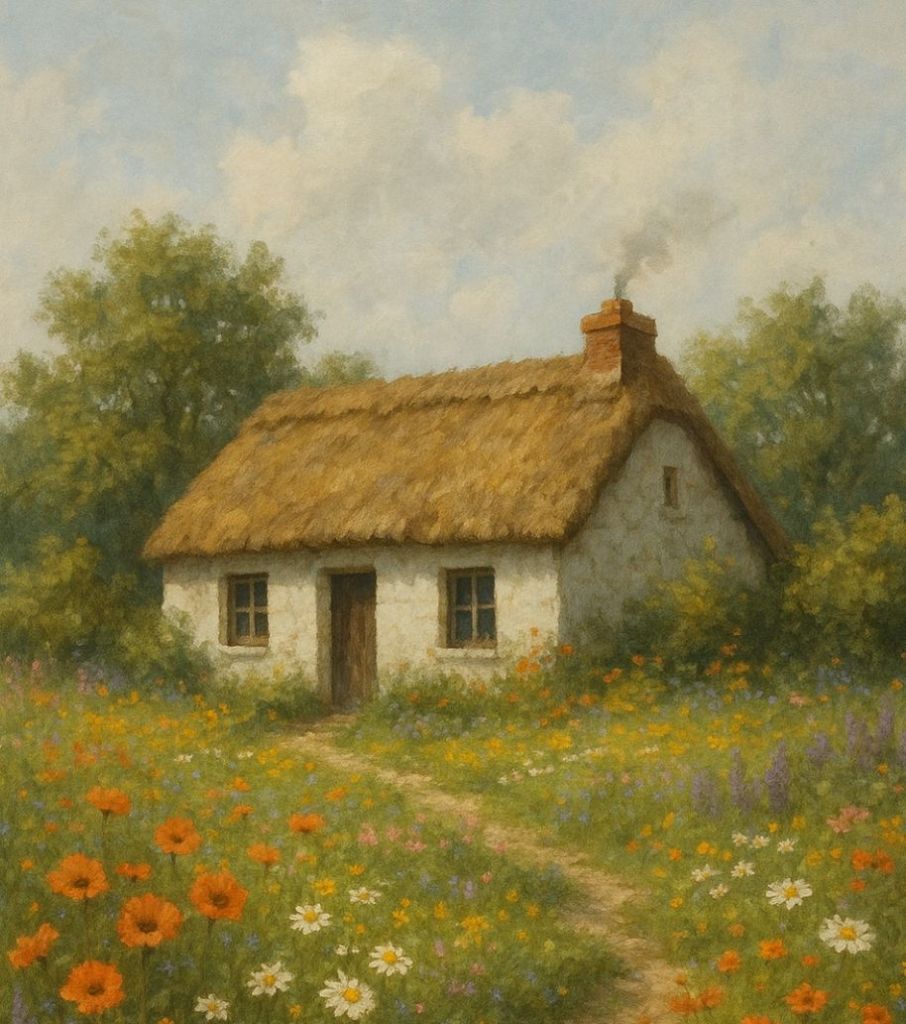
There’s a lane in County Clare, just past a stone wall covered in lichen, where the grass grows taller than a man’s waist, and the trees whisper stories older than English. People say not to go down it. Not because it’s dangerous—but because it remembers.
James O’Dea didn’t care about warnings. Not from neighbours, nor doctors, nor the priest who’d mutter things about “unquiet spirits” and “unwise folklore” James believed in one thing: the old land.
He hadn’t always. For years, he lived in Dublin, in a flat with radiators that clanked in winter and a job in insurance that drained the colour from his face. It was only when his mother fell ill—something slow and cruel in her bones—that he came back to the cottage he’d sworn he’d never return to.
“Leave her be, James,” the doctors told him after five minutes of looking at charts. “She’s old. It’s the way of things.”
But James remembered his grandmother’s voice telling tales of mushrooms that only grew in places where the earth remembered. Mushrooms that could listen. That could mend. Not just the body but the soul.
So he went walking.
He crossed fields where cows stared at him like he’d grown antlers, passed tumbledown ringforts and hazel groves so quiet it felt like the world held its breath. He didn’t look at maps. He let his feet remember.
And one morning, as the mist still clung to the heather, he found it.
A glade—untouched by man or machine. No fences. No wires. Just moss-covered stones and mushrooms rising like prayers from the damp earth. They weren’t like supermarket mushrooms. They were strange things—tall, golden-topped, and almost pulsing, as though they beat in time with the heartbeat of the land itself.
James knelt. He didn’t pick them up. That wasn’t the way.
Instead, he listened.
He pressed his hand to the soil and closed his eyes, remembering stories his father had dismissed as old nonsense. But his grandmother had believed. And her grandmother before her. He whispered a name—Bríd—his mother’s name—and the wind shifted.
That night, he brought nothing home. No roots, no tinctures. Just the smell of moss on his coat and the dirt beneath his fingernails.
But his mother smiled in her sleep for the first time in weeks.
So he went again. And again. Each time, he whispered. Each time, he gave something: a strand of hair, a song, a memory from childhood. The land, it seemed, liked to be remembered.
And his mother grew stronger.
By the fifth week, the doctors were confused. The priest stopped coming by. And the neighbours? They nodded at James with a mix of fear and respect.
“You’ve stirred the old ones,” Mrs. Doolan whispered from behind her curtains.
James didn’t argue. He simply tended the garden. Not the modern sort with tidy rows and concrete edges—but one like his grandmother kept, wild and humming, with marigolds growing beside cabbages and bees drunk on clover.
Then came the day the county council posted a notice on the gate: Development Project – Wind Turbine Access Road. Right through the glade.
James drove into town. Not to protest. Not to argue. But to warn.
“They don’t understand,” he said to the project manager. “That land is full of memory. You dig it up, you won’t just move earth—you’ll break something that doesn’t want breaking.”
They laughed, of course.
So James went to the glade one last time. He brought a trowel, a leather-bound book, and a bottle of rainwater collected from the eaves of the cottage. He didn’t cry. Instead, he planted something.
Not a tree. Not a mushroom. But a memory. A vision of his mother laughing in the kitchen of his grandmother singing old songs in the half-light.
And he left.
Three weeks later, the diggers came. But the access road never reached the glade. Machines failed. GPS systems glitched. Workers went missing for hours only to return confused, covered in mud, and speaking in Irish, none of them knew.
The project was delayed. Then abandoned. Something about “environmental instability.”
James’ mother lived another five years. Long enough to see her garden bloom again. Long enough to hear her grandson speak the old tongue with the same lilt his great-grandmother once had.
And James?
He stayed.
He didn’t claim to be a healer. He didn’t write books or give talks. He just lived, quietly, in the same cottage, walking the same fields, tending the same stories.
And every so often, when the mist was right, he’d see someone new wandering past the stone wall. Lost. Sick. Or simply searching.
He never told them where to go.
He simply nodded.
Because there’s power in the old land where the wild mushrooms grow.
Real power.
You just have to remember.