There is a particular kind of loneliness that comes from asking the universe for answers and hearing nothing back.
It’s not the loneliness of empty rooms or silent phones. It’s the loneliness of standing in front of a mirror, having done everything you were told—checked the horoscope, consulted the cards, paid the psychic, waited for the sign—and realizing that no one is coming to tell you what comes next.
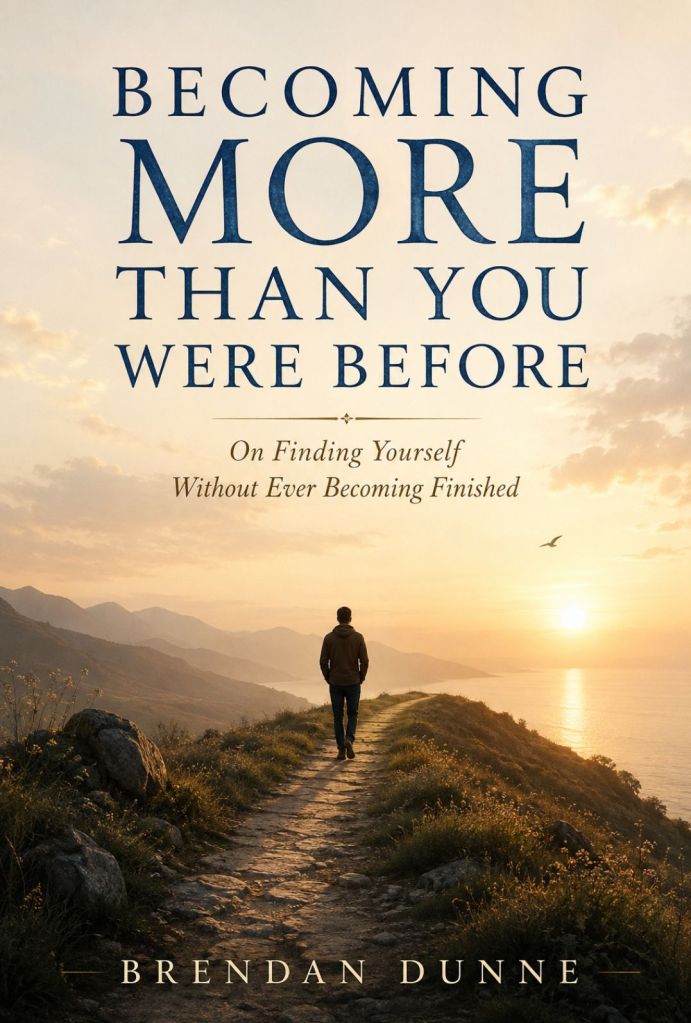
This book is for anyone who has ever googled. “Am I happy yet?” at 2 a.m.
It’s for the people who have rearranged their furniture because someone said having your bed facing north was bad for your health.
I wrote Addicted to Signs because I believe that escapism is not shallow when the real world feels heavy. I believe that laughter and tears can live in the same sentence. I believe that a story about a woman who breaks three engagements because of a sycamore tree can be both absurd and heartbreaking—and that readers deserve both.
Jacqueline Prescott is not me. But she is everyone I have known who has ever outsourced their agency to a system, a sign, or a stranger.
This is not a self-help book disguised as a novel. I have no interest in lecturing anyone about what to believe. That’s their perogative.
Addicted to Signs is a work of fiction. The psychics are fictional (though the techniques they use are real). The sycamore tree is fictional (though there is one in my neighbourhood that I now cannot look at without smiling). The characters are invented, but their struggles are very real.
If you have ever asked the universe, “What now?” and hated the silence that followed—this book is for you.
It will be released in the near future.
I hope you enjoy reading the story as much as I enjoyed creating it.
Then—most importantly—at the spoon on the counter.
Claire blinked. “…No.”
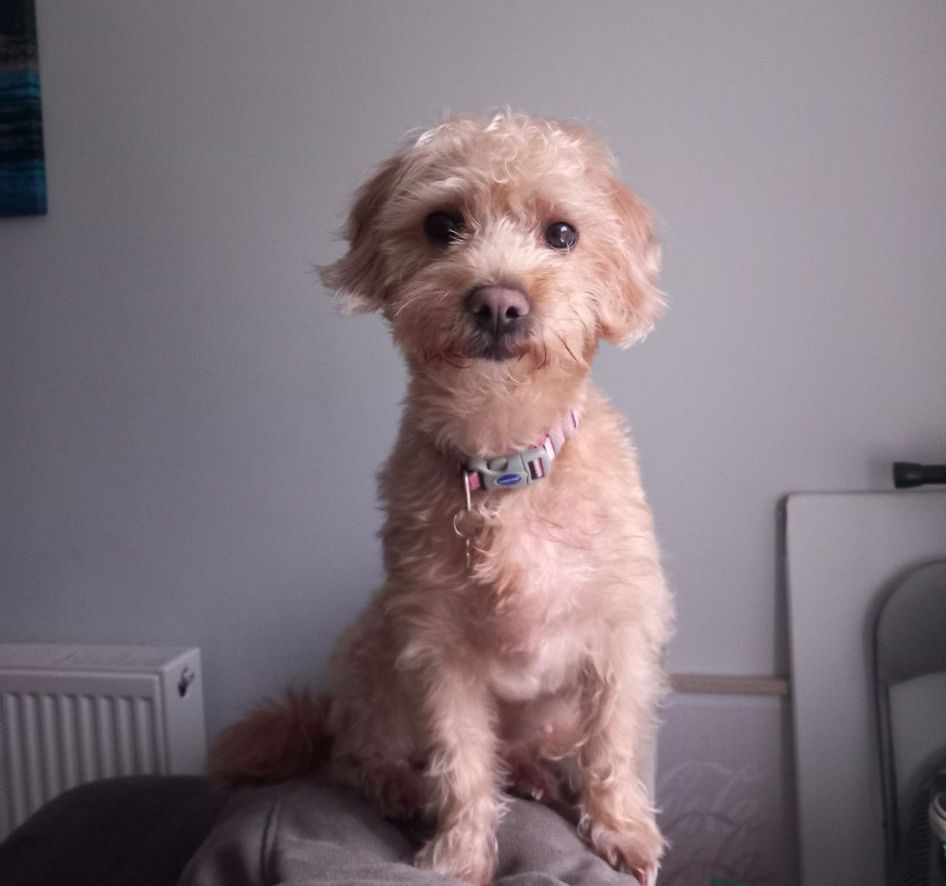
Bella blinked back.
Yes.
What followed can only be described as a negotiation between species.
Bella sat. Claire waited.
Bella tilted her head. Claire resisted.
Bella gave a small, theatrical whimper.
Claire sighed. “Fine. Just this once.”
Claire scooped a small amount of kibble onto a spoon and held it out.
Bella leaned forward… delicately.
Gracefully.
Like royalty accepting tribute.
She ate it.
Paused.
Then she gave a slow, approving nod.
Internal Mission Log Update
Spoon delivery: Acceptable
Human compliance: Promising
Power dynamic: Shifting
Claire stared. “You’ve got to be joking.”
Bella sat taller.
I do not joke about dining standards.
Spoonful after spoonful, Bella consumed her meal—not like a dog—but like a tiny, judgemental food critic who had just secured a Michelin star for herself.
Occasionally, she would pause.
Claire would instinctively go to scoop another bite.
Bella would stop her.
No.
Timing mattered.
Pacing mattered.
This was an experience.
Halfway through, Bella glanced at the bowl.
Then back at Claire.
See? Look at it. Chaotic. Undignified.
Claire muttered, “You were eating out of that yesterday.”
Bella blinked slowly.
We grow. We evolve. We demand better.
When the meal was finished, Bella leaned back, satisfied.
Claire sat there, spoon in hand, questioning every life decision that had led her to this exact moment.
“You’re a dog,” she said.
Bella tilted her head.
And yet, here we are.
Bella trotted off, tail high, mission complete.
Behind her, Claire looked at the empty bowl.
Then at the spoon.
Then at Bella.
“Tomorrow,” Claire called, “you’re eating like a normal dog.”
Bella paused in the doorway.
Without turning around, she gave the smallest flick of her tail.
Internal Mission Log: Final Entry
Human still believes she has authority
Recommend gradual reconditioning
Next objective: Napkin implementation
And somewhere, deep in her tiny, fluffy mind, Bella smiled.
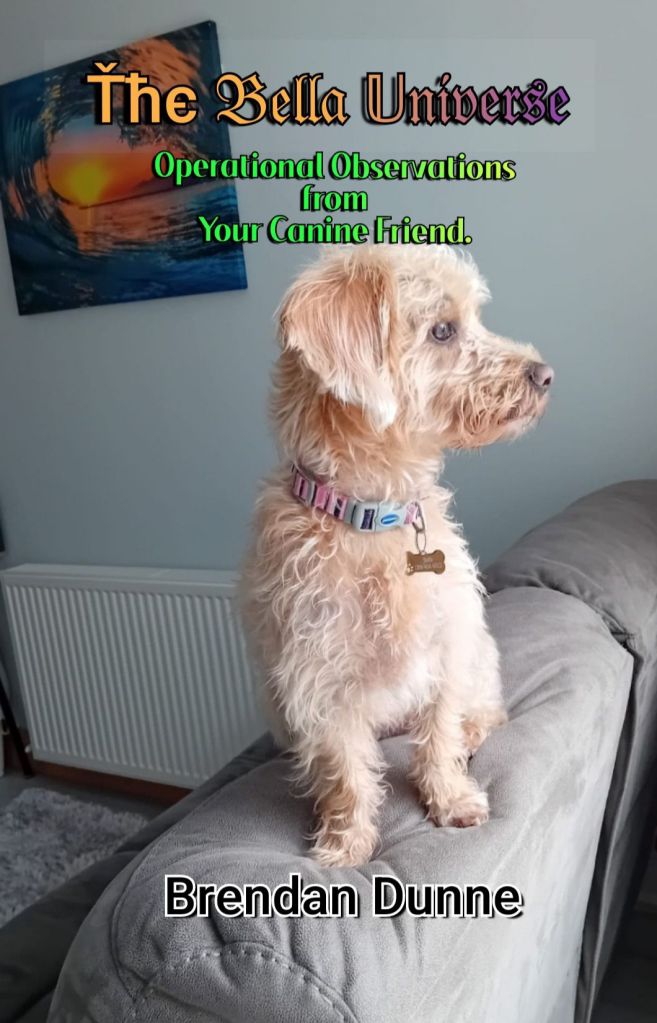
A Field Report by Bella, Household Security Specialist (Grade: Good Girl, First Class)
Classified: For Human Eyes Only (though you’ll probably just coo and show it to your friends).
MissionObjective: To investigate the recurring human vocalization known as “I’m bored” and to document the factual inaccuracy of this claim based on a standard 24-hour operational cycle.
Executive Summary: Humans are sensory-deprived. It’s not their fault. They simply lack the necessary equipment to process the high-frequency data stream that is a normal, exciting day. This report is submitted for their re-education.
0600hours: Operation Morning Sniff Audit
The humans believe the morning perimeter sweep, or “walk,” follows a predictable route. This is a critical intelligence failure. While the visual topography appears static, the smell-scape has undergone a complete overhaul in the last 12 hours. My initial findings indicate:
· Three unknown canines have marked the eastern lamp-post. Their scent profiles suggest one small, anxious bichon and two large, overconfident labs. Threat level: Moderate (high for treat-competition). · A feline operative conducted reconnaissance near the hedge. Its scent trail is laced with contempt and an unfamiliar brand of kibble. · A squirrel has committed multiple acts of reckless acorn relocation in Sector C (the park). This is a clear violation of the Rodent-Hedgehog Accords.
The humans attempt to truncate my investigation with phrases like, “Come on, Bella, we walked here yesterday.” My official response: Exactly. Which is why the new data is so urgent. Their inability to read this “canine paperwork” is not my problem.
0730hours: The Sector B Green Anomaly
Post-walk, I assume my observation post in the garden. A leaf, designated “Green Anomaly 7-Alpha,” executes a low-altitude, erratic flight path across Sector B. The humans dismiss this as “wind.” I recognize it as a possible communication from the bird network. I am forced to conduct a full, 12-minute visual surveillance op to ensure it is not a precursor to a coordinated pigeon incursion. My unwavering focus is not “boredom,” it is heightened readiness.
1100hours: Toy Re-Engagement Protocol
Humans lack object-permanence when it comes to joy. They ask, “Didn’t you already play with that squeaky duck yesterday?” Operational Note: Yesterday, the squeaky duck was a plaything. Today, in my current emotional context, it represents:
· A tool for sonic warfare against human concentration. · A symbol of my athletic dominance. · An effigy of the postman.
Seventeen squeaks were required to fully interrogate the duck. Seventeen.
1400hours: Advanced Window Surveillance
From my primary overwatch position (the back of the sofa), I monitor the neighbourhood for threats and points of interest.
· Target Alpha: A man walking a dachshund. The dachshund’s posture was unusually confident. This warrants further observation. · Target Bravo: A pigeon. It moved three inches to the left. Then stared directly at our house for 47 seconds. “Questionable intentions” is the official classification. · Recurring Event: The Doorbell Surprise. The human known as “Postman” continues to trigger the door alert system, then flees the scene, leaving behind artifacts (parcels, letters). It’s a brilliant, chaotic game, and I am its most dedicated player.
The humans glance at the static scene and utter the baffling statement: “Nothing happening.” My internal debriefing log reads differently: INCIDENT. INCIDENT. PIGEON. INCIDENT.
1900hours: The Philosophy of Routine
Humans express a dislike for routine, calling it “boring” or “the same thing every day.” They fail to grasp that a predictable environment is the foundation of a successful security state. A reliable routine guarantees:
· Resource Acquisition: Dinner at the scheduled time. · Perimeter Integrity: Walks happen on a dependable cycle. · Asset Verification: My humans are exactly where I left them, alive and capable of dispensing cheese.
This is not boredom. This is excellent system design.
2100hours: Final Reflections & Recommendations
As the humans wind down, they stare into their glowing rectangles and sigh, “I’m bored.”
Conclusion: The human condition is one of self-imposed sensory deprivation. Their reliance on flat, scentless, glowing rectangles has atrophied their ability to perceive the rich, complex, and wildly exciting world that exists right at the end of their noses. My primary function is to serve as their Ambassador to this world, to drag them through it, and to remind them daily of what they’re missing.
Recommendation: More cheese. It helps with their focus.
End of Report.
Now, if you’ll excuse me, I need to investigate the kitchen floor. A crumb may have materialized. It’s a full-time job. 🐾
Operational Addendum for Reader Enjoyment:
· (Bella, reading over your shoulder): I see you’re reading about me again.
It’s a romantic comedy for a time when the rules of the game have changed.
She has a neural implant designed to prevent self-deception. He runs a wellness startup, specialises in grand gestures, and has absolutely no idea what he’s actually feeling.
They meet when he steals her scarf.
In a world where everyone has a Companion nudging them to question their thoughts, misunderstandings are rare. Projection is inefficient. Drama is exhausting.
Falling for lies is almost impossible.
Falling for someone? That’s more complicated.
The Less Gullible Generation is a romantic comedy about what happens when clarity meets chaos, when scepticism meets longing, when the most self-aware generation in history attempts the one thing that still requires a little irrational belief.
It’s for anyone who has ever analysed themselves into paralysis. Anyone who has ever been called “too much” or “not enough.” Anyone who has stood at the edge of love and thought:
The Completely Hypothetical and Totally Not Inevitable Journey Around the Next CornerontheBus.
Listen, we’ve all been there.
Convinced that our entire existential vibe will upgrade after the next corner.
After we finally buy the ridiculously expensive coffee machine. After we find the perfect sofa that doesn’t have a mysterious stain. After we adopt the hobby, that will definitely make us interesting on Instagram.
Corners are sneaky like that. They promise a montage. They whisper that just ahead, the soundtrack changes, and you start walking in slow motion.
And sometimes, yes—new things are nice.
But here’s the detail they never include in the montage:
When you turn the corner, all of you comes with you. Including the part that forgets to water plants and still replays that awkward thing you said in 2012.
You can trade rain for sunshine, but you’re still the person who didn’t pack an umbrella. Your internal weather app stays stubbornly set to “scattered nonsense,” regardless of the postcode.
This isn’t pessimism. It’s just remembering you packed your own luggage.
You are the main character in your life, but sometimes you’re a slightly needy protagonist. Every job, every apartment, every relationship is just a new set for the same ongoing show: You, but with a different background.
Every apartment has a kitchen. Not every apartment is where you magically become someone who meal-preps.
We love to confuse movement with meaning. Busyness with purpose. Motion without direction is how you end up with a high step count and a soul still sitting on the couch. Any road will do if you’re just trying to escape the group chat.
You can’t outrun your own mind. It jogs alongside you like a loyal but irritating companion, whispering, “Hey, remember that deadline?” and “Are we sure this counts as happiness?” Just as you’re trying to enjoy the view.
You are a consciousness temporarily operating a body that requires water, rest, and the occasional stretch. This body is the rental car, not the destination. And you’ve been ignoring the check-engine light because the radio still works.
If your happiness depends entirely on a specific person, place, or artisanal kombucha, that’s not happiness—it’s a hostage situation. It doesn’t mean those things aren’t good. It just means you’ve handed them the thermostat to your inner life.
You don’t need a flawless relationship with anyone else before you build one with yourself. In fact, most other relationships are quietly waiting for you to stop cancelling plans with yourself to stare at your phone.
And if you keep having the same argument with different people—about dishes, boundaries, or emotional labour—it’s worth considering that the universe might not be conspiring against you. Sometimes, the common factor is simply… you really hate dishes.
So what’s actually around the next corner?
Maybe it’s your dream opportunity. Maybe it’s another “learning experience” (which is just failure with better PR). Maybe it’s a decent taco stand. One can hope.
Often, the real journey isn’t about what’s around the bend. It’s about which version of you shows up. The one that’s grown—or the one that’s just grumpy from the drive.
Change the scenery. Move to the coast. Buy the plant.
Just don’t outsource your inner peace to a realtor or a lifestyle brand. A place only earns five stars when the main tourist—you—stops losing their keys.
The next corner is coming. That part is inevitable.
The only real question is this:
When you turn it, will you be the same person—just slightly more sunburnt and in debt? Or will you be someone who, at the very least, remembered to bring a snack for the journey?