The purpose of guidance isn’t to show people how to follow your path. It’s to help them discover their own.
We all have something to teach.
We’ve experienced things, made mistakes, learned lessons and discovered perspectives that might help someone else navigate their way through life.
Sometimes, someone comes to us looking for advice. They want direction, reassurance or perhaps a little clarity when everything seems confusing.
And because we’ve been there, or believe we understand what they’re going through, we want to help.
We want to show them the way.
But perhaps this is where we need to pause and ask ourselves a question.
Are we helping them find their way, or are we simply showing them ours?
There’s a difference.
Your Journey Is Not Their Journey
Every one of us sees the world through a different lens.
Our beliefs, experiences, fears, ambitions, and disappointments shape the way we interpret life. Even when two people face similar circumstances, they may need entirely different things to move forward.
What worked beautifully for you might not work for someone else.
The lesson that changed your life might mean very little to another person. The path that brought you peace might lead someone else somewhere they don’t want to go.
That doesn’t make your experience less valuable.
It simply means your experience is a resource, not a universal instruction manual.
We sometimes forget this when we’re trying to help.
We offer advice when someone needs to be heard. We provide answers when they haven’t finished asking the questions. We point towards the destination we believe is right without stopping to discover where the other person actually wants to go.
Our intentions may be good.
But good intentions don’t automatically make good guidance.
Meet People Where They Are
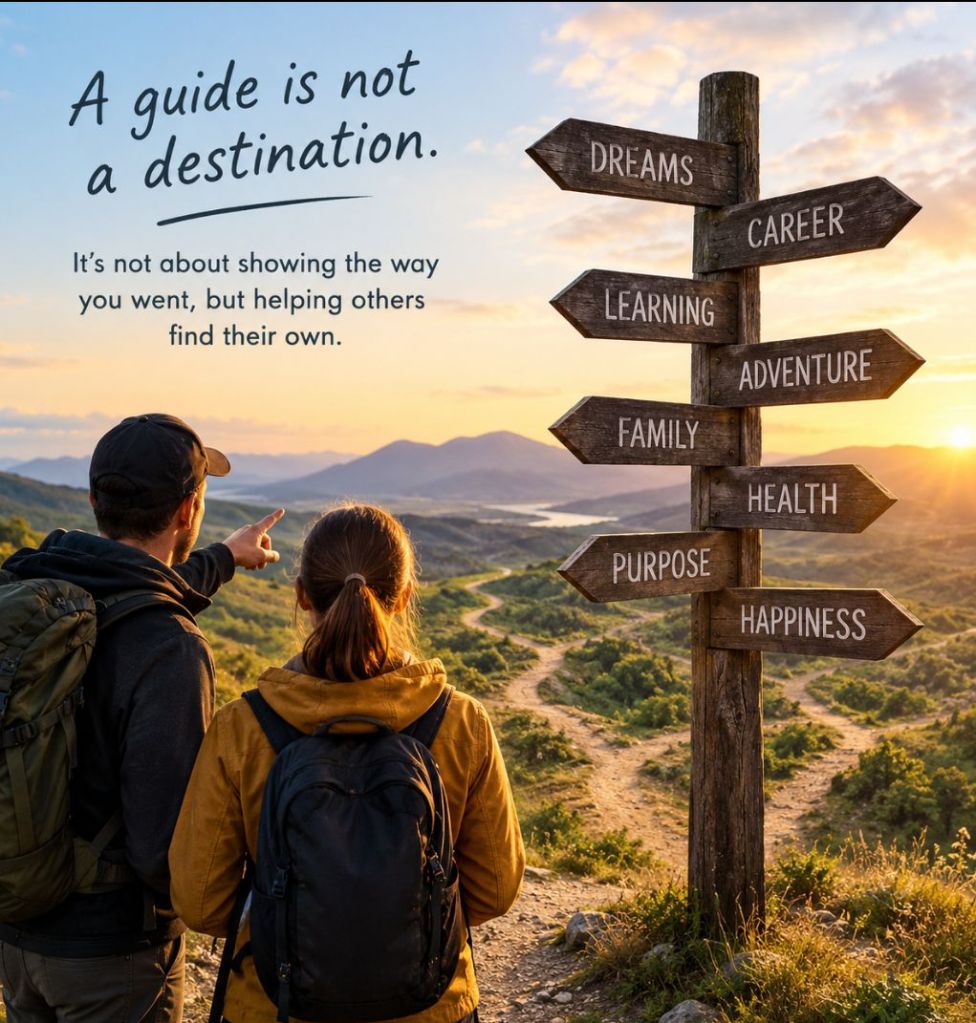
Imagine someone standing at a crossroads.
You recognise the landscape because you’ve travelled through it yourself. You know which road you took, the obstacles you encountered, and the destination you eventually reached.
Naturally, you want to point them in the same direction.
But what if their destination is different?
What if they have responsibilities you never had, fears you’ve never experienced, or ambitions you don’t fully understand?
Before pointing towards a road, perhaps the better approach is to ask a few questions.
Where do you want to go?
What matters most to you?
What do you think is holding you back?
What possibilities have you considered?
And, perhaps most importantly, what do you already know that you haven’t yet recognised?
These questions don’t make you a less effective guide.
They make you a more thoughtful one.
Because guidance begins with understanding, not instruction.
The Art of Helping Without Taking Over
Good guidance requires a particular kind of humility.
It means accepting that we can have valuable experience without having all the answers.
It means recognising that someone else’s life isn’t ours to manage.
And it means understanding that our responsibility is not to create agreement, obedience or dependence.
It’s to help someone develop the confidence and ability to make their own decisions.
That might mean asking before advising.
Listening before leading.
Offering possibilities rather than presenting our opinions as verdicts.
Sharing what we’ve learned while being honest about what we don’t know.
And allowing someone the freedom to disagree with us without assuming they’ve failed to understand.
Sometimes, the most helpful thing we can say is, “This is what worked for me, but your circumstances may be different.”
Sometimes, it’s simply, “What do you think your next step might be?”
And sometimes, the best guidance is silence.
Not because we have nothing to offer, but because the other person needs space to hear their own thoughts.
We don’t always need to fill that space with our wisdom.
Growth Is Not Measured by Agreement
Here’s an interesting thought.
If someone follows your advice, does that necessarily mean you’ve helped them grow?
Perhaps they agree with you because they trust you. Perhaps they don’t want to disappoint you. Perhaps your confidence has persuaded them to ignore their own doubts.
Agreement alone tells us very little.
Likewise, if someone listens carefully to your advice and ultimately chooses a different direction, does that mean you’ve failed?
Not necessarily.
They may have considered your perspective, learned something valuable, and discovered a better way forward for themselves.
Isn’t that what growth should look like?
The goal isn’t to produce people who think like us, make our choices or validate our beliefs.
It’s to help people become more capable of thinking, choosing, and navigating for themselves.
The best guide doesn’t measure success by how many people follow their footsteps, but by how confidently they learn to walk their own path.
You Don’t Have to Know the Way
There’s another lesson here, one that applies to all of us.
We don’t have to wait until we’ve figured everything out before we can help someone else.
We don’t need to possess perfect wisdom, endless experience, or a solution to every problem.
We simply need to be willing to share what we’ve learned, listen to what others have experienced, and remain open to the possibility that we might learn something ourselves.
Guidance isn’t a one-way journey from the knowledgeable to the uninformed.
Sometimes, the person asking the questions helps us see something we’ve overlooked. Sometimes, their different perspective challenges an assumption we’ve carried for years.
And sometimes, helping another person discover their way reminds us that we’re still discovering ours.
Perhaps that’s one of the most beautiful things about being human.
We can learn from one another without needing to become one another.
We can offer direction without demanding obedience.
We can share our experience without claiming ownership of someone else’s future.
And we can walk beside someone without insisting they walk behind us.
A Final Thought
The next time someone comes to you looking for direction, resist the temptation to hand them your answer immediately.
Listen.
Ask questions.
Explore possibilities together.
Share your experience, but leave room for theirs.
You might help them discover a direction they hadn’t considered. You might help them recognise a strength they didn’t know they possessed. Or you might simply give them the space and confidence to take a step they already knew they needed to take.
You don’t have to carry them to their destination.
You don’t even have to know exactly where they’re going.
You just have to be willing to meet them where they are and help them see what might be possible from there.
Because a guide is not a destination.
Your experiences can illuminate the road, but they cannot decide where someone else should travel.
Your wisdom can open a door, but it cannot determine whether someone should walk through it.
And your guidance can make a difference without becoming a substitute for another person’s judgement.
We’re all learning. We’re all navigating. We’re all trying to make sense of a world that rarely provides straightforward directions.
Perhaps the greatest gift we can offer one another isn’t a map with every turn marked.
Perhaps it’s the confidence to explore, the courage to question and the freedom to find our own way.
After all, the purpose of a guide isn’t to make people dependent on their direction.
It’s to help them discover that they can navigate their own lives.
So, here’s a question worth reflecting on:
This week, how might you help someone discover their next step without deciding what that step should be?
You might be surprised by what happens when you stop trying to lead someone towards your answers and start helping them discover their own.
🌱
If this reflection resonated with you, feel free to share it with someone who believes in helping others grow.
#PersonalGrowth #Mentorship #Leadership #SelfDiscovery #Wisdom #LifeLessons
