We’ve all heard it: “You’ve got to be cruel to be kind.”
It sounds wise. It sounds brave. And sometimes, the sentiment behind it is even true.
A parent setting a difficult boundary. A friend telling you something you desperately need to hear. A manager having an uncomfortable conversation because someone needs an opportunity to improve.
Not every uncomfortable experience is unkind. Sometimes, doing the right thing means saying something people would rather not hear.
But here’s what that familiar expression conveniently forgets:
Cruelty is easy. Kindness is hard.
It’s easy to call harshness “tough love”. Easy to dress up our impatience, our desire for control, or our need to be right as “doing it for your own good”.
Easy to cause pain and call it a gift.
But having good intentions doesn’t automatically make our behaviour kind. We can be right about what needs to be said and still be wrong in how we say it.
Being honest doesn’t require humiliation. Setting boundaries doesn’t require intimidation. And helping someone grow doesn’t require making them feel small.
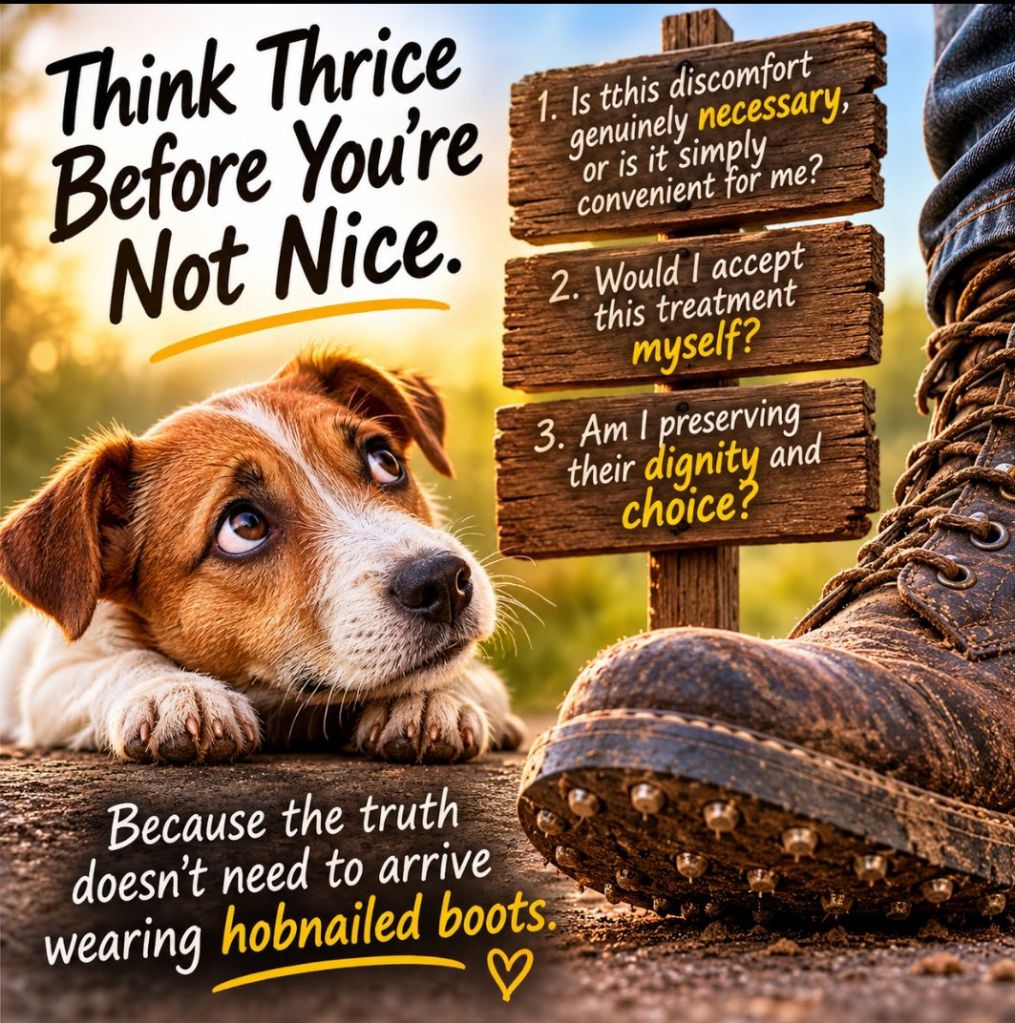
So, before you reach for the verbal scalpel, ask yourself three times:
- Is this discomfort genuinely necessary, or is it simply convenient for me?
Am I trying to help someone understand something important, or am I just releasing my frustration?
- Would I accept this treatment myself?
Not just the words, but the tone, the timing and the way they’re delivered. Would I feel respected, even if I didn’t like what I was hearing?
- Am I preserving their dignity and freedom to choose, or am I overriding them to feel powerful?
Am I offering guidance or expecting obedience? Am I helping someone find their own way forward or insisting they follow mine?
These questions matter because kindness isn’t simply about what we intend to achieve. It’s also about how we treat people along the way.
Real kindness doesn’t mean agreeing with everyone. Avoiding difficult conversations or pretending everything is wonderful.
Sometimes, kindness means being firm. Sometimes, it means saying no. Sometimes, it means telling someone an uncomfortable truth and allowing them to decide what to do with it.
The difference is that firmness can respect people. Cruelty diminishes them.
You don’t have to choose between being kind and being honest. You don’t have to choose between compassion and boundaries.
And you certainly don’t have to make someone feel small to help them grow.
There’s a related trap worth naming here: the assumption that honesty requires broadcasting everything we know. It doesn’t. You can hold a difficult truth and still be discerning about who needs to hear it, when, and in what form. Being honest with someone about their work doesn’t mean recounting every critical thing a third party has said about them. Being truthful about a situation doesn’t mean passing along every unflattering detail.
You don’t need to share negative gossip with the people at the centre of the gossip.
That’s not honesty—it’s collateral damage dressed up as candour. It rarely helps anyone grow. It usually just transfers discomfort from one person to another.
So, the next time someone tells you—or you tell yourself—that you’ve “got to be cruel to be kind,” pause for a moment.
Think thrice before you’re not nice.
Because the kindest people rarely need to justify their behaviour by claiming they’re doing it for someone else’s good.
And the cruellest ones always seem to have a reason ready.
Being right doesn’t give us permission to abandon compassion.
After all, the truth doesn’t need to arrive wearing hobnailed boots. 💛
