I don’t write self-help books.
I write novels. Stories about customs inspectors, behavioural economists, and algorithms that quietly decommission the machinery of coercion. People making choices in rooms they can’t leave, with information they can’t verify, wondering whether the world just changed beneath their feet.
There are no seven steps. No affirmations. No chapters end with a list of things you should try before breakfast.
And yet.
Somewhere around page eighty, a reader puts the book down and notices something. Not a lesson. Not an instruction. Something more subtle: a different way of looking at things.
They’ve been watching a character pay attention. They’ve seen someone refuse to let fear make every decision. They’ve watched a person remain curious when certainty would have been easier or stay in the room when the outcome wasn’t guaranteed.
And perhaps they think: I could do that.
That’s the moment.
Not because I told them they should. Not because I’ve supplied a formula for becoming a better person. But because the story has created the conditions for them to recognise a possibility in themselves.
They haven’t been instructed to change. They’ve been given the opportunity to discover why they might want to.
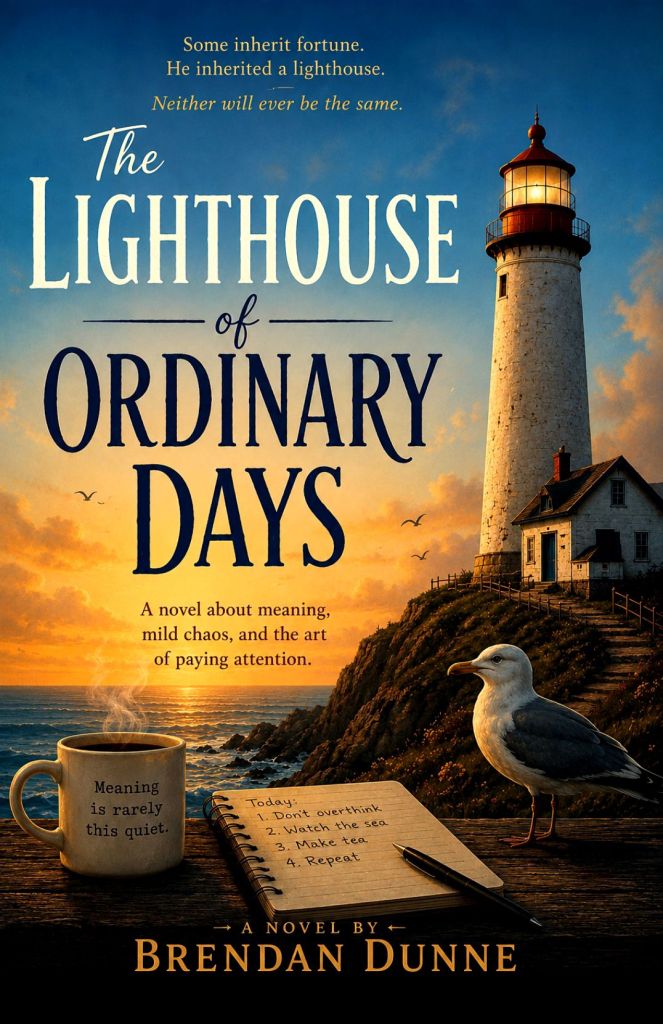
It’s something I explore in The Lighthouse of Ordinary Days, too. The idea that the things capable of changing our lives aren’t always dramatic revelations or extraordinary achievements. Sometimes, they’re ordinary moments that reveal something we’ve overlooked. A different perspective. A question we hadn’t considered. A familiar situation is seen through unfamiliar eyes.
The story doesn’t need to explain everything. Sometimes, its greatest contribution is leaving the reader with something worth thinking about long after the final page.
And that’s an important distinction.
Being handed an answer and discovering one for yourself are two very different experiences.
The first gives you something to accept. The second gives you something to examine.
When you arrive at an insight independently, you can question it, challenge it, and decide whether it belongs in your life. You’re no longer simply receiving someone else’s wisdom. You’re participating in your own understanding.
That’s the kind of learning that has a chance of lasting.
The answers you’re looking for aren’t necessarily in a book. They’re in the life you’ve already got: the conversation you didn’t finish, the application you didn’t send, the assumption you never questioned, the prediction you never tested.
A novel can’t make those decisions for you. It can’t live your experiences or supply the courage required to face them.
But it can show you what it looks like when someone finally starts paying attention.
It can introduce you to possibilities you hadn’t considered and questions you hadn’t thought to ask. It can give you a different perspective without demanding that you adopt it.
And perhaps that’s enough.
I don’t believe every book needs to tell people what to think, just as I don’t believe every meaningful lesson needs to arrive labelled as one.
Sometimes, the most useful thing a writer can do is open a door and let the reader decide whether to walk through it.
So no, they’re not self-help books.
Until they are.
And by then, you’ve done the work yourself.
That’s the only kind of personal growth worth writing about.
And perhaps the only kind that lasts.
