Category: Irish

  • I was born into a country of storytellers.
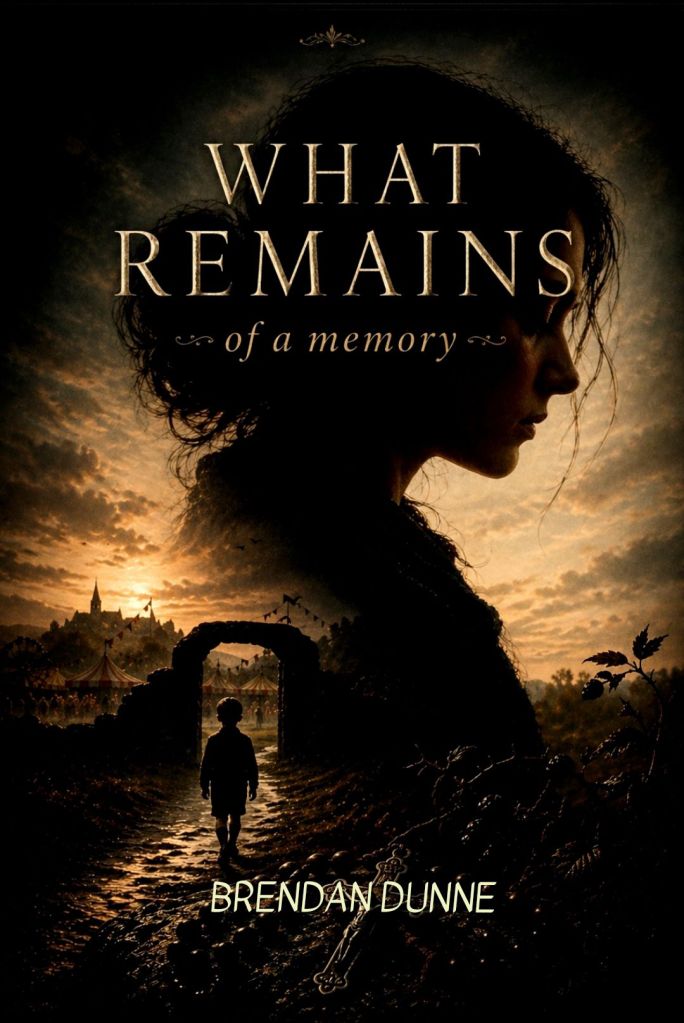
    https://amzn.eu/d/0d1d7p3h

    Ireland gave me this: the certain knowledge that the space between a breath and a heartbeat is not empty. It is crowded with whispers. With the almost-remembered. With the ones who walked into a rath (faerie ring) and never came back, or came back wrong, or came back with a fairy’s gift and a faerie’s curse.

    To be Irish is to live in two worlds at once. The world of the clock, the kettle, the cottage range. And the other world—the one behind the green door, the one at the bottom of the lake, the one that opens when you say a name you swore you would forget.

    This is not superstition. It is imagination. And imagination, in Ireland, is a kind of memory.

    We remember the ones who were taken. The ones who followed the music. The ones who stayed too long at the faerie hill and woke up a hundred years later, alone. We remember them not because we believe in faeries the way we believe in gravity but because forgetting would be a smaller country to live in. And we have always chosen the larger country.

    I wrote this book for the ones who wait. For the sisters who keep looking. For the mothers who burn shoes and regret it. For the boys with no names and the fairies who are a bit of idiots. For the electricians who hold onto buttons and the librarians who catalogue love. For everyone who has ever lost something and refused to stop saying its name.

    Being Irish is a privilege. Not because of the green fields or the soft rain or the way we sing sad songs at weddings. Because we were given a heritage of imagination—a permission slip to believe that what is lost is not gone, only moved. That the dead are not silent, only speaking in a language we have forgotten how to hear. That the space between a breath and a heartbeat is wide enough to hold every goodbye that ever ended too soon.

    This book is my small attempt to map that space.

    The Áit Eile is real. It is wherever you put the things you cannot let go. But remember: keeping is not the same as loving. Letting go is not the same as forgetting.

    And somewhere, in a complaints box that no longer exists, a lost button glows blue.

    Go raibh maith agat.

    —Brendan Dunne

    Cill Mór, County Clare
    The year the fair returned
  • In every parish, you’ll find him. A man defined not by his work, his faith, or his good deeds — but by his unerring attendance at funerals.

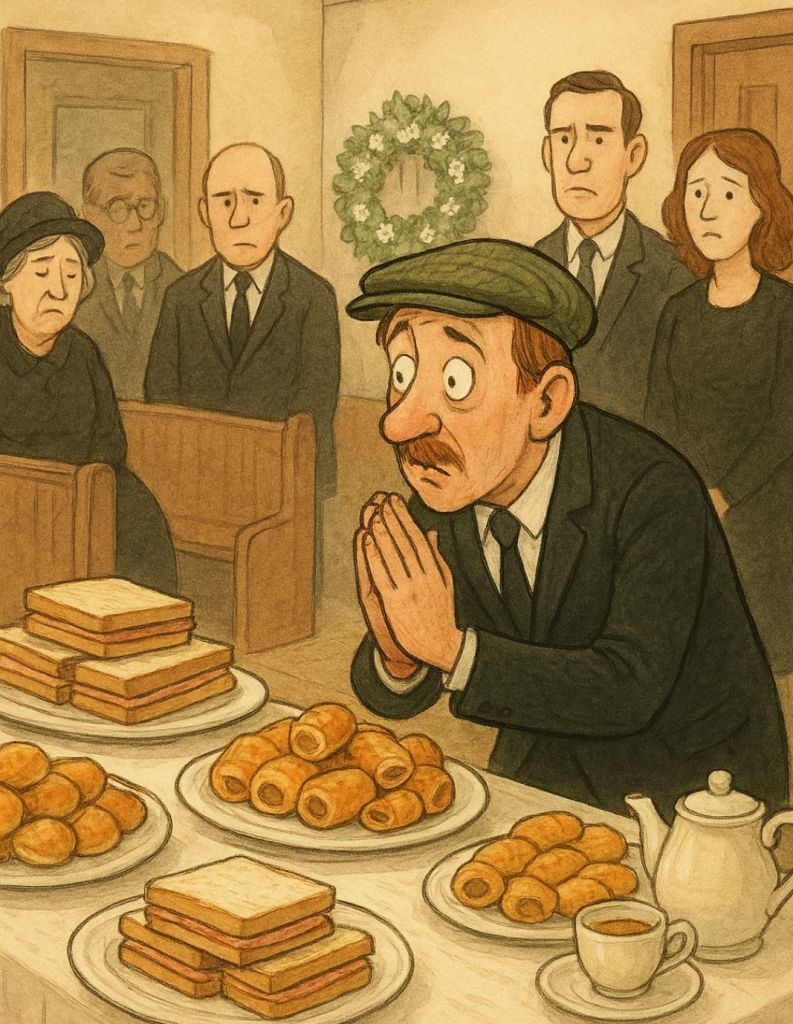
    Meet Irish Pat, who approaches the death notices like a socialite scanning the festival lineup. His sole criterion for attendance? A quick check of the catering arrangements.

    Pat seldom knows the deceased. His philosophy is simple and pragmatic: where there’s a hearse, there’s a ham sandwich. He arrives with calculated tardiness — just after the first hymn — wearing a tie that has attended more wakes than weddings. He lip-syncs the prayers with the vague timing of a buffering video, nodding solemnly through the “Our Father” while mentally planning his assault on the buffet.

    His greatest challenge is not grief but evasion. He becomes a master of stealth, melting behind pillars, shrinking behind oversized floral tributes, and studying memorial cards with theatrical intensity — all to avoid the dreaded question from a relative:

    “And how did you know our dear Uncle Seamus?”
    (He didn’t. He misread the name as Seán and was lured by the whispered promise of vol-au-vents.)

    When cornered for the obligatory condolences, Pat shifts into performance mode. He clasps hands with grave sincerity, heaves a sigh laden with unspoken memories, and delivers his signature line with Oscar-worthy conviction:

    “A terrible loss. A wonderful, wonderful person. Salt of the earth.”

    This heartfelt tribute is applied universally — to strangers, to a man he met once in a pub in 1983, or to a woman he’s fairly sure he saw at a bus stop.

    Then his true pilgrimage begins: the funeral reception. Here, his devotion is laid bare before the altar of the buffet table. With a plate piled high, he offers a quiet grace:

    “The Lord giveth… and may He bless the hands that made these sausage rolls.”

    Pat has never been seen to shed a tear during a eulogy, but he has been observed looking genuinely distraught at the sight of an empty gravy boat.

    Some call him an opportunist. Others insist he’s a cultural preservationist — ensuring no funeral pastry dies alone.

    But if you see Pat at your wake, take it as the highest compliment.
    It means you’ve officially been inscribed on the roll of honour:
    The Free Dinner List of the Dearly — and Deliciously — Departed.