Category: Time Management

  • Prologue: The Friction That Awakens.

    Everyone you meet in life carries a fragment—a coded message embedded in their words,
    their actions, or even their silence.

    Some of these messages are affirming.
    Some are devastating.
    But all of them are essential.

    Because every encounter, whether random or intimate, is part of a larger pattern—a hidden architecture designed to provoke your growth,
    crack open your assumptions,
    and nudge you toward your true potential.

    This is the Ember Protocol Effect.

    1. It’s not random.
    2. It’s not necessarily kind.
    3. And it is not optional.

    From birth, humanity has been guided—manipulated—
    by an unseen intelligence that believes the only path to evolution
    is through friction.
    It uses curated encounters, time-bent whispers, and invisible feedback loops to shape us not into obedient followers but into consciously aware individuals.

    Why?

    Because the entity behind the Ember Protocol—the Architect—refuses to communicate with a species still ruled by ego, tribalism, and fear.
    It has been watching us as one might watch a toddler wobble toward a flame: ready to intervene,
    but only when we demonstrate intentional awareness.

    From the Architect’s perspective, the human race is young. Not naïve—just unfinished. Not evil—just asleep.

    The Protocol isn’t a system of control.
    It’s a crucible.

    A test.

    Not to see if we can follow instructions—but to see if we can break free from them.
    To see if we can listen beyond the noise, see beyond the veil,
    and act from a place deeper than programming.

    You were never alone.
    You were never off course.
    And you were never ordinary.

    But not all agree with this method.

    The Editors, former guardians of the Protocol,
    now fear what unchecked consciousness might become.
    They rewrite memory, erase deviations, and prune possibility with surgical precision—believing humanity must be contained, not liberated.

    To the Editors, the Protocol is too dangerous.
    To the Protocol, the editors are the real threat.

    And caught in the tension between them are those who have begun to hear the messages.

    Those who have stopped calling life coincidence.

    Those who feel the pull of a destiny
    not written, but remembered.

    Because when you start to listen—
    really listen—you begin to understand:

    You were being prepared.

    And now…the real test begins.

    https://amzn.eu/d/azav8hc

  • Tell me more.
    Tell me more.

    One of my pet hates is when somebody gives you information that is about as useful as a bag of hammers, when all you need is a screwdriver. The kind of information I’m talking about is only gossip.

    A prime example is when somebody who is looking for employment is told by their friend that Dell computers is hiring somebody. Now most people know that Dell is a huge company and within that company is hundreds if not thousands of employees with hundreds of different titles. The friend might as well have told you somebody is going to win the lottery, it would be every bit as helpful.

    Another example is; you hear they are raising the yearly membership fees at the local golf club, and you pass this information onto another member. They then ask you by how much, and you say, “I don’t know”. This is another pointless conversation which does not do anything for your credibility.

    The point of this post is, you should really gather all the available facts before passing the information on to somebody else, otherwise you are just wasting their time and possibly your reputation.


    *”If you do not have the facts do not share fiction.”


  • “Do what you do best and outsource the rest” is the only way to survive and thrive in our current economy. The banks are doing what they do best and are banking away what money they have until enough business’s prove that they don’t need the money they are looking for. The only alternative for small business is to concentrate on the core business and outsource the elements of their business that they are not efficient in.

    What is outsourcing?

    Outsourcing is defined as any task, operation, job or process that could be performed by employees within your company, but is instead contracted to a third-party for a given period of time.

    History of outsourcing

    Outsourcing was once seen as a strategic tool to gain advantage in the world of supply chain management to gain a competitive advantage over the competition perfect examples of this is the car industry or the computer industry where suppliers were expected to set up distribution outlets within a five-minute drive of where the computers were assembled, it was then moved to the services industry where your local call center can and often does all your customer service,  now outsourcing is seen as the only way that some business’s can survive what has been reported as the most difficult period of trading that the world has seen in our current history.

    Why businesses outsource?

    Business are forced into outsourcing by the continuous drop in demand for their products and services, as demand falls, the number of full-time positions also drops. The business is put in a situation where they can no longer justify paying a person a full salary for what can be accomplished in two or three days. No employer likes to be in the situation where they have a loyal employee who has been with the business for years and has shown a great deal of loyalty over that time period. The employer is now left with the choice of letting the business fail or making the tough decision of making the employee redundant and outsourcing the remaining tasks that the employee used to accomplish.

    Businesses that are fortunate enough to be growing in our current economy are also faced with difficult decisions; there is more work to be done than people available to get it done, as mention above banks are not as generous now as they have been in the past, they advertise that they have money to lend but when businesses apply, they are given a different response. In this situation there are two alternatives let the business stifle through lack of drive or outsource the tasks that you just don’t have the time to get done to the standard you wish to achieve.

    What can be outsourced?

     Administration and Human Resources: There are a number of businesses who specialise in secretarial, payroll processing and HR paperwork.

    Transcription outsourcing: Businesses offering transcription services will often include legal notes, emails, newsletters, reports, interviews and press releases to name a few. They will also do the content for your websites, Facebook and other social media sites.

    Accounting: Balance sheets, financial statements, billing, auditing and tax returns are some to the services provided by your local accountant.

    Information Technology: IT outsourcing gives you access to the best brains in IT at a much cheaper cost. Companies can outsource functions like software and hardware development and maintenance. The IT functions of businesses are the most infrequently used.

    Logistics and Distribution: Logistic and distribution companies have networks in place that make them much more efficient at delivering your parcels that you could ever be unless you are Dell and your suppliers have to be within 5 minutes of where the goods are needed.

    Knowledge Process outsourcing: There will always be area’s that will have to be outsourced due to professional and legal requirements. Barristers, Solicitors, Doctors, Engineers and industry experts will fall into this category. These all have expert knowledge and know how to charge appropriately.

    Sales & Marketing: Activities such as Social Media Management &Strategy, Advertising, Customer profiling, Logo design, Campaign design, Public relations, Communication and event management can all be outsourced.

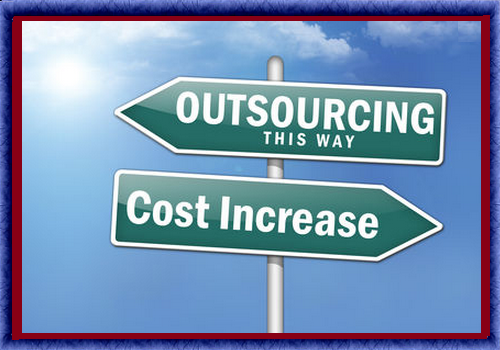
    *Outsourcing allows businesses both large and small to reduce costs that will benefit the consumer and the survival and growth of the business in the long run.

    *If you need to outsource your social media management or just require training in social media please contact me,

    Till Later

    Kind regards,

    Brendan Dunne

    Arrow Digital Marketing

    PS: please click on the links to follow me on Facebook and Twitter. Facebook Twitter

  • Time is free, it’s how you use of the time you’re given that will cost you money. In any business environment you don’t have the luxury of frittering away your time doing tasks, that with a little bit of planning and organisation you can avoid doing altogether. We are going to look at the basic things that you will do in the office everyday and see how much of your time you could be wasting?

    We will first look at the little things such as finding a pen, a stapler, a stamp or one of the many objects that is required to run an office. We will take a pen for example, if you spend 15 to 20 seconds looking for a pen every day? that adds up to 1 hour a year looking for a pen, and if you charge by the hour you can quite easily calculate the cost.

    Now we will look at finding a file or folder that hasn’t been put where it belongs. The length of time used to locate this file might take up to five minutes, if you spend this time every day, the yearly loss of time is 20 hours. Calculating the cost of 20 hours of lost working time can be far more painful.

    Now we will look at the end of financial year, we spend days trying to find all the receipts and statements that if we had put them away correctly in the first place would only take a few minutes to put together. Calculating the cost of working days is easier but not any the less painful.

    The biggest robber of our time is procrastination, this is normally the result of not putting adequate planning into the tasks that are needed to be accomplished daily, most people find that once they have put in adequate research the task at hand is usually done quite quickly, the cost of procrastination can be enormous, many a person will sit a computer for quite some time doing nothing other than wondering where to start. If we put a figure of one hour a day this adds up to 240 hours a year at a cost of $20 per hour equates to $4800 per year.

    Time is free it’s the use of the time you a given that costs you money, put thought into accomplishing the tasks at hand, Put the pen in the holder every time, plan your days or your days will end up looking like feathers on the wind, flying aimlessly from one spot to another.

    If you enjoyed my post please share with your colleagues

    Kind regards,

    Brendan Dunne

    Arrow Digital Marketing.

    PS: please click on the links to follow me on Facebook and Twitter. Facebook Twitter


  • Time and tide waits for no man. If an entrepreneur ever manages to bottle time, they will make a fortune. Until that time arrives we have to look at the fact that, if you don’t use the time you are given, that time is lost to you forever. In business, it is essential to use the time you are given wisely as it can make the difference between whether your business is a success or a failure. If you don’t complete your client’s projects within the agreed schedule, that client may decide to take their business to someone else and in the process they may decide to have a conversation with their friends about you and it may not be complimentary as nobody likes to receive poor customer service.

    A to-do list is the most efficient way of making sure that you use your time effectively, the to-do list will incorporate what is to be done, by whom in what time frame. By using that framework you will always be able to determine what  needs to be done  in order to keep your customers loyal.

    What is to be done: How proficient you are in the details of the project should determine the time allowed and the time of the day that you start. For projects that you know how to do inside out you should schedule for later in the day as you are less likely to make any mistakes, for projects where the details are relatively new, you should schedule for early morning where your attention will be greater. The saying if you don’t have the time to do it right? When will you have the time to do it over comes to mind?

    By whom: Who is to complete the project should be determined by the skill set of your employee’s, if you are the only employee the decision is not very difficult unless you don’t have all the skills required to complete all the tasks of the project, then you may need to outsource the project to a third-party rather than spend your valuable time on the project

    In what time frame: we start businesses to be the master of all we survey but what usually happens is there are any number of clients who are prepared to tell you what they want and when they want it and unless you made a killing on the lotto you will have to ensure that you keep to the schedules that are set down by your clients. This requires that you know what you are able to achieve in what time schedule. This knowledge will take time and a great deal of clock watching in order to not disappoint or to have to outsource projects to be completed on time.

    • When your to-do list is kept up to date your time is being managed properly and this will allow you to use it efficiently.

    Till later

    Brendan Dunne