“Care about what other people think, and you will always be their prisoner.” Lao Tsu. If you allow other people’s opinions to dictate your behaviour, then you will end up living someone else’s life. Please enjoy reading Ben’s story of how he experienced and overcame the effects of paying too much attention to other people’s opinions.
Ben’s story
In a quiet town nestled between rolling hills, there lived a young man named Ben. He was known for his kindness, his gentle nature, and his willingness to help anyone in need. But beneath his pleasant demeanour, Ben was trapped, though not in any physical sense. He was a prisoner of his own making, bound by the invisible chains of other people’s opinions.
From a young age, Ben learned that pleasing others brought praise, and he thrived on it. In school, he always did what was expected of him, never straying from the path that others had laid out. He wore the clothes his friends deemed fashionable, listened to the music that was popular, and even pursued a career that his parents believed was prestigious—becoming a lawyer.
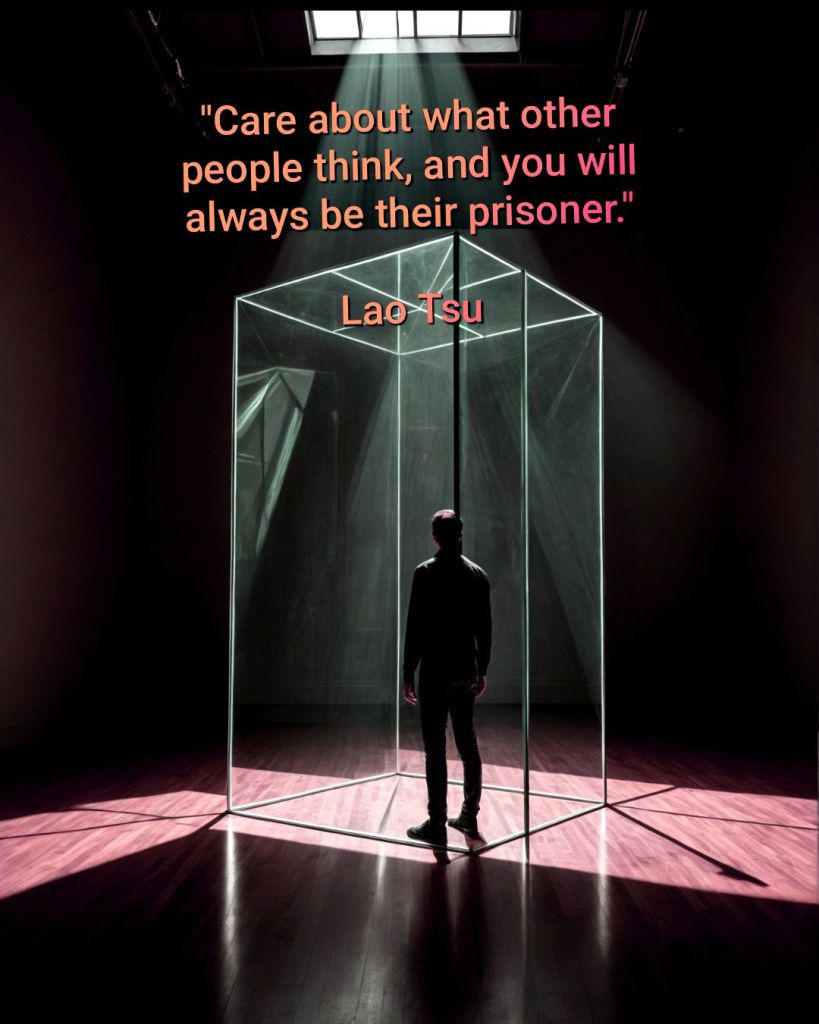
Though Ben was successful, he was never happy. The more he tried to please everyone around him, the more he felt the walls closing in. Every decision, no matter how small, was weighed against the potential judgment of others. Should he speak up in a meeting, even if his idea wasn’t perfect? Should he wear that bright shirt he loved, even if his friends thought it was too bold? Should he consider moving to the city for a job he was passionate about, despite his family’s wishes for him to stay close to home?
One day, Ben received a letter from an old friend, someone who had moved away years ago to travel the world. The letter was filled with stories of adventure, mistakes made, and lessons learned. It spoke of freedom, of living for oneself, and of the joy found in embracing one’s true desires. But what struck Ben most was a simple sentence at the end of the letter: “Care about what other people think, and you will always be their prisoner.”
The words echoed in his mind for days. He realized with startling clarity that his entire life had been dictated by the fear of what others might think. He had imprisoned himself in a life that wasn’t truly his. The realisation was both terrifying and liberating.

Ben decided it was time to break free. He started small, allowing himself to make choices without considering how they would be perceived. He wore the bright shirt to a work event and received compliments instead of criticism. He shared his ideas in meetings, and to his surprise, they were met with enthusiasm. These small victories gave him the courage to make bigger changes.
The biggest change came when Ben decided to leave his well-paying, secure job and move to the city. He wanted to pursue a career in art, something he had always been passionate about but had never considered seriously. His family was shocked, his colleagues puzzled, but Ben was resolute. For the first time in his life, he was living for himself.
Life in the city was not easy at first. The art world was competitive, and Ben faced rejection after rejection. But he persevered, driven not by the need for approval but by a deep-seated desire to create. Slowly, his work began to gain recognition. He held his first solo exhibition, and the response was overwhelming. People connected with his art in ways he had never imagined, and for the first time, he felt truly seen—not as the person others wanted him to be, but as who he really was.
Years later, Ben returned to his hometown for a visit. The town was just as he had left it, but he was not the same. The chains that had once bound him were gone. He was no longer a prisoner of other people’s expectations, but a man who had found freedom in living his truth.
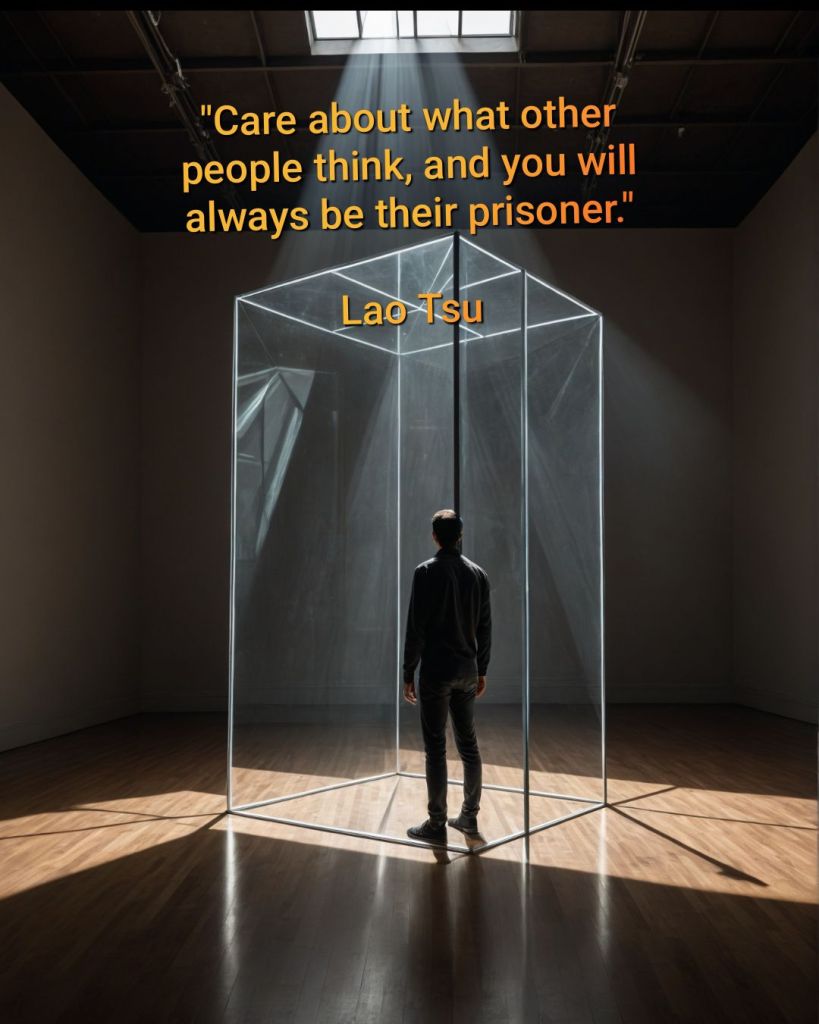
As he walked through the familiar streets, he met people who remembered him as the quiet, compliant boy they had known. They marvelled at the change in him, at the confidence and joy that radiated from him. Some even asked him how he had done it, how he had found the courage to break free.
Ben smiled and simply said, “I stopped caring what others thought, and I started caring about what I thought. And in doing so, I found my freedom.”
And with that, Ben continued on his path, his heart light, his spirit unchained, and his life his own.
