Category: self-discovery

  • That’s right, I’m changing how I interpret my thoughts.

    There comes a point in life when you realise that something happened to you that you never deserved.

    Someone hurt you.

    Someone betrayed you.

    Someone underestimated you.

    Someone walked away when you needed them most.

    Perhaps circumstances dealt you with a life you would never have chosen. Perhaps you grew up believing that life was something that happened to you rather than something you could participate in shaping.

    And for a while, the story of what happened may have become the story of who you were.

    I was abandoned.

    I was rejected.

    I was bullied.

    I was never given a chance.

    I always get treated this way.

    People like me don’t get opportunities.

    There may be truth in every one of those statements.

    But there is a dangerous difference between saying “this happened to me” and saying, “This is who I am.“

    The first describes your history.

    The second can become your identity.

    Identities are remarkably difficult prisons to escape from because eventually, we stop noticing the bars.

    But perhaps one of the most powerful things you can ever say is:

    I’m not a victim anymore.

    Not because nothing happened.

    Not because it didn’t hurt.

    Not because the people who hurt you suddenly deserve forgiveness.

    And certainly not because you have decided that everything was somehow your fault.

    You say it because you have decided that what happened to you no longer gets to have the final word about what happens next.

    Imagine someone who was bullied throughout school.

    For years, they carry the belief that there must be something fundamentally wrong with them.

    They avoid social situations. They don’t put themselves forward at work. They assume people are judging them. When someone doesn’t reply to a message, they immediately think they’ve done something wrong.

    The bullying ended years ago.

    But the bully is still living inside their interpretation of the world.

    Then, one day, they begin to notice something.

    The person insulting them at fifteen is no longer standing in front of them.

    Yet they are still allowing that person’s opinion to determine their behaviour at thirty.

    That realisation doesn’t erase the past.

    But it creates a choice.

    Perhaps they start speaking in meetings.

    Perhaps they join a club.

    Perhaps they make a new friend without assuming rejection is inevitable.

    Perhaps they finally apply for the job they have repeatedly convinced themselves they aren’t good enough for.

    Nothing magical has happened.

    They have simply stopped allowing an old wound to make every new decision.

    That is what reclaiming your life can look like.

    It isn’t always dramatic.

    Sometimes it looks like raising your hand.

    Making the phone call.

    Walking through the door.

    Saying no.

    Saying yes.

    Trying again.

    Or consider someone whose relationship ended badly.

    They were cheated on, lied to, or emotionally neglected.

    Understandably, they become cautious.

    But caution can slowly become a philosophy.

    “Nobody can be trusted.”

    So every new relationship is examined through the evidence of the previous one.

    A delayed message becomes suspicious.

    A change in tone becomes threatening.

    Someone needing time alone becomes proof that they are losing interest.

    The new person is being judged for the behaviour of someone they have never met.

    Again, the past isn’t imaginary.

    The betrayal really happened.

    But there is a difference between learning from the past and living inside it.

    Learning says:

    “I know what red flags look like now.”

    Victimhood says:

    “Everyone will eventually hurt me.”

    One gives you wisdom.

    The other gives your past control over your future.

    This doesn’t mean you should pretend you had more control than you actually did.

    There are things that happen in life that are profoundly unfair.

    People lose jobs they desperately needed.

    Children grow up in homes they didn’t choose.

    People become ill.

    Families break apart.

    Friends betray one another.

    Opportunities disappear.

    Sometimes another person’s cruelty changes the direction of your life.

    There is no inspirational slogan capable of making that fair.

    And telling someone who has suffered that they simply need to “change their mindset” can be another form of cruelty.

    You don’t always choose what happens.

    But there is often a space, however small, between what happened and what you do next.

    That space matters.

    You may not be able to change the fact that your employer treated you unfairly.

    But you might be able to update your CV.

    You may not be able to make your former partner apologise.

    But you can decide whether you will spend the next ten years waiting for an apology.

    You may not be able to change the childhood you experienced.

    But you can decide what kind of adult you want to become.

    You may not be able to make someone recognise your worth.

    But you can stop using their inability to see it as evidence that you don’t have any.

    That is the shift.

    Not from “nothing bad happened to me” to “everything is my fault.”

    But from:

    “My past determines me.”

    to:

    “My past informs me, but it does not have to define me.”

    There is enormous power in taking responsibility for your future without taking full responsibility for everything that happened to you.

    Those are not the same thing.

    If someone breaks your heart, you didn’t necessarily cause the heartbreak.

    But healing is still your responsibility.

    If someone treated you badly, you didn’t necessarily deserve it.

    But deciding what boundaries you have in the future is your responsibility.

    If someone convinced you that you weren’t good enough, their words weren’t necessarily true.

    But rebuilding your relationship with yourself may still be your work.

    This is not blame.

    It’s agency.

    And agency is one of the first things we lose when we begin seeing ourselves exclusively through the lens of what has been done to us.

    Perhaps you’ve spent years saying:

    “I can’t because of what happened.”

    Try asking a different question.

    “What can I do now, despite what happened?”

    That question doesn’t deny the obstacle.

    It simply refuses to let the obstacle become the entire landscape.

    Maybe you were made redundant at fifty-five.

    You can’t undo the redundancy.

    But perhaps you can learn something new, contact people you haven’t spoken to in years, start a small business, retrain, volunteer, or discover that the career you thought you needed was never actually the life you wanted.

    Maybe you were rejected for an opportunity.

    You can’t change the decision.

    But you can apply somewhere else.

    Maybe someone underestimated you.

    You don’t need to spend the rest of your life proving them wrong.

    You can simply become the person you know you are capable of becoming.

    That is freedom of a different kind.

    And perhaps the most surprising part is that becoming free doesn’t always feel like triumph.

    Sometimes, it feels like grief.

    Because when you stop blaming your past for everything, you may have to confront something uncomfortable:

    You now have choices.

    Not unlimited choices.

    Not perfect choices.

    Not choices unaffected by circumstance.

    But choices.

    And choices bring responsibility.

    You can no longer spend quite as much time waiting for someone else to rescue the life you have been given.

    You have to participate in it.

    You have to decide what stays.

    What goes.

    What matters.

    What you will tolerate.

    What you will pursue.

    Who you will become.

    That can be frightening.

    But it is also extraordinarily hopeful.

    Because if you have some influence over what happens next, then your story isn’t finished.

    I’m not a victim anymore doesn’t mean:

    “I was never hurt.”

    It means:

    “I refuse to build my entire identity around the hurt.”

    It doesn’t mean:

    “They were right to hurt me.”

    It means:

    “They don’t get to decide what I become because they hurt me.”

    It doesn’t mean:

    “My suffering didn’t matter.”

    It means:

    “My suffering will not be the only thing that matters.”

    And it doesn’t mean:

    “I control everything that happens to me.”

    It means:

    “I will pay attention to what remains within my control.”

    Sometimes, that might be a lot.

    Sometimes, it might be very little.

    But even a small amount of agency is worth protecting.

    Because a life doesn’t necessarily change when the past disappears.

    Sometimes, it changes when you stop asking the past for permission to begin again.

    You don’t need to become a completely different person tomorrow.

    You don’t need a five-year plan.

    You don’t need to suddenly feel confident.

    Start smaller.

    Make one decision that belongs to you.

    Set one boundary.

    Take one risk.

    Have one honest conversation.

    Apply for one opportunity.

    Walk away from one thing that continually diminishes you.

    Return to one thing you abandoned because someone convinced you that you weren’t capable.

    Let yourself imagine a future that isn’t simply a reaction to your past.

    Then do something, however small, that moves towards it.

    Because healing isn’t always a dramatic transformation.

    Sometimes, it’s the quiet accumulation of choices that gradually teach you:

    I have more influence over my life than I thought.

    And eventually you look back and realise something extraordinary.

    The person who hurt you is still part of your history.

    The experience is still part of your story.

    The scars may still exist.

    But they are no longer holding the pen.

    You are.

    And perhaps that is what it really means to say:

    I’m not a victim anymore.

    Not that life suddenly became fair.

    Not that the past stopped hurting.

    But that you finally decided your future deserved your voice too.
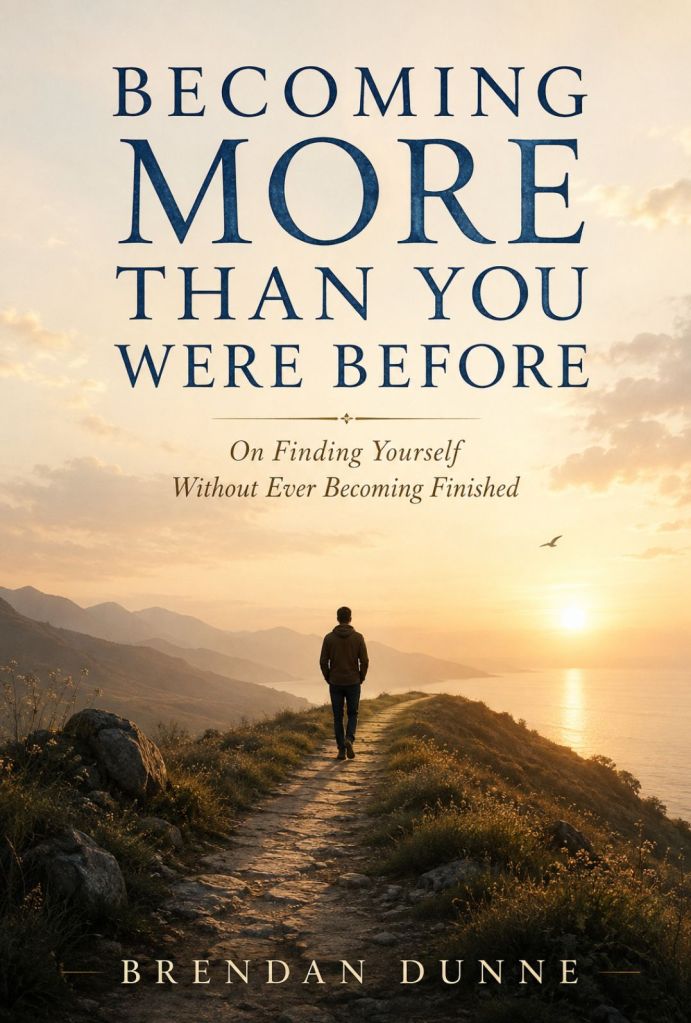
  • If you don’t know what you want to do with your life, don’t panic.

    Life will keep happening—beautifully, messily, unexpectedly.

    And clarity?

    It rarely arrives as a thunderbolt from the sky.

    More often, it arrives quietly.

    *Through action.

    *Through mistakes. (Unfortunately)

    *Through conversations.

    *Through trying something and discovering you love it—or discovering that you absolutely don’t.

    *Through paying attention to the things that energise you, the things that drain you, and the questions that refuse to go away.

    But here’s the part we sometimes forget:

    You have to participate.

    You don’t need the whole map.

    You need the next honest step.

    Take the class.

    Send the message.

    Try the job.

    Leave the thing that is quietly shrinking you.

    Volunteer.

    Create something.

    Rest when you need to.

    Ask better questions.

    Then listen to the answer that keeps returning.

    You are allowed to be a beginner.

    You are allowed to change your mind.

    You are allowed to discover that the person you thought you were supposed to become isn’t the person you actually want to be.

    You are even allowed to want something different from what everyone expected of you.

    Because your life isn’t a test you are supposed to complete according to someone else’s marking scheme.

    You are living it.

    And sometimes the only way to discover where you are going is to start moving.

    You are not lost.

    You are exploring.

    You are not late.

    You are becoming.

    One day, you may look back and realise that the path wasn’t sitting there waiting for you to discover it.

    You made it.

    One brave, ordinary choice at a time.

    The conversation you finally started.

    The opportunity you finally accepted.

    The boundary you finally set.

    The book you finally wrote.

    The place you finally left.

    The thing you finally tried.

    None of those moments seemed like the answer at the time.

    They were simply the next step.

    And sometimes that’s how a life is built.

    Not through one enormous decision that suddenly makes everything clear, but through hundreds of small decisions that gradually reveal who you are.

    So don’t wait for certainty to begin.

    Begin—and let certainty catch up.

    Participate in your own becoming.

    Your life is not behind schedule.

    You’re still writing it. ✨

  • Your Mind Is the Greatest Travel Agent You Will Ever Use. (And the reason you keep booking non-refundable trips to yesterday’s regrets).

    —but a notoriously unreliable guide.

    It books trips without asking your permission, upgrades your seat to first-class anxiety without your consent, and rarely reads the itinerary you actually wanted.

    The metaphor is powerful, but it contains a curious flaw.

    We talk about the mind as though it were a service we employ.

    In reality, it’s both the travel agent and the passenger.

    This may explain why refunds are so difficult to obtain.

    Without a passport, a penny, or a single ounce of physical energy, your mind can send you almost anywhere.

    You can revisit the kitchen of your childhood home in a nanosecond.

    Rehearse a job interview so vividly that your palms begin to sweat.

    Build an entire fictional galaxy while sitting in a waiting room.

    Memory becomes a rerun.

    Curiosity becomes a road trip.

    Imagination becomes a wormhole.

    And the mind doesn’t merely book the journey.

    It helps determine what the journey means.

    The same breakup can become bitter regret, hard-won gratitude, quiet wisdom, or unexpected inspiration, depending on how the mind chooses to frame the experience.

    That is an extraordinary ability.

    But it comes with a catch.

    The agent has a dark side

    Travel agents are supposed to get you where you want to go.

    Your mind isn’t always that helpful.

    It is a creature of habit. It often doesn’t send you somewhere because the destination is good for you.

    It sends you there because you’ve been there before.

    So it books journeys to:

    Yesterday’s mistakes; replayed in glorious 4K.

    Tomorrow’s disasters, complete with conversations that haven’t happened and consequences that may never arrive.

    Arguments from years ago, where you finally think of the perfect response—usually several hours after everyone else has gone home.

    But anxiety isn’t the only destination your mind can book.

    It can also sell you the honeymoon.

    An all-inclusive nostalgia package to a golden past that probably wasn’t quite as golden as you remember.

    It’s a fantasy future where you finally impress the person who doubted you.

    A heroic comeback in which the critic is silenced, the old wound is healed, and everyone finally realises how wrong they were about you.

    These journeys can feel wonderful.

    And that’s precisely why they can be so seductive.

    Whether the destination is terrifying or beautiful, the ticket can carry the same hidden cost:

    your presence in the here and now.

    But who exactly is the traveller?

    This is where the metaphor becomes more complicated.

    If your mind is the travel agent, and you are the passenger, who is the person deciding whether to board?

    The answer isn’t as simple as we’d like.

    There isn’t necessarily some separate little “you” sitting inside your head, wrestling with your mind like an unruly employee.

    The mind is doing what minds do.

    It predicts.

    It remembers.

    It rehearses.

    It compares.

    It worries.

    It imagines.

    And much of this happens automatically.

    Anxiety doesn’t necessarily wake up one morning and decide to ruin your day.

    It simply books the 6 a.m. flight to Worry because it has booked that flight a thousand times before.

    So, how do we change the itinerary?

    Not by trying to control every thought.

    That would be exhausting.

    And ironically, it would give your thoughts even more attention.

    The more useful skill is simply learning to notice the departure gate.

    Before you board, pause.

    Ask yourself:

    Did I choose this destination, or did a habit bring me here?

    You can visit a past regret without taking up permanent residence.

    You can look at an uncertain future without putting down a deposit on disaster.

    You can remember yesterday without moving back there.

    You can imagine tomorrow without abandoning today.

    The distinction is surprisingly simple:

    A visit is not a permanent move.

    And sometimes, escape is necessary

    There is an important qualification.

    For someone experiencing profound grief, physical pain, or a genuinely unsafe present, the mind’s ability to escape isn’t necessarily a flaw.

    Sometimes, imagination is a lifeboat.

    Sometimes, memory provides somewhere to rest when reality is unbearable.

    The goal isn’t to chain yourself permanently to the present as though “now” is always a peaceful garden.

    It isn’t.

    The case for it

    The goal is something more modest:

    To make returning a choice rather than a punishment.

    The real qualification

    Perhaps the original statement needs one small amendment:

    Your mind is the greatest travel agent you will ever use—but you must learn to become your own travel consultant.

    Don’t let the agent make every booking while you’re distracted.

    When it offers you a non-refundable package to yesterday’s ghosts or tomorrow’s catastrophes, look at the ticket.

    And ask yourself the consultant’s first question: Is this a reconnaissance mission or a vacation?
    Am I here to gather a useful insight and leave, or am I checking in for an indefinite stay?

    You don’t have to destroy the itinerary.

    You don’t have to argue with it.

    You don’t even have to get angry about the destination.

    You can simply notice it.

    Smile at its creativity.

    Acknowledge its familiarity.

    And say:

    “That’s an interesting place to visit. But I don’t need to live there.”

    The Travel Consultant’s Rules:

    · Check the departure gate – notice the thought before you board it.
    · Downgrade the ticket – don’t pay emotional priority fare for a brief visit.
    · Visit, but don’t move in – extract the lesson, leave the luggage.
    · The present is the only lounge with a working departure board.

    Then come back.

    Not because the present is always comfortable.

    Not because the past has nothing to teach you.

    Not because the future doesn’t matter.

    But because the present is the only departure lounge from which any real journey can begin.

    Over to you: Where has your mind booked a trip to this week—and did you choose the seat, or did habit choose it for you? Let me know in the comments.

  • The Philosophy of Open Questions

    We spend an extraordinary amount of our lives trying to understand things.

    Why did that happen?

    Why did they say that?

    What am I supposed to do?

    Where is my life going?

    What does it all mean?

    We treat understanding as though it is the final destination. As if, once we’ve figured everything out, we can finally relax.

    But what if that’s the wrong way to look at some of life?

    Let me be clear from the start: human beings live with a necessary tension.

    There are moments when we need answers and moments when we need openness.

    If a plane is losing altitude, we need to act. If a surgeon is operating, uncertainty doesn’t remove the need for the best decision possible. Some questions are practical problems, and practical problems demand practical answers.

    But most of the questions that keep us awake at night aren’t engineering problems or medical emergencies.

    They’re human mysteries.

    And for those, the relentless demand for a neat explanation can become a cage.

    What if nothing existential needs to be fully understood?

    Not every experience needs a neat explanation.

    Not every person needs to make sense.

    Not every mistake needs to reveal its grand lesson.

    Not every unanswered question is a problem waiting to be solved.

    Sometimes something happens, and we simply don’t know why.

    Sometimes, we make the best decision we can with the information we have, only to discover later that life had other plans.

    Sometimes we never discover the reason at all.

    And perhaps, for these particular questions, that’s perfectly okay.

    The Freedom of Not Knowing

    There is a strange freedom in admitting:

    “I don’t know.”

    Not as an intellectual failure, but as an honest starting point.

    It leaves room for curiosity.

    It leaves room for change.

    It leaves room for the possibility that our current understanding isn’t the final version.

    The danger isn’t not knowing.

    The danger is becoming so attached to an explanation that we stop looking.

    We create stories about ourselves.

    Stories about other people.

    Stories about how the world works.

    Then we defend those stories as though they were facts.

    But our understanding of reality is always incomplete.

    We’re all walking around with partial information, interpreting events through our experiences, expectations and assumptions.

    We are, in many ways, unreliable narrators trying to make sense of a story while we’re still living it.

    And sometimes the story we construct isn’t an explanation.

    It’s simply a way of making uncertainty feel uncomfortable enough to disappear.

    Knowing When Not to Know

    Perhaps wisdom isn’t knowing everything.

    Perhaps it’s knowing which questions require an answer and which require us to become comfortable with the absence of one.

    We must act decisively in the cockpit or the clinic.

    But in the quiet hours of our lives, we can afford humility.

    To mistake a human heart for a broken engine is to treat a mystery as a malfunction.

    People aren’t always problems to be fixed.

    Experiences aren’t always puzzles to be solved.

    And life doesn’t necessarily owe us an explanation for everything that happens to us.

    Sometimes, we need an answer.

    Sometimes, we need acceptance.

    And sometimes we need to recognise the difference.

    Perhaps the Question Is Enough

    I’ve come to think that curiosity doesn’t always need to end in certainty.

    You can wonder without concluding.

    You can explore without arriving.

    You can change your mind without having failed.

    You can live with an unanswered question without treating it as an unfinished life.

    Wisdom may not be the accumulation of answers.

    It may be learning which answers matter—and becoming peaceful enough not to invent the ones we don’t have.

    The world will keep turning whether we understand what set it in motion or not.

    The sun will rise.

    People will surprise us.

    Plans will change.

    We will make mistakes.

    We will fall in love.

    We will lose things.

    We will discover things.

    And through it all, there will be questions we answer and questions we don’t.

    That’s life.

    Maybe we’re not here to solve the mystery.

    Maybe we’re here to experience it.

    To ask better questions.

    To remain curious.

    To laugh occasionally at our certainty.

    To change our minds when new understanding arrives.

    And when it doesn’t?

    That’s okay too.

    Because an open question isn’t an empty space.

    It’s an invitation.

    An invitation to keep looking.

    To remain curious.

    To leave room for possibilities we haven’t considered.

    And perhaps most importantly, to stop confusing the absence of an answer with the absence of meaning.

    You don’t need to understand everything to appreciate something.

    You don’t need to explain everything to experience it.

    And you don’t need to know where the story is going to enjoy being in it.

    The question can remain open.

    You can keep moving.

    And the world can keep revolving—even if none of us ever truly understands what set it all in motion to begin with.

    Closure is for when closure is possible.

    For everything else?

    That’s okay.

  • I created this post for my daughters, but please, share it with your daughters, too.

    You Are Beautiful When You Feel Beautiful.

    Beauty has very little to do with what you see in the mirror.

    There is something I hope my daughters understand as they move through life.

    You will probably spend far too much time wondering whether you look beautiful.

    You’ll look in the mirror and notice the things you don’t like.

    A little extra weight.

    A tired face.

    A spot that appeared at precisely the wrong moment.

    Hair that refuses to cooperate.

    A photograph where you think everyone else looks better than you.

    And because we live in a world that has become remarkably good at convincing us that appearance is everything, you may sometimes believe that feeling beautiful requires looking beautiful.

    It doesn’t.

    In fact, the two things are almost completely different.

    Feeling beautiful is a state of mind.

    You can wake up in the morning, put on an old pair of clothes, have messy hair, no makeup, and feel absolutely wonderful.

    You can laugh until your stomach hurts.

    You can dance badly in the kitchen.

    You can walk along the beach with the wind blowing through your hair.

    You can accomplish something you thought you couldn’t.

    You can help someone who needs you.

    You can sit with people who make you feel completely comfortable being yourself.

    And suddenly, without changing a single thing about your appearance, you feel beautiful.

    That’s because beauty isn’t always something you look like.

    Sometimes, it’s something you feel like.

    And I think that’s one of the great secrets of growing older.

    The more comfortable you become with yourself, the less interested you become in constantly measuring yourself against everyone else.

    You begin to realise that your face was never the problem.

    Your body was never the problem.

    The photograph was never the problem.

    The problem was believing that your worth could somehow be measured by them.

    There will always be someone younger.

    Someone thinner.

    Someone taller.

    Someone with clearer skin.

    Someone with different features.

    Someone who photographs better.

    Someone whose life appears more perfect on Instagram.

    If you make beauty a competition, you have entered a competition you can never win.

    Because there will always be someone who appears to have something you don’t.

    But there is something nobody else can compete with.

    Being completely, unapologetically yourself.

    Your kindness.

    Your humour.

    Your intelligence.

    Your courage.

    Your curiosity.

    The way you make people feel.

    The way you laugh.

    The way you love.

    The things you believe in.

    The mistakes you’ve survived.

    The experiences that have shaped you.

    The person you are becoming.

    Those things don’t appear in a mirror.

    And yet they are the things that make you beautiful.

    So, my girls, don’t spend your lives trying to look beautiful.

    Spend your lives doing things that make you feel beautiful.

    Surround yourself with people who make you laugh.

    Go places that make you feel alive.

    Learn things that make you curious.

    Do things that scare you.

    Be kind when you don’t have to be.

    Stand up for yourself when you need to.

    Fall in love.

    Have adventures.

    Make mistakes.

    Change your mind.

    Grow.

    And occasionally do absolutely nothing and enjoy it.

    Because one day you’ll look back and realise something that took me many years to understand.

    The best version of you was never the one who looked the best.

    It was the one who felt most alive.

    And perhaps that is what beauty really is.

    Not a face.

    Not a body.

    Not a number on a scale.

    Not a photograph.

    Not somebody else’s opinion.

    Just the quiet feeling that, for this moment, at least, you are completely comfortable being you.

    And when you feel that way, you don’t need anyone else to tell you that you’re beautiful.

    You already know.