Category: Positive

  • Introduction

    There is a particular kind of loneliness that comes from asking the universe for answers and hearing nothing back.

    It’s not the loneliness of empty rooms or silent phones. It’s the loneliness of standing in front of a mirror, having done everything you were told—checked the horoscope, consulted the cards, paid the psychic, waited for the sign—and realizing that no one is coming to tell you what comes next.

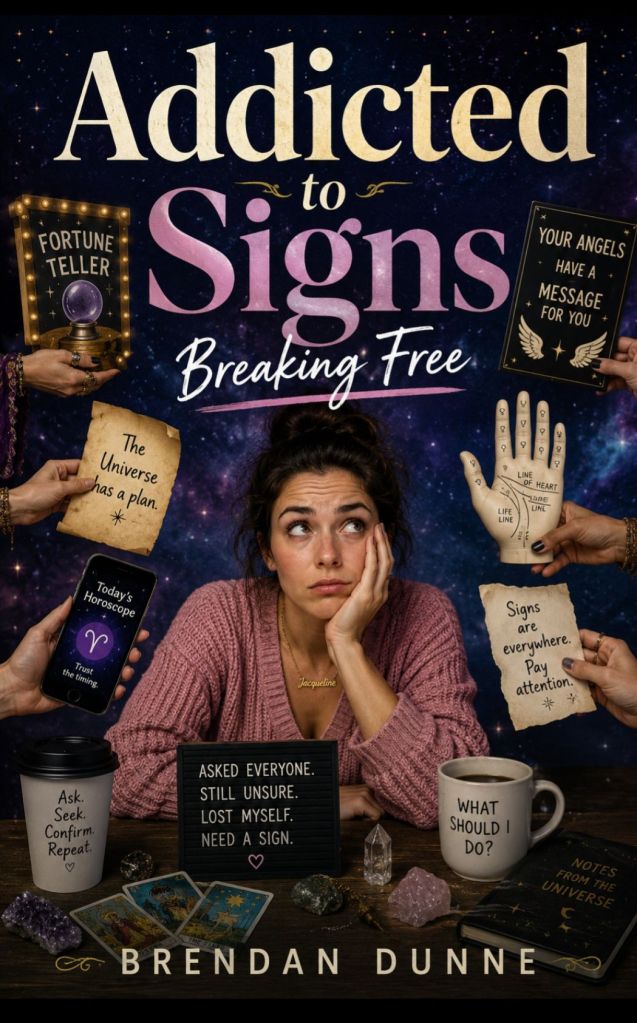
    This book is for anyone who has ever googled. “Am I happy yet?” at 2 a.m.

    It’s for the people who have rearranged their furniture because someone said having your bed facing north was bad for your health.

    I wrote Addicted to Signs because I believe that escapism is not shallow when the real world feels heavy. I believe that laughter and tears can live in the same sentence. I believe that a story about a woman who breaks three engagements because of a sycamore tree can be both absurd and heartbreaking—and that readers deserve both.

    Jacqueline Prescott is not me. But she is everyone I have known who has ever outsourced their agency to a system, a sign, or a stranger.

    This is not a self-help book disguised as a novel. I have no interest in lecturing anyone about what to believe. That’s their perogative.

    Addicted to Signs is a work of fiction. The psychics are fictional (though the techniques they use are real). The sycamore tree is fictional (though there is one in my neighbourhood that I now cannot look at without smiling). The characters are invented, but their struggles are very real.

    If you have ever asked the universe, “What now?” and hated the silence that followed—this book is for you.

    It will be released in the near future.

    I hope you enjoy reading the story as much as I enjoyed creating it.

    Brendan Dunne

  • You notice it in the small things.

    The invitations that go to everyone else.

    The focused attention they give others, while your words land on distracted nods.
    The support they offer freely—except when it’s you who needs it.

    At first, it feels like a quiet ache. Then, it becomes unmistakable.

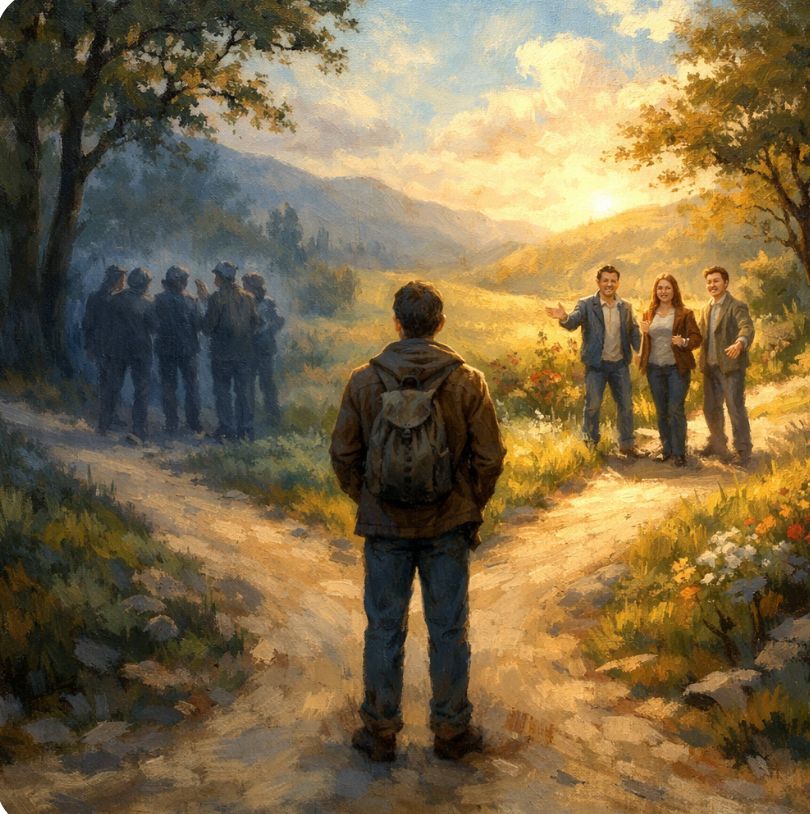
    You are not being treated like a friend.

    That realisation isn’t paranoia or neediness. It’s emotional intelligence doing its job. It’s self-respect raising its hand and saying, “I see the difference—and it matters.”

    Accepting that someone is not your friend is not a failure.
    It is a boundary.

    It is choosing to see the relationship as it is—perhaps an acquaintance, a situational connection, or a bond that has quietly expired—rather than what you hoped it might become. That acceptance isn’t a loss. In time, it’s a gain.

    Here’s what you get back:

    • Your energy. No more mental gymnastics explaining their absence or strategising how to earn what should have been mutual.
    • Clarity. When you stop pouring into one-sided relationships, you create space. And that space attracts people whose actions match their words.
    • Your worth. By refusing crumbs, you quietly teach yourself—and others—how you expect to be treated. You become a guardian of your own peace.

    There is no real downside to releasing a hollow connection.
    The brief sting of loneliness is far kinder than the slow drain of a friendship that only exists in name.

    Let it make room.

    Room for the people who call without prompting.
    Who remembers.
    Who celebrates you.
    Who shows up without needing reminders.

    Trust actions over memories. Evidence over excuses.

    Then, gently redirect your loyalty, humour, and care toward those who truly value it—starting with yourself. The right people find you there. And those connections feel lighter, easier, and real.

    You aren’t losing friends.
    You’re finding your footing.

    And your circle may get smaller—but it will get stronger.

    That’s everything.

  • It isn’t negative to acknowledge this:

    Much of the human world runs on an old, vigilant fuel. Not because people are cruel, but because survival taught us to scan the horizon for threats long before it taught us how to rest in the clearing. Fear kept us alive. Comparison told us where we stood in the herd. This wiring didn’t retire when the dangers became abstract—it simply learned to whisper in the language of news feeds and quiet anxieties.

    So we look for problems.
    We rehearse futures.
    We measure our own ache against another’s, not always from malice, but from a deep, ancient need to map the safe path.

    This isn’t a flaw.
    It’s an inheritance.

    An inheritance that can be examined.

    The moment you feel its weight—that instinct to contract, to compare, to pre-live the disaster—you are already standing in the light of a new choice. Awareness itself is the first, quiet revolution.

    You can notice when your mind is protecting you instead of freeing you.
    You can feel the urge to feel “better than” and let it pass, like weather.
    You can choose meaning over comparison.
    Presence over prediction.
    The active warmth of compassion over the cool safety of distance.

    Reality isn’t dark.
    It’s unfinished.

    The most human thing you can do is meet it honestly—not by pretending you’re above your instincts, but by refusing to let them write your whole story.

  • We are born with a map—written in DNA—but we are also explorers, continually moving into uncharted territory.

    For too long, we’ve treated ourselves as finished stories—bound by genetics, fixed traits, and narratives handed down by circumstance. Science itself once seemed to confirm it: here are your loaded dice. Roll them. Accept the outcome.

    But the deeper science looks, the more it reveals a quieter, more powerful truth: we are not just the map—we are the cartographers.

    Our DNA is not a prison sentence; it is potential. A palette. And the most influential brush isn’t found in a laboratory—it lives in the quiet theatre of your own mind.

    The placebo effect makes this impossible to ignore. A sugar pill, wrapped in a believable story, can produce measurable physiological change. Why? Because belief becomes instruction. Expectation turns into chemistry. If a simple story about a pill can alter pain perception, what might a conscious, intentional story about yourself be capable of?

    This is where many people stall. They glimpse the power of belief and tumble into scepticism.
    Is this pain real? Is this success just self-deception?
    What follows is paralysis—a hall of mirrors where nothing feels solid enough to move toward.

    But there is a wiser path.

    The path of conscious authorship.

    Instead of oscillating between rigid certainty and sceptical chaos, you can choose agility. You can accept that while you didn’t choose your starting conditions, you retain a profound influence over how the story unfolds.

    This is the practice:

    1. Acknowledge the map.
    Respect your genetics, temperament, and history. These are your materials. Don’t waste energy denying the clay you’ve been given.

    2. Draft a new blueprint.
    Who do you want to become? Not as a vague hope, but as a lived image. See the calm presence in moments of pressure. The resilient self after failure. The creator where there was once empty space. Make it specific. Make it felt.

    3. Let the image trigger the traits.
    Your brain is a prediction engine. Feed it a vivid, emotionally charged picture of your future self, and it begins to rewire. It calls forward latent courage, focus, patience—whatever is needed to bridge the gap. This isn’t self-deception; it’s a targeted, identity-level placebo effect.

    4. Embrace the greys.
    This is the crucial part. Hold your vision with depth, not rigidity. Life is never black and white. New shades of grey will always emerge—unexpected challenges, hidden strengths, unfamiliar versions of yourself. Agility is the willingness to revise the blueprint without abandoning the masterpiece.

    A life of depth asks, Why?
    A life of agility answers, Why not?
    A life of both is one that is truly, authentically yours.

    There is an immense amount of untapped potential waiting to be released. It isn’t unlocked by discovering the one “true” self, but by recognising that many possible selves live within you, waiting for the signal to emerge.

    The signal is the story you choose to believe.
    The story you choose to live.

    So what instruction are you giving your nervous system today?

    Start drafting.

  • Life doesn’t need to be complicated.

    We’ve turned living into a performance sport.

    Trackers. Targets. Hustle culture. Morning routines that look like Olympic training schedules. A thousand rules for how to be a “better human.” A million voices telling us we’re behind.

    And yet, the quiet truth keeps returning:

    Life doesn’t need to be complicated.
    It needs to be honest.
    It needs to be human.
    It needs to be livable.

    You don’t need a perfect system.
    You don’t need a 12-step method to feel whole.
    You don’t need to optimise your soul like a productivity app.

    What you need are a few simple habits that make life feel lighter, not heavier.
    More alive, not more managed.
    More real, not more curated.

    Here are five habits you need to adopt.

    1. Choose Presence Over Performance

    Most of us aren’t living — we’re performing life.

    Performing success.
    Performing happiness.
    Performing strength.
    Performing “having it together.”

    Presence is quieter. It’s the courage to be where you are without turning it into a show. It’s listening without planning your reply. It’s being in the room instead of in your head.

    Habit:
    Start noticing moments instead of measuring them.
    Feel the coffee.
    Hear the laughter.
    Look at the person in front of you.
    Not everything needs to be documented, shared, branded, or improved.

    Some moments exist just to be lived.

    2. Protect Your Energy Like It’s Sacred

    Your energy is your real currency.

    Not time.
    Not money.
    Not productivity.
    Energy.

    What you tolerate drains it.
    What you chase distorts it.
    What you compare yourself to poisons it.

    Habit:
    Say no without explanation.
    Rest without guilt.
    Walk away from chaos without drama.
    Stop negotiating with things that cost you your peace.

    You don’t owe access to your nervous system to anyone.

    3. Build Inner Safety Before Outer Success

    Most people chase security in the wrong place.

    Titles.
    Status.
    Validation.
    Achievement.
    Approval.

    But real stability is internal.

    It’s knowing you can sit with discomfort.
    That you can survive uncertainty.
    That you don’t collapse when things change.
    That you don’t disappear when you’re not needed.

    Habit:
    Learn to self-soothe.
    Learn to self-trust.
    Learn to self-regulate.
    Learn to be alone without feeling abandoned.

    Because a calm mind is more powerful than any external structure.

    4. Tell Yourself Better Stories

    Your life follows your internal narration.

    If the story is “I’m behind” — you’ll feel rushed.
    If the story is “I’m broken” — you’ll feel defective.
    If the story is “It’s too late” — you’ll feel trapped.

    But stories can change.

    Habit:
    Replace harsh narratives with honest ones. Not fake positivity. Not denial. Not fantasy.

    Just truth without cruelty.

    “I’m learning.”
    “I’m evolving.”
    “I’m becoming.”
    “I’m allowed to move at my pace.”
    “I’m allowed to change my mind.”

    Language shapes identity. Identity shapes behaviour. Behaviour shapes life.

    5. Let Life Be Simple Again

    We’ve overcomplicated everything.

    Happiness. Healing. Purpose. Growth. Meaning.

    But the deepest human needs are still simple:

    To feel safe.
    To feel seen.
    To feel connected.
    To feel free.
    To feel alive.

    Habit:
    Walk more.
    Breathe deeper.
    Laugh often.
    Sleep properly.
    Eat real food.
    Talk to people.
    Touch nature.
    Create things.
    Do nothing sometimes.

    You don’t need a new personality. You need a nervous system that can relax.

    Final Thought

    Life doesn’t need to be complicated.

    It needs to be felt.
    It needs to be lived.
    It needs to be inhabited, not managed.
    It needs to be experienced, not optimised.

    You don’t need more rules.
    You don’t need more strategies.
    You don’t need more systems.

    Sometimes, the most radical thing you can do is this:

    Make your life smaller.
    Make your world quieter.
    Make your days gentler.
    Make your mind kinder.
    Make your living simpler.

    Not because life is easy —
    but because you deserve peace inside it.