As we travel through life, we acquire quite a number of memories. Those memories fall into both positive and negative because we rarely remember the mundane times. Even though we experience a great deal more of those, you see, nobody remembers that okay dinner from last year. That’s not how our minds work.
Having both positive and negative memories is normal. However, attaching strong emotions to those memories can be detrimental to enjoying your everyday life.
I’ve created a story about Ben to highlight those dangers and about how to overcome them. Please enjoy his inspiring story.
Ben’s story.
Ben was sitting on his porch one evening, sipping coffee and watching the sun dip behind the hills. Lately, he had been spending a lot of time in his own head, reliving old memories, both good and bad. He couldn’t shake the feelings that came with them.
The bad memories, like the time he lost his first job or when his long-term relationship ended abruptly, weighed heavily on him. Every time he thought about them, he felt the same sting, the same disappointment. He realised that holding on to those feelings was like reliving the pain over and over, making it impossible for him to enjoy the present. His life had moved forward, but emotionally, he was stuck in those moments. They clouded his vision of what he had now, like a successful career and meaningful relationships.
But there was another side to Ben’s reflections. He would often find himself reminiscing about the golden days of his youth—the exciting vacations, the laughter with old friends, and the carefree life he once lived. These memories brought a smile to his face, but they also left him with a lingering sadness. He had begun comparing those moments to his current life, and nothing seemed to measure up. The more he focused on the joy of the past, the more dissatisfied he became with the present. His life felt dull in comparison to the memories he cherished so much.
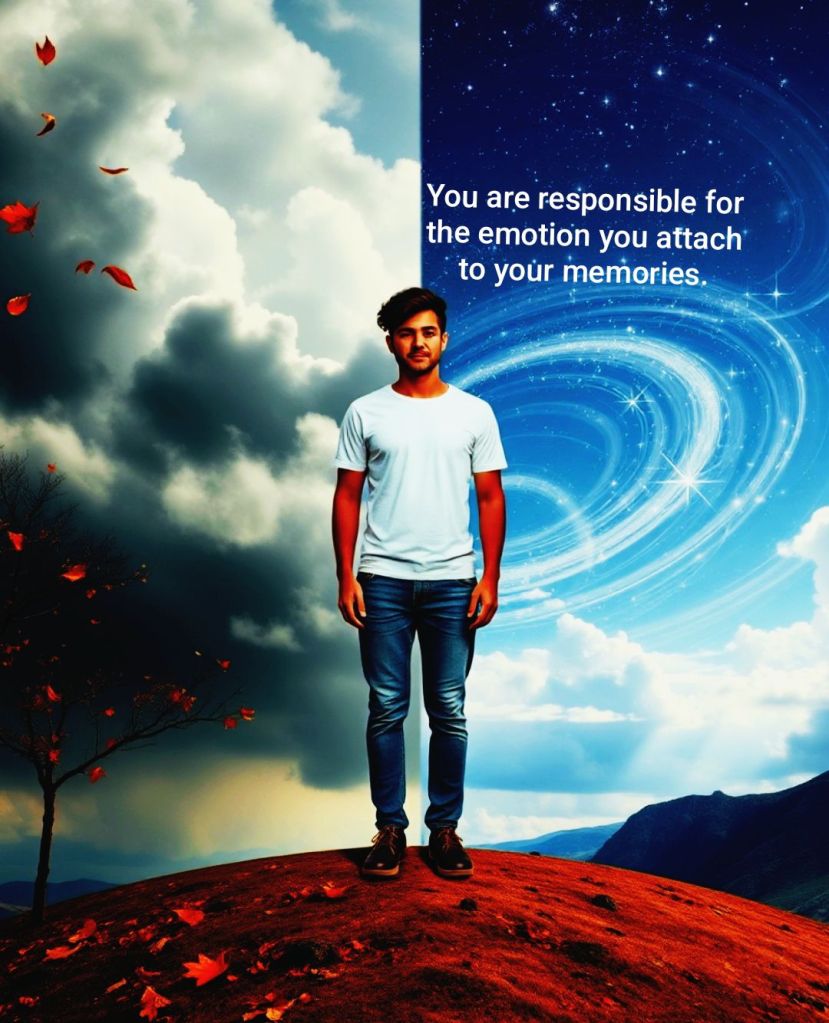
One evening, Ben had a realisation. He was holding onto both the positive and negative emotions from his past too tightly, and it was distorting his view of the present. The bad memories kept him stuck in fear and resentment, while the good ones were making him long for a time that had passed. He wasn’t living fully in the present, and it was costing him his peace of mind.
Ben decided he needed to strike a balance. He started practising a form of mindfulness where he would acknowledge his memories—good and bad—without attaching strong emotions to them. When a painful memory surfaced, instead of letting the old hurt take over, he would acknowledge it, take the lesson from it, and let it go. Likewise, when he thought about the joy of his past, he learned to appreciate it for what it was—a beautiful chapter in his life—but not something to chase after in his current reality.
As Ben embraced this new mindset, he began to feel lighter. He stopped resenting the hard times and longing for the perfect moments. Instead, he found contentment in where he was right now, knowing that his past shaped him but didn’t define his future. Striking a balance between his memories allowed him to live more fully in the present, free from the emotional baggage that had weighed him down for so long.
Remember.
You are responsible for the emotion you attach to your memories.
