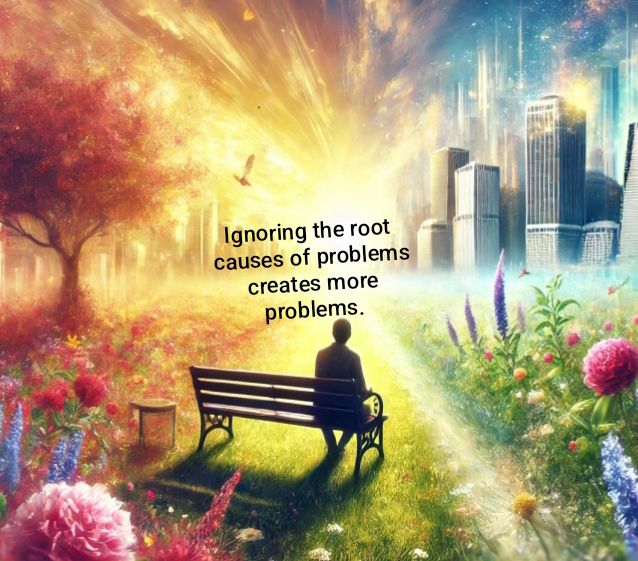
Ignoring the Root Causes of Problems Creates More Problems
In today’s fast-paced world, it’s easy to chase surface-level solutions to problems while neglecting their deeper causes. Whether it’s in personal lives, education, or society at large, this pattern of avoidance often leads to a vicious cycle where unresolved issues re-emerge, sometimes in more complex forms. This post explores why addressing the root causes of problems is essential, building on themes from similar articles about purpose, mindset, and societal challenges.
Short-Term Fixes vs. Long-Term Solutions
Many people believe that external solutions—like more money, better relationships, or societal acceptance—will improve their lives. While these can provide temporary relief, they often fail to resolve the underlying issues. For example:
Money can alleviate financial stress in the short term, but if someone hasn’t addressed deeper emotional or behavioural patterns, those problems resurface.
Inclusiveness, while important for reducing exclusion, doesn’t solve the existential struggles of meaning, identity, and purpose that affect all humans.
When we ignore these root causes, we risk creating even more problems, both individually and collectively.
The Power of Mindset
A major theme from previous posts on this site is the idea that how you think about your life has a profound impact on how you experience it. Problems often persist not because of external circumstances but because of our mindset. For instance:
Gratitude can shift focus from what’s lacking to what’s present.
Self-reflection can uncover hidden fears or unresolved conflicts, allowing for growth.
Changing your perspective is one of the simplest (not always easiest) yet most powerful ways to tackle life’s challenges.
Existential Problems in a Comfortable World
In first-world countries, most people’s basic needs are met. This means that many struggles are existential rather than survival-based. Questions like, “What is my purpose?” or “Am I living a meaningful life?” dominate, yet society often overlooks them. Instead, we distract ourselves with consumerism, social media, or surface-level fixes.
As highlighted in similar posts, these distractions can temporarily dull the discomfort, but the core issues remain. We must address these existential questions head-on by fostering self-awareness, resilience, and a deeper understanding of what truly fulfils us.
A Better Way Forward
To break the cycle of ignoring root causes, we need to:
1. Teach Life Skills Early: Schools should educate students about purpose, self-reflection, and emotional resilience. A practical education on navigating existential crises would help individuals face life’s deeper questions with confidence.
2. Encourage Inner Work: Societal emphasis should shift toward introspection, helping people understand their values and what gives their lives meaning.
3. Balance Inclusiveness with Personal Growth: Inclusiveness is vital, but it should be complemented with tools for addressing universal human struggles, like finding purpose and overcoming fear.
Conclusion
Ignoring the root causes of problems might seem easier in the short term, but it only delays the inevitable reckoning. Whether it’s personal dissatisfaction or societal unrest, lasting solutions require us to dig deeper, confront discomfort, and make meaningful changes. By focusing on mindset, purpose, and resilience, we can create a world where challenges lead to growth, not more problems.
Let’s stop skimming the surface and start diving into what really matters.
What are your thoughts on this topic? Share your insights in the comments!
