Everyone has a freezer. What’s in Yours?
We all have parts of ourselves we lock away. The real skill is learning to hear the hum of what’s hidden—in others, and in ourselves.
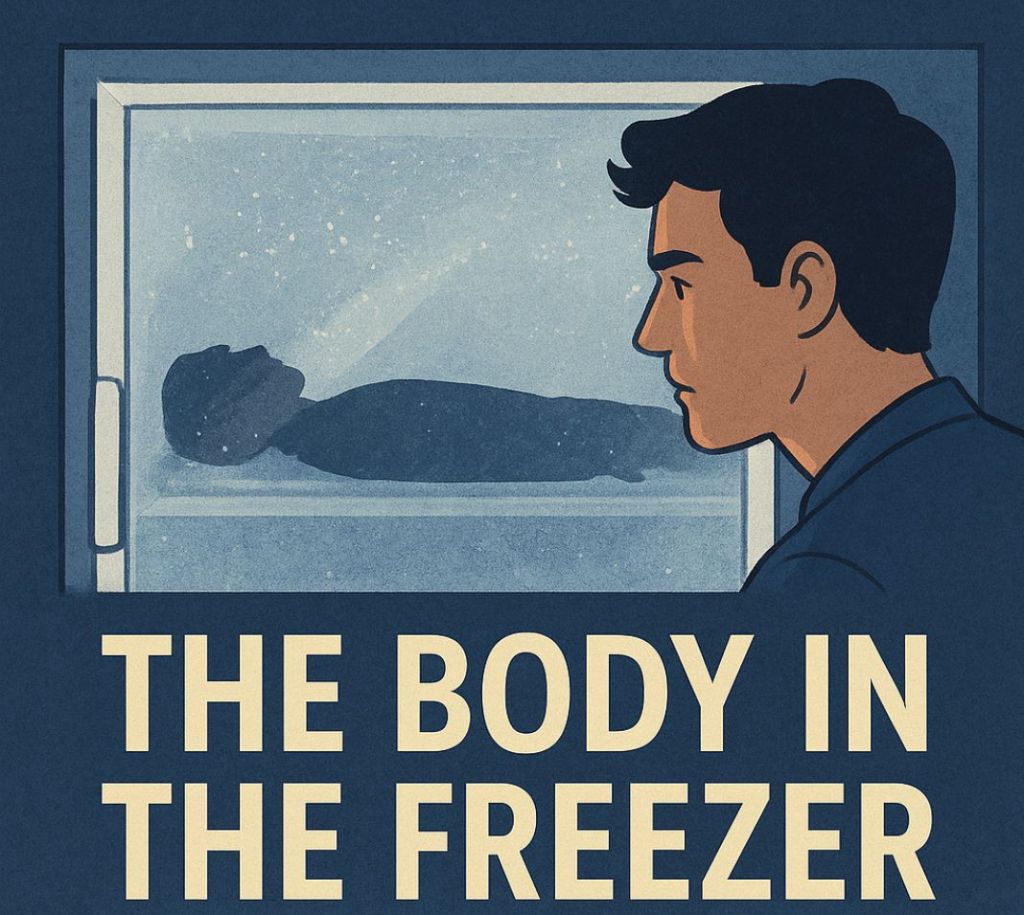
It started during my night shifts at the corner shop. My job was to notice things: expiry dates, tidy shelves, the steady hum of the freezer. But one night, I noticed something else.
A shadow in the frosted glass.
Not a person, not exactly—but the faint outline of someone lying still, preserved in frost. I yanked the door open, and a wave of cold, damp air washed over me. The shape was gone. The shelves were a perfect landscape of mint chocolate chip and vanilla swirl.
No one else had seen it. The manager was busy with paperwork. The world carried on.
But the image stuck with me. Not as horror, but as a question:
Why hide a body in a freezer? And why cover something so raw under a layer of sweetness?
Laura’s Freezer
After a painful breakup, my friend Laura became the life of every party. “I’m thriving,” she’d declare, her laugh a little too loud, her glass never empty. Everyone celebrated her resilience.
But I saw the purple wine stains blooming on her tablecloth, the bottles piling up by the bin. Her joy was the ice cream, spread over the frozen grief she couldn’t bear to name.⁷
Mr. Collins’s Freezer
My neighbour, Mr. Collins, baked scones for the entire block every Sunday. “The heart of our street,” everyone said. He wore a smile as consistent as his baking schedule.
Then I overheard his quiet, desperate phone call to a son who wouldn’t answer: “Just let me know you’re alright…” The scones were his sweetness, a ritual to soften the hollow silence that had moved into his home.
My Father’s Freezer
My father polished his car every Saturday until it gleamed, a silent, shimmering monument. Neighbours admired his dedication.
I saw it for what it was: the steady hum of a deep freeze. The polish, the shine, the endless routine—his way of glossing over the vast, cold absence my mother left behind.⁸
My Own Freezer
And then, in the quietest hour of my shift, the question turned inward.
What was in my freezer?
I realized my politeness, my quiet observation, and my safe role as the “watcher”—that was my ice cream. A thoughtful distraction from my own truth: the fear that to be truly seen was to risk being truly hurt. It is better to curate others’ pain than to confront my own. It is better to hum quietly than to thaw.
The Freezer We All Share
We all have one. A private, insulated space where we keep the things too painful, messy, or shameful to face in the light of day.
The success, the humour, the relentless busyness—the sweetness we offer the world—is just the ice cream we stack high to hide the door.
Life goes on. Kids still press their noses to the glass, choosing their flavours. The world hums with things left unsaid.
But wisdom isn’t about emptying the freezer. It’s about the courage to hear its hum in every heart you meet. To acknowledge the cold weight inside—in others, and in ourselves—without flinching, and to offer the quiet kindness that says, “Me too.”
Because the hum, once heard, can also be answered.
So I’ll ask you:
What’s in your freezer?
