Month: Sep 2026

  • Your mind is creating your life.

    Not all of it—but more of it than you think.
    It doesn’t love you or hate you.

    It doesn’t reward you for being good or punish you for being bad.

    It simply responds to what you repeatedly give it.

    Feed it fear, and fear becomes familiar.

    Feed it doubt, and doubt starts sounding like wisdom.

    Feed it resentment, and the world begins to look like evidence.

    But feed it curiosity, truth, action and connection, and something else begins to grow.

    Possibility.

    This doesn’t mean you can simply think your way out of everything.

    Life is not that simple.

    Trauma is real.
    Systems are real.
    Circumstances are real.
    Other people are real.
    Chance is real.

    You are not the sole author of your story.

    But you are a co-creator.

    And that distinction matters.

    Because even when you cannot control the circumstances, you can sometimes influence the loop.

    What you notice.

    What you question.

    What you practise.

    What you repeat.

    What you give your attention to.

    And now, AI is entering the garden.

    AI is not entirely alien.

    It is, in many ways, a reflection of the collective human mind—our language, our knowledge, our biases, our brilliance, our contradictions and our imagination.

    We will shape AI.

    And AI will shape us.

    That relationship will not be determined by technology alone.

    It will also be shaped by what we ask it to do, what we choose to believe, what we choose to amplify and, perhaps most importantly, what we choose to remain responsible for.

    The future of AI won’t only be written in code.

    It will be written in attention.

    In intention.

    In curiosity.

    In the choices we make with the tools we create.

    So use AI to expand your thinking, not replace it.

    Let it challenge your assumptions rather than quietly becoming them.

    Let it give you possibilities without surrendering your judgement.

    Let it serve your agency rather than atrophy it.

    Build tools that make us more capable of being human, not less.

    Because your mind is not the future of AI.

    But the future of AI will be shaped by minds like yours.

    So plant wisely.

    Question what grows.

    Water what matters.

    Pull out what no longer serves you.

    And remember that not every thought deserves a permanent place in your garden.

    You don’t have to believe everything your mind produces.

    You don’t have to follow every thought it offers.

    You can pause.

    You can choose.

    You can plant something different.

    And sometimes, the smallest change in what you feed your mind can become the beginning of an entirely different life.

    What will you feed your mind today?
  • There’s an old wisdom in the phrase:

    Give credit where credit is due.

    It sounds simple.

    But we often find it surprisingly difficult to practise.

    Someone does well, and instead of simply saying, “You did well,” we compare.

    Why them?

    What about me?

    I could have done that.

    And somewhere along the way, we confuse recognition with competition.

    But someone else’s success doesn’t shrink yours.

    Their moment in the sun doesn’t dim your light.

    Recognition isn’t a limited resource.

    There’s enough to go around.

    In real life, it looks like this:

    • A coworker stays late to fix a bug before launch. Say: “You saved us. That was brilliant.”
    • A friend gets a promotion. Don’t immediately wonder when your turn is. Say: “You earned that. I’m proud of you.”
    • Your partner handles the school runs, meals, bills and mental load. Say: “I notice everything you do. Thank you.”
    • A teammate’s idea gets used in a meeting. Give them the credit: “This came from Maya.”
    • A nurse, teacher, barista or driver goes out of their way to help. Tell them—or tell their manager: “I appreciate what you did.”
    • Someone helps you when they didn’t have to. Acknowledge it: “That meant a lot. I won’t forget it.”

    Old sayings have been reminding us of this for generations:

    Give honour where honour is due.

    Give praise where praise is due.

    Give respect where respect is earned.

    Hats off.

    Give them their flowers.

    Different words.

    Same message.

    Notice what deserves to be noticed.

    And then tell them.

    Don’t wait for the perfect moment.

    Don’t assume they already know.

    Give them their flowers while they can still smell them.

    Because the world gets a little better when we stop asking,

    “Why aren’t they recognising me?”

    and start saying,

    “You deserve to be recognised.”

    Give credit where credit is due.

    Give praise where praise is deserved.

    Give respect where respect is earned.

    And when someone genuinely deserves their moment in the sun…

    Let them have it.

  • Perception can be altered. Your reality can be altered, too.

    I’m not an expert today.
    But I could be tomorrow. Or the day after tomorrow.

    Not because tomorrow grants me some magical ability I don’t have today.

    Because tomorrow gives me the opportunity to do what every expert once had to do:

    Start before I felt ready.
    Ask the question that sounded stupid.
    Practise while it was still awkward.
    Make mistakes.
    Fail in public.
    Learn from the embarrassment.
    Adjust.
    Try again.
    And then do it all over again.

    Expertise rarely arrives like a lightning bolt.
    More often, it grows quietly in the background through a thousand ordinary decisions to keep going.

    The first time you write something, it probably won’t be very good. The secret is to keep writing until you can look back and recognise how far you’ve come.

    The first time you speak in front of people, your voice might shake. Your mouth might go dry. But if you persevere, you’ll learn to speak like someone who has found their voice.

    The first time you try something new, you might look like someone who has absolutely no idea what they’re doing.

    That’s okay.

    You aren’t supposed to look like an expert while you’re becoming one.
    You aren’t supposed to know everything at the beginning.
    You’re supposed to be curious enough to learn.

    So I’m not pretending to know it all.
    I’m practising like I’m becoming.
    Because I am.

    Today, I’m a beginner with direction.
    Tomorrow, I’ll be a beginner with more experience.
    The day after that, I’ll have a few more mistakes behind me, a few more lessons learned, and perhaps a little more confidence.

    And one day, without even noticing when it happened, I’ll look up and realise something:

    I became the person I kept showing up as.

    I didn’t become an expert because I waited until I was ready.
    I became one because I started before I was.

    So, if you’re standing at the beginning of something today, don’t worry about being good enough.
    Don’t worry about knowing enough.
    Don’t worry about looking foolish.

    Start.

    You don’t have to be an expert today.
    You just have to be willing to become one tomorrow.

  • Do I want you to be better?

    No.

    I want you to want to be better.

    There is a difference.

    I can encourage you.
    I can support you.
    I can tell you what I see in you when you can’t see it yourself.

    But I cannot want your growth for you.

    And neither should I.

    Because when I become more invested in your improvement than you are, something changes.

    Support becomes pressure.
    Advice becomes expectation.
    Love can quietly become control.

    Real growth begins when the desire to change comes from within.

    Not because someone told you that you weren’t good enough.

    Not because you are trying to earn someone’s approval.

    Not because you are afraid of losing someone.

    But because somewhere inside yourself, you have decided:

    I want to become more than I am today.

    That doesn’t mean you need to become someone else.

    It means becoming more fully yourself.

    Learning from your mistakes.
    Questioning what no longer serves you.
    Letting go of old versions of yourself.
    Choosing differently when you know better.

    And sometimes the most loving thing we can do for someone is stop trying to change them.

    Give them encouragement without demanding transformation.

    Give them space without abandoning them.

    Believe in their potential without making their potential your responsibility.

    Because you cannot carry someone into becoming who they want to be.

    You can walk beside them.

    You can hold the light.

    You can remind them that another way is possible.

    But eventually, they have to choose to walk towards it.

    And perhaps that is the greatest gift we can give another person:

    Not the demand to be better.

    But the freedom to want better for themselves.

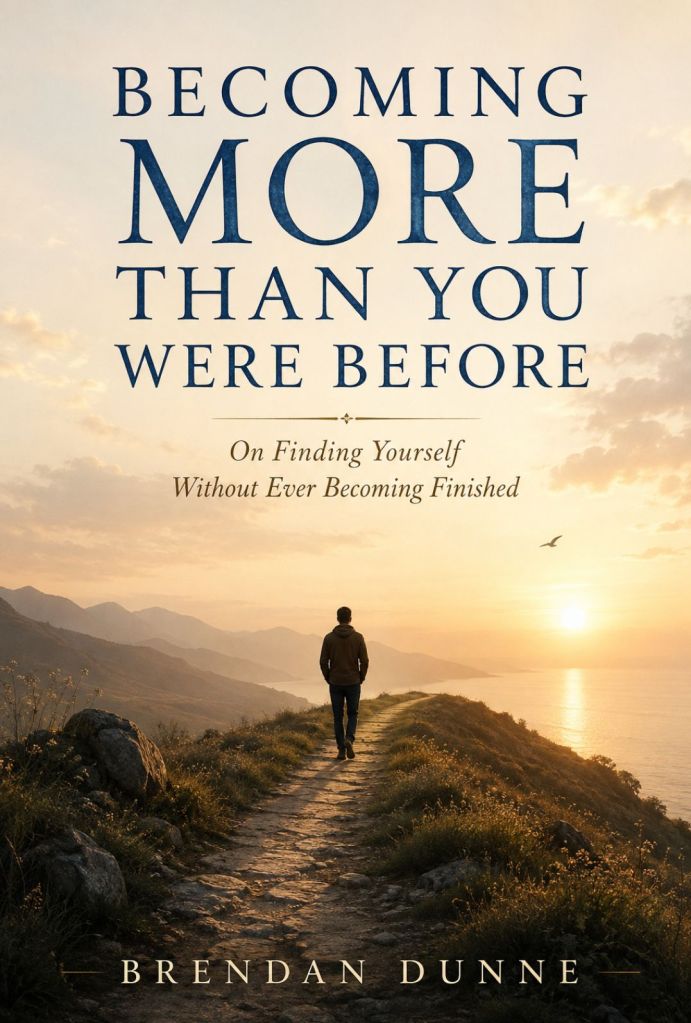
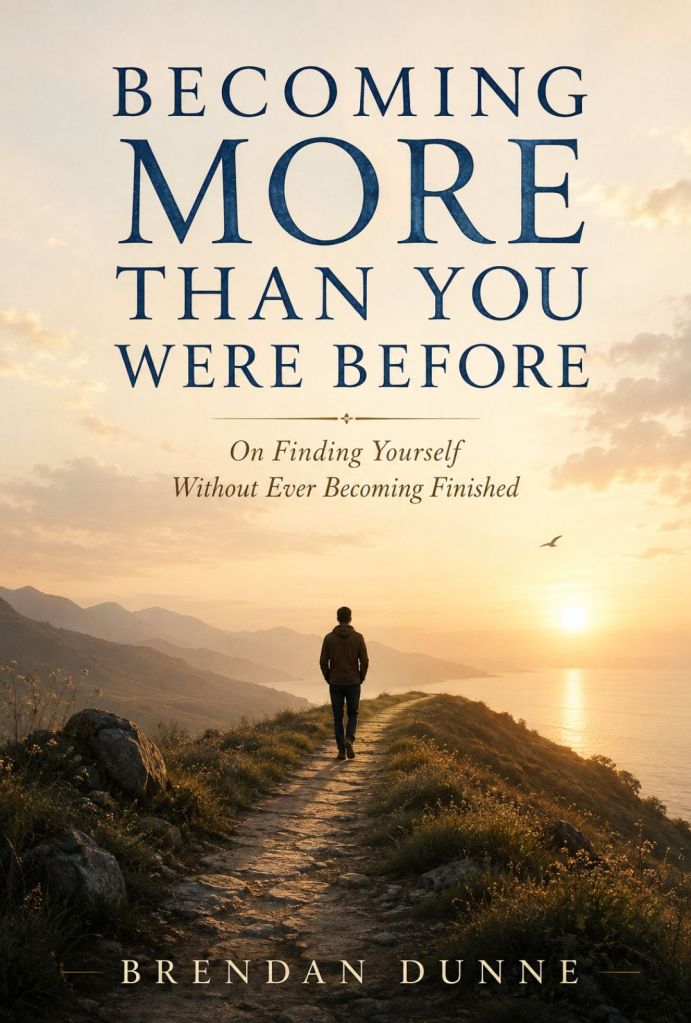
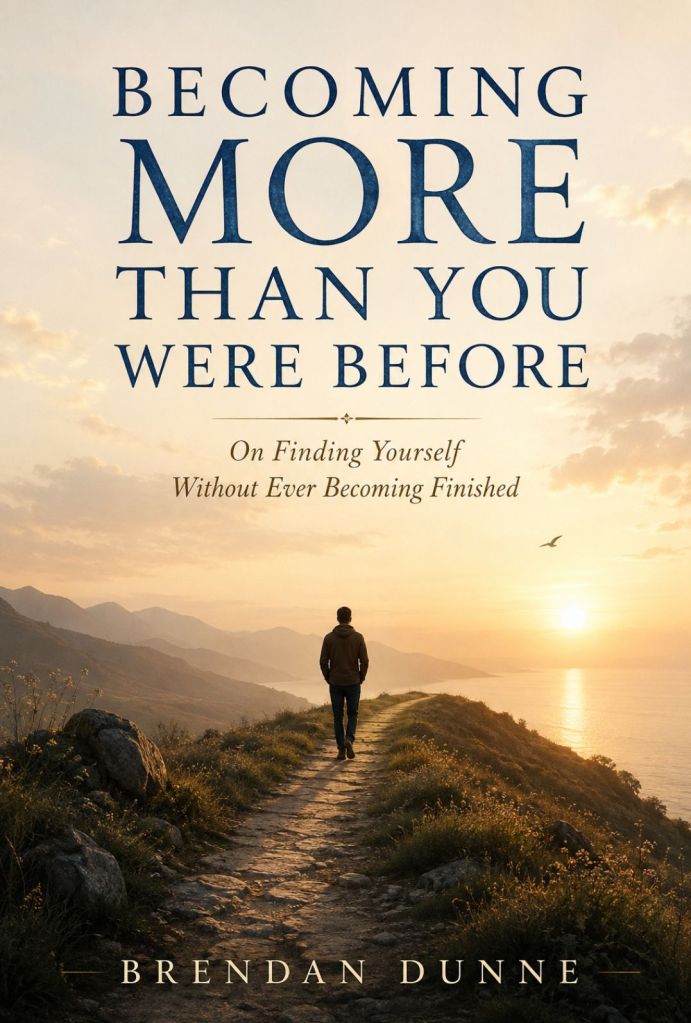
    Click the link above to read Becoming More Than You Were Before. 

  • Writing isn’t impossible.

    It just feels that way when you’re staring at a blank page, expecting to conjure an entire world from nothing.

    But that’s not what writing is.

    Writing begins with a concept.

    Then comes a process.

    You take the idea and break it apart. You ask questions.

    What happens next?

    Who is involved?

    What do they want?

    What stands in their way?

    What would make the reader care?

    You experiment. You rewrite. You cut what doesn’t work and strengthen what does. You connect one idea to another until something begins to take shape.

    And then something else happens.

    Emotion enters the room.

    A technically perfect story can still leave you cold.

    The reader needs to feel something.

    Curiosity.

    Fear.

    Hope.

    Loss.

    Recognition.

    That strange moment when they read a sentence and think:

    “That’s exactly how I feel.”

    My own story, The Quiet Between Storms, is a good example of this.

    It opens with a sunrise nobody notices.

    A sigh of curtains.

    A kettle’s whistle.

    Light slipping across a wooden floor.

    None of these details are dramatic on their own. But together, they build a quiet, ordinary world.

    And that quiet is what makes the phone call that follows so devastating.

    The emotion doesn’t arrive because the writer tells the reader to feel something.

    It arrives because the process has laid the groundwork, sentence by sentence, until the reader is ready to feel it.

    That’s why I don’t think writing is simply an art.

    And it isn’t simply a science either.

    It’s both.

    Science gives you the process.

    Emotion gives you the reason.

    The process turns an idea into something tangible.

    Emotion makes that thing worth reading.

    And there’s another part of the process that can make writing easier:

    Know what you want the reader to feel at the end.

    If you know the emotional destination, you can begin building towards it from the first chapter.

    You can create the character the reader will care about.

    You can introduce the questions that need answering.

    You can plant the details that will matter later.

    You can shape the journey around the feeling you want to leave behind.

    Suddenly, the first chapter has somewhere to go.

    You don’t need to wait for inspiration to arrive like lightning.

    You need an idea worth exploring and a willingness to work through the process.

    The blank page isn’t asking you to create a masterpiece.

    It’s asking you for one sentence.

    Then another.

    And another.

    Eventually, those sentences become a paragraph.

    The paragraphs become a chapter.

    The chapters become a story.

    And one day you look at what you’ve created and realise something remarkable:

    You didn’t create an entire book in one moment.

    You created it one decision at a time.

    One thought.

    One sentence.

    One scene.

    One feeling.

    One revision.

    One chapter.

    Until something existed that didn’t exist before.

    That’s writing.

    Not magic.

    Not some mysterious gift given to a chosen few.

    Science and emotion working together to turn an idea into reality.

    So when the blank page looks intimidating, don’t ask yourself:

    How am I going to write an entire book?

    Ask a smaller question.

    What is the next sentence?

    Then write it.

    And let the story grow from there.

    Click the link to see my published work.

    https://www.amazon.com/author/brendandunne