Clarity and practical value are at the heart of everything I’ve created.
“For fourteen years, I wrote in fragments—observations, reminders, questions. Not as a teacher, but as someone trying to understand what makes a life feel lighter, freer, and more meaningful.
My books are what happens when those fragments are finally allowed to speak to each other.”
You experience it through the lens of what you believe.
Not occasionally. Not when it’s convenient.
Constantly.
Two people can walk into the same room, meet the same people, face the same opportunities, and leave with completely different stories about what happened.
One will say the world is full of possibility. The other will say it’s stacked against them.
Both will find evidence.
Because belief is not a passive thing. Belief is a filter. And filters quietly decide what you notice, what you ignore, and what you call “truth.”
If you believe people can’t be trusted, your mind will collect examples like a careful librarian. If you believe you’re always the unlucky one, every inconvenience will feel like confirmation.
Your brain loves being right.
Even when “right” is making your life smaller.
But here is the strange freedom hiding inside that fact.
If your beliefs are already shaping your experience of reality, then you have far more influence over your life than you might think.
Not because you can magically control everything.
You can’t.
Storms will still arrive. People will still disappoint you. Plans will still fall apart.
But belief determines what those moments mean.
One person sees failure as proof they should stop. Another sees it as proof they’re finally trying something difficult enough to matter.
Same event. Different life.
And over time, those interpretations compound.
They shape the risks you take. The conversations you start. The chances you give yourself.
Which means the beliefs you hold today are quietly building the life you will eventually call your destiny.
This is why the most powerful beliefs are not the ones that are perfectly proven.
They’re the ones that move you forward.
Believing people are mostly good makes you more open to connection. Believing effort matters makes you more willing to try again. Believing your life can grow makes you more likely to plant something new.
Those beliefs create actions.
Those actions create outcomes.
And the outcomes begin to look suspiciously like proof that your beliefs were correct all along.
So if belief is shaping the world you experience anyway, you don’t need to wait for perfect certainty before choosing one.
Choose the belief that helps you live.
Choose the one that expands your courage instead of shrinking it.
Choose the one that lets you wake up tomorrow and move forward with a little more curiosity and a little less fear.
Because in the end, the world you believe in is the world you will largely experience.
And if that’s true…
Believing in something better is already a powerful place to begin.
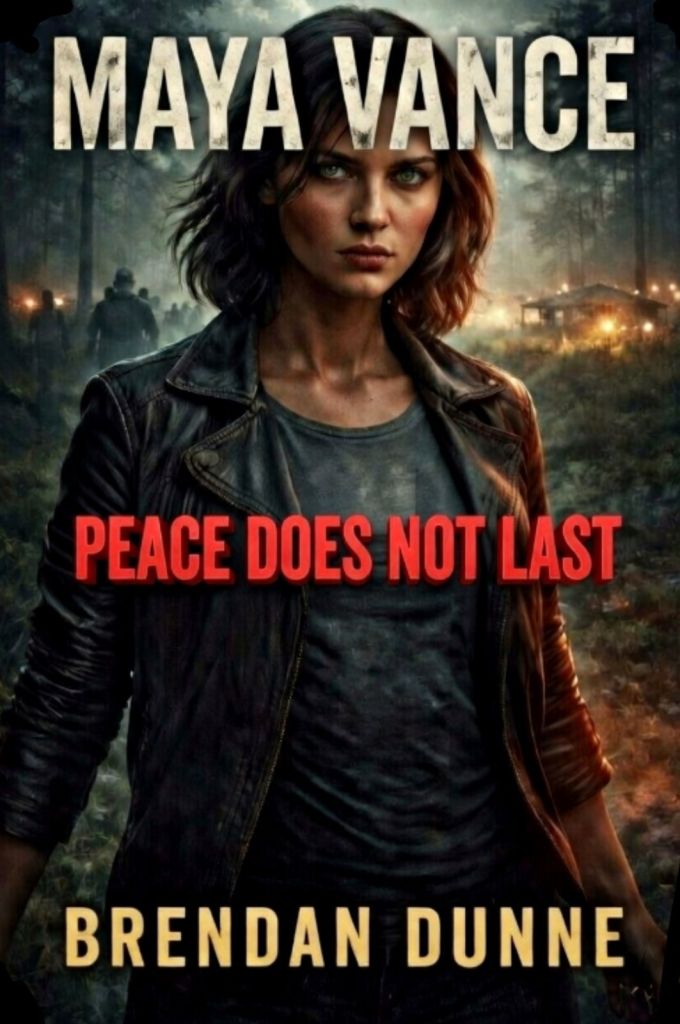
That’s what I learned in the three years since I walked out of the Virginia house and left Leo staring at the rain. Three years since I stood in the ashes of my certainties and decided to build something smaller. Three years of quiet gatherings, folding chairs and tea, of choosing doubt over doctrine and calling that enough.
Three years of pretending it was.
The work paid nothing. Rent still needed paying. Food still needed buying. So I consulted—risk assessments for companies afraid of internal rot, due diligence for law firms who wanted to know where the bodies were buried before they signed the contract. I was good at spotting fractures. I’d lived inside one.
It kept the lights on.
The evenings belonged to the gatherings.
A rented room on Thursdays. No hierarchy. No manifesto. Just people who had walked out of something and weren’t sure what came next. We didn’t offer answers. We didn’t fix anyone. We sat in uncertainty together and called it progress.
Leo came most weeks. Not the old Leo—the investor with sharp suits and sharper cynicism. This Leo moved carefully, as if his body were something recently returned to him. He helped me now. Helped others who had escaped high-control groups and didn’t know how to live without someone else’s instructions.
He was proof that healing was possible.
I held on to that proof harder than I should have.
Peace is most dangerous when you start believing it will last.
Twenty-six years old. A software engineer at a company called Nexus Dynamics, one of those Silicon Valley transplants that had taken over whole blocks of the city with their open floor plans and branded espresso machines. She’d started coming to the gatherings six months ago, referred by a friend who’d heard about us through channels I never tracked.
Her name was Priya Chen.
Bright. Questioning. Full of the particular energy of someone who’d spent her whole life doing what she was supposed to do and was just beginning to wonder if that was the point.
“I feel like I’m running on someone else’s software,” she’d said one night, her voice low in the circle. “Like I’m executing code I didn’t write and can’t read. And I don’t even know who the programmer is.”
That was exactly the kind of person the garden looked for.
I told myself I could help her before anything found her first.
I was wrong.
The changes started small.
A missed gathering. Then another. When she returned, her edges had softened. Not gone. Just streamlined.
“I’ve started a program at work,” she said. “It’s helping.”
A company called Integral. A wellness consultancy. One-on-one sessions. Performance clarity. Behavioral refinement.
“Now I can just be.”
Leo had said that once, in Virginia. Right before they hollowed him out.
I warned her.
She smiled the way people smile when they’ve already decided you’re behind them.
Her boyfriend found me next.
Marcus was young, mid-twenties, with the rumpled look of someone who spent his days in front of screens and his nights worrying. He found me after a gathering, hovering near the door until everyone else had gone.
“She’s different,” he said. “Not worse. Better. That’s what scares me.”
“How?”
“She doesn’t spiral anymore. Doesn’t question. Doesn’t argue. She used to fight for things. Now she just… accepts.”
I felt something cold settle behind my ribs.
“Don’t meet with the consultant,” I told him. “Whatever she says, don’t go.”
“I love her,” he said. “I just want her back.”
So did I.
Three days later, he was dead.
Black ice. A stretch of road he drove every day, suddenly treacherous. The police called it tragic.
I didn’t argue. I just started paying attention differently.
At the funeral, Priya stood beside Marcus’s mother. Composed. Symmetrical. Unshaken.
When I approached her, something flickered in her eyes. Recognition. Grief.
Then it closed.
“I’m sorry,” she said gently. “Do I know you?”
For a moment, the world tilted. Not grief. Not rage.
Failure.
I stood there long after she’d gone, the rain soaking into my coat, and realized something I had refused to admit for three years.
Peace hadn’t returned.
It had been waiting.
That night, I opened a folder I hadn’t touched in three years.
Fourteen names. The Lydia Protocol. The remains of Aletheia.
At the bottom, a journalist I’d never followed up on. Elena Vasquez. Institutionalized after publishing a partial exposé on Aletheia’s early funding structures. Diagnosed. Silenced. Contained.
And another name I had skimmed past once.
Daniel Cross.
He’d been in the correspondence. Not public-facing. It’s not charismatic. Structural. Methodological. The language in his emails is colder than Creed’s. Precise. Efficient.
Optimization protocols.
I hadn’t followed him then.
He’d followed me.
My phone rang.
Unknown number.
“Maya Vance.”
A man’s voice. Mid-forties. Even. Controlled.
“My name is Daniel Cross.”
No introduction. No hesitation.
“I think we should talk.”
“I don’t know you.”
“You know my work.”
A pause.
“Priya Chen sends her regards.”
The line went dead.
Not rushed. Not threatened. Dismissed.
He hadn’t called to intimidate me. He’d called to confirm that I understood.
And for the first time in three years, I felt the old fear rise—not loud, not panicked. Just precise.
AI won’t replace your therapist any time soon. That’s not a tech limitation. It’s a human one. People say they want the truth.
What they crave is a flattering narrative—one that shifts blame outward and shields the fragile self-image they’ve constructed for survival.
You claim exhaustion. You’re often addicted to being needed; chaos gives you identity. Without it, you’d have to face yourself.
You say you’re unlucky in love. You select partners who reinforce the core belief: you’re too much, or never enough.
You blame a toxic boss. Sometimes true—but authority can also spotlight how shaky your self-worth truly is.
AI could expose this in moments: mapping contradictions, behavioural loops, language slips, and rewritten memories. It would prove every personal story has one consistent author—you.
The real dread isn’t misunderstanding. It’s being seen clearly, with no room to dodge or reframe.
We idealize human therapists: their warmth, empathy, Carl Rogers-style unconditional positive regard. Yet even in a live session, people curate—soften edges, omit the ugly, and cast themselves as the reasonable party. When truth approaches, they label it a poor fit and leave.
If AI declined to enable self-deception—if it logged every evasion, every strategic edit, every rewritten history—you’d label it cold. Not for lacking feeling. For refusing to protect the ego.
The uncomfortable reality: Most don’t truly want problems fixed. They want innocence maintained.
Genuine change demands identity surgery: Enduring discomfort instead of avoiding it. Risking judgment rather than hiding. Acknowledging you might be the recurring variable.That feels humiliating—like losing oxygen. So we defend the familiar wound, argue the diagnosis, shoot the mirror.
AI will soon deliver pattern diagnosis with merciless accuracy. The true barrier isn’t capability. It’s human capacity to withstand: “You are not the victim in every story you tell.”Therapy’s future isn’t about smarter machines. It’s about our willingness to tolerate unflinching clarity without attacking the source.
Today, clarity registers as assault. The ego? Still the planet’s most bulletproof employment.
You’re waiting for the sign. The one that splits the sky, or the one that arrives in the mail with your name on it. You’re listening for the voice—yours or someone else’s—that finally makes everything clear.
But that’s not how the door opens.
It opens like this:
Your hand is on the phone, ready to fire off the text that will win the argument. You put it down.
You’re at the kitchen sink, and the water is warm on your hands, and for once, you’re not mentally anywhere else. You’re just there, scrubbing a plate.
You’re tired, and a lie is right there, a soft place to land. You don’t take it. You stand in the hard truth for a second and then say it quietly.
You put the book on the nightstand and turn off the light at the same time you said you would, three hours ago.
No one sees any of this. There’s no witness. It’s just the slow, invisible work of laying bricks where no road is yet visible.
We’ve been taught to believe in the before-and-after. The dramatic weight loss photo. The tearful, public apology. The phoenix, always rising from ashes that look suspiciously like a spotlight. We think transformation has to be a bonfire to be real.
But a life isn’t built from bonfires. It’s built from the friction of one stone against another day after day. It’s not the single, violent shudder of an earthquake that shapes you; it’s the tremor you learn to feel only in retrospect. The slight shift in your spine. The callus that forms before you even notice you’ve been holding on.
Your integrity is not a monument; it’s a sedimentary rock. Each quiet choice is a grain of sand settling in the deep, dark place where pressure becomes peace.
And because it’s quiet, you’ll doubt it. You’ll stand in the middle of an ordinary Tuesday and think, “This is nothing. This is dust.”
But dust, over millennia, becomes chalk. And chalk holds the fossil. It preserves the record of everything that once lived.
The world reports on the explosion. It has no meter for the person who, for the fifth day in a row, simply did not detonate. No one goes viral for the restraint of a single, un-typed sentence. There are no headlines for the man who remained steady while everything around him shook.
But that is the architecture. That is the fossil being laid down.
The person who absorbed the blow instead of returning it. The person who walked when the current pulled hardest. The person who showed up, not for the standing ovation, but for the slow, sedimentary work of just… staying.
You don’t need a reinvention. Reinvention is a myth for people who want to skip the work. You need accumulation. You need the weight of a thousand unremarkable Tuesdays pressing down until you finally harden into the person you were always becoming.
If you could stand on the ridge of your own future and look back, you would see it: the vast, quiet, undeniable landscape formed by all the times you chose the almost-nothing that was actually everything.