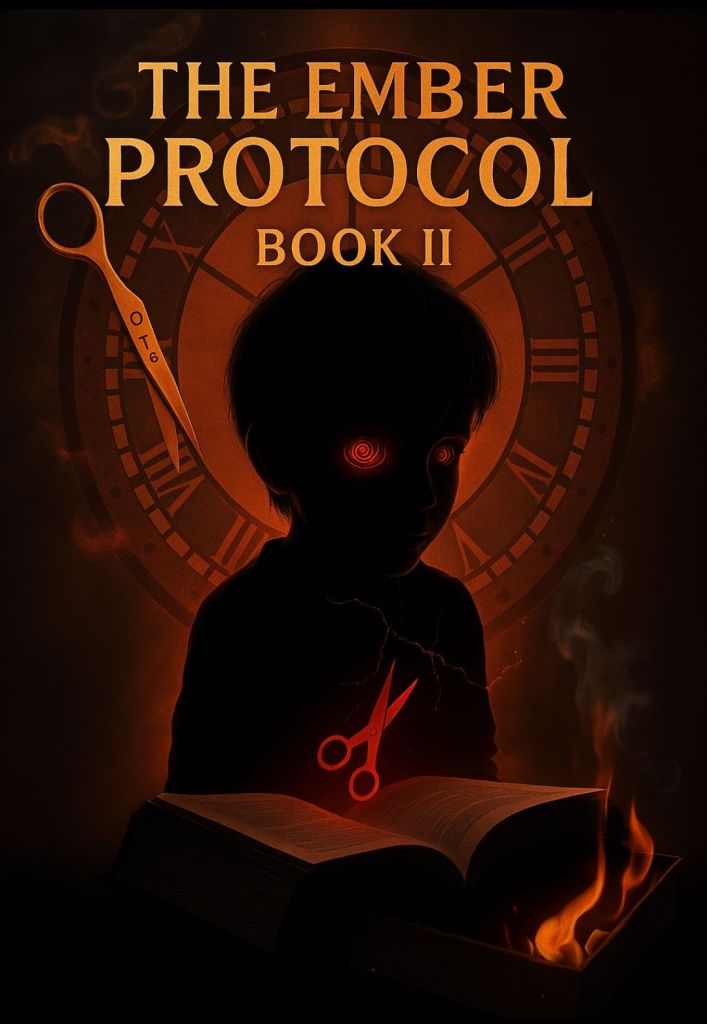
Somewhere along the way, we decided that questions are weapons.
Ask one, and you must be attacking. Raise doubt, and you must be disloyal. Challenge a structure, and you must want to destroy it.
But that’s not how growth works.
Questions are not demolition charges. They are door handles.
In the novel I’ve been writing, a system exists that prides itself on clarity. It dismantles inherited beliefs. It rebuilds identity with precision. It speaks the language of integration and stability.
On the surface, it’s compassionate.
But the tension doesn’t begin with violence. It begins with a quiet internal friction: “What does that actually mean?”
When a character notices phrasing. When she replays a sentence in her mind. When she senses something slightly off in a perfectly polished explanation.
That’s where the real story begins.
Because the moment you ask a sincere question, you step slightly outside the frame. And frames don’t always like that.
Here’s what we get wrong in real life: We think questioning something means we hate it. We think expressing doubt means we are betraying the group, the institution, the relationship.
So we polarise. You’re either loyal or hostile. With us or against us.
It’s exhausting. And it’s unnecessary.
You can ask a question without demonising the person you’re asking. You can examine a system without calling it evil. You can say, “Help me understand this,” without implying, “You’re corrupt.”
Curiosity is not cruelty. Inquiry is not aggression. Discernment is not disloyalty.
In my story, the most dangerous thing isn’t open rebellion. It’s quiet pattern recognition.
The system doesn’t fall because someone screams. It wavers because someone sees. And seeing doesn’t require hatred. It requires honesty.
You don’t need to burn structures down to examine their foundations.
That sentence is powerful. It creates space. And growth needs space.
The irony? If a structure can’t withstand questions, it was never stable. If an idea collapses under scrutiny, it isn’t strong enough. If a relationship fractures because you asked for clarity, it wasn’t secure.
Questions don’t create weakness. They reveal it.
And if asking better questions makes you slightly inconvenient, slightly uncomfortable, slightly harder to categorise?
The day the volume got stuck on every thought everyone was having and the consequences.
When the phenomenon began, nobody noticed immediately. Most of Carrigstown was too busy internally rehearsing their complaints about the drizzle, which was just the usual Monday-level mist.
Butby9:07 a.m., it was undeniable: every mind in town had been set to “public broadcast.” It wasn’t whispers. It was a full, Dolby surround-sound system of insecurities, grocery lists, and shockingly original curses about the bus schedule.
* The first casualty was subtlety. * The second was dignity. * The third was Mrs.Hennessy’s book club, which dissolved after ten seconds of mutually hearing the thought: “I never actually liked the book.”
The Grocery Store Incident
Tom O’Reilly went to Murphy’s SuperValu for milk. What he got was a live commentary.
“Skim. The ghost of milk.” “He walks like he’s apologizing to the floor for his footsteps.” “Is that Tom? I heard he went to Cork to become a mime.” “No, that’s the fella with the sentient eyebrows. This one just cried at a toilet paper ad once.” “I bet his reusable bags are folded by size. Monster.”
Tom left, milk-less, now wondering if his gait was indeed overly penitent.
Relationships Were… Audited
Couples everywhere underwent a brutal, instant transparency audit. The “I’m fine” statistic plummeted.
Emma heard her boyfriend’s inner voice, a ponderous baritone: “The laundry basket exists in a dimensional blind spot. Science should study it. Also, I am suddenly, ravenously craving a jambon.”
He, in turn, was buffeted by Emma’s rapid-fire internal shriek: “If I glare at the back of his head hard enough, will he spontaneously remember to change the toilet roll? TELEKINESIS, COME ON. Focus, Emma. Nothing. Just… caveman.”
They signed up for a communication course. Separatebuildings.
Workplace Honesty Achieved Critical Mass
At Duffy’s Office Supplies, the boss clapped his hands. “Team! Synergy brainstorm!”
The mental barrage was instant and unanimous:
“I would rather lick the photocopier.” “My soul is leaving my body. It’s hovering by the fire exit.” “If he draws a Venn diagram, I’m legally allowed to shriek.” “Why is he wearing that tie? It’s the visual equivalent of a dial-up tone.” “I can hear Brenda thinking about her dog’s fungal infection. Make it stop.”
The boss went pale, muttered, “Point taken,” and gave everyone Friday off. Productivity soared, primarily in the field of serene gardening.
The School System Collapsed in 43 Minutes
Children’s thoughts, normally a chaotic fountain, became a public health hazard.
Mr. Keating, the history teacher, fled after one child’s relentless internal chant: “BOREDBOREDBOREDBORED do teachers ever poo?”
But the final blow was young Siobhan’s quiet, devastatingly logical suspicion: “Miss Byrne doesn’t have a house. She folds herself into the stationery cupboard at night. I’ve calculated her diet: chalk dust and lukewarm tea from the staffroom.”
Miss Byrne, hearing this, stood very still. “I have a bungalow,” she whispered aloud, then placed her chalk neatly in the tray and walked out forever.
The Great Adaptation
By day three, a new etiquette emerged.
People wore industrial-grade headphones, not for music, but to dampen the psychic noise of collective anxiety about mortgage rates.
The local café’s sign read: “NO THINKING ABOUT OUR SOUFFLÉS. THEY’RE TRYING THEIR BEST.”
Politicians, forced into honesty, found it revolutionary. The local councillor stood silently, his mind replaying the precise cost of the unnecessary roundabout. He was re-elected in a landslide.
And something beautiful, amidst the noise, took root.
With every secret fear and stupid song lyric broadcast loud, pretense became exhausting. Then impossible.
A kindness bloomed. You’d hand a tissue to a stranger because you’d heard their internal weepy over a dog in a film. You’d let someone merge in traffic because their mind was singing “don’t cry don’t cry you are a competent adult” on loop.
You realized the stern postman was mentally composing haikus about his cat. That the cool barista was internally debating whether a tomato was a room. That everyone, absolutely everyone, was just a frantic, silly, soft creature trying to seem like they had the manual.
We were all ridiculous. We were all the same.
The phenomenon ended as abruptly as it began on Sunday evening. The great, silent privacy of the mind was restored.
But on Monday, people spoke a little more freely. They laughed more easily.
And Tom O’Reilly went back to Murphy’s. He picked up a carton of full-fat milk, placed it decisively on the counter, and met the cashier’s eye.
“Lovelydayforit,” he said.
“Sure is,” she replied. “The good milk, I see. Respect.”
He heard no other judgement. Out loud or otherwise.
· JOHN: A man with ambitions of achieving nothing, respectably. · MAUREEN (The Interviewer/Manager): Deeply committed to process over outcome. · AUDITOR: Sharp, suited, and increasingly horrified. · PHIL, DEIRDRE, GARY: Civil Servants. Nodding, form-filling, and coffee-obsessed.
SETTING:
A drab, soul-crushingly beige government office. A single flickering fluorescent light buzzes ominously. The walls are adorned with motivational posters that are anything but: “A Clean Desk is a Sign of a Cluttered In-Tray,” “Meetings: The Practical Alternative to Work.”
[SCENE 1]
THE INTERVIEW
(SOUND of a faint, slow, rhythmic TICKING)
(The office is grey. The flickering light casts a sickly glow. JOHN sits opposite MAUREEN. A large poster behind her reads: “Public Service: Because Somebody Has To.” It’s slightly crooked.)
MAUREEN (Without looking up,scanning a form) So, John. Why do you want to work for the council?
JOHN (Leaning forward earnestly) Well, I’ve always dreamed of… not working, exactly, but, you know, appearing to work in a respectable way. A sustainable, long-term career of plausible activity.
(Maureen looks up. A slow, genuine smile spreads across her face. It’s the first real emotion we’ve seen.)
MAUREEN Perfect.You’ve articulated our core mission statement. Do you have any direct experience in administration?
JOHN Not directly. But I am excellent at forming committees to discuss the potential for administrative experience. I believe in laying the groundwork.
MAUREEN (Slamming a stamp onto a form with finality) Outstanding.You’re hired. Start Monday, take Tuesday off for acclimatisation, and we’ll schedule a preliminary review of your position sometime after the next general election.
(They shake hands. The handshake lasts just a beat too long. The TICKING seems to get slower.)
BLACKOUT
[SCENE 2]
THE PROJECT PROPOSAL
(Six months later. A meeting room. Six civil servants sit around a table buried under teetering stacks of paperwork. A whiteboard reads: “Bike Shelter Project – S.M.A.R.T. Goals.” Only the “S” is filled in: “Sustainable.”)
(John now has a slightly glazed but confident expression. He sips from a mug that reads “World’s Okayest Employee.”)
MAUREEN Clapping hands together softly. Right, team. Synergy time. Our Q4 headline project is building a bike shelter outside the Department of Transport.
JOHN Lovely. Promoting green commuting. How much are we thinking? Ten thousand? Fifteen?
MAUREEN (Chuckles condescendingly) Oh, John. You’re still thinking in tangible terms. The budget is €326,000.
JOHN Chokes on his tea. …For abike shelter?
MAUREEN Ah, but it’s not just a bike shelter. It’s a multi-stakeholder, future-facing vision statement. Sustainable transport, climate goals, the illusion of progress—the works. Phil, the breakdown?
PHIL (Rattling off from a binder) €45k for community liaison,€80k for environmental impact surveys, €60k for architectural well-being design, €25k for stakeholder engagement workshops…
DEIRDRE (Interrupting) We had very robust biscuit provision at those workshops.It was in the budget.
JOHN And how many bikes will it actually hold?
GARY (Consulting a chart) According to our spatial efficiency metrics,three. Maybe four, if we fold them nicely and promise not to tell Health and Safety.
JOHN And who, ultimately, will use it?
MAUREEN Oh, no one. Security designated it a restricted-access zone last year. But it will photograph beautifully for the annual report. It’s about the narrative.
(They all nod in unified agreement. Deirdre writes “SUCCESS METRIC ACHIEVED” on the whiteboard.)
BLACKOUT
[SCENE 3]
THE ACCOUNTABILITY REVIEW
(Six months later. The bike shelter stands in the rain, pristine and utterly empty. A single PIGEON is perched inside, looking bureaucratic.)
(The AUDITOR, a sharp woman in a severe suit, stands with John and Maureen. She clicks an expensive pen.)
AUDITOR Let’s cut to the chase. Can anyone explain to me why this three-bike shelter cost more than a four-bedroom house in County Mayo?
JOHN (Smoothly) Well, we had to form a sub-committee to review the colour of the roof. It was a very nuanced debate.
AUDITOR And what colour did you choose?
MAUREEN We couldn’t reach a consensus. It was divisive. So we spent €40,000 on an external consultant’s report on colour psychology and community resonance.
JOHN The report was 120 pages.The executive summary concluded that grey felt… safest.
AUDITOR (Pinching the bridge of her nose) I see. And has any member of the public, or staff, ever actually used it?
(John and Maureen look at each other, then back at the Auditor, genuinely baffled by the question.)
MAUREEN Oh, goodness, no. It’s far too dangerous to cycle here with all the ongoing roadworks.
JOHN But we’re already one step ahead.We’ve just formed a cross-departmental task force to investigate the roadworks issue.
AUDITOR The roadworks that have been there for eight years?
MAUREEN Precisely! It’s a complex legacy situation.
(Everyone nods gravely. Gary starts filling out a “Task Force Initiation Form.”)
AUDITOR I need a coffee.
MAUREEN Excellent. Phil, the Coffee Requisition Form, please. It’s triplicate. And we’ll need to minute the milk allocation.
(Phil produces a thick wad of forms. The Auditor looks into the middle distance, defeated.)
BLACKOUT
[SCENE 4]
THE PROMOTION
(Back in the original grey office. The flickering light is now strobing erratically. Maureen pours two cups of lukewarm tea from a thermos.)
MAUREEN John, I have news. Congratulations. You’ve shown remarkable initiative in maintaining appearances without producing any measurable outcomes.
JOHN Thank you, Maureen. I’ve worked very hard at not working too hard. It’s a delicate balance.
MAUREEN We’re promoting you. Effective immediately, you are the Senior Assistant Deputy Director of Strategic Inefficiency.
JOHN That sounds…like a lot of responsibility.
MAUREEN (Waving a dismissive hand) Don’t worry. It isn’t. Your first duty is to chair the committee reviewing the effectiveness of our committees. It’s a five-year project.
JOHN A legacy project. I’m honoured.
(They raise their chipped mugs of lukewarm tea in a quiet toast. The flickering light finally gives out with a POP, plunging them into darkness.)
MAUREEN (Voice in the dark) I’ll put in a work order for that. Should be actioned by 2028.
FADE TO BLACK.
TAGLINE:
The Department of Inefficiency: Progress, measured in paperwork, priced like a palace.
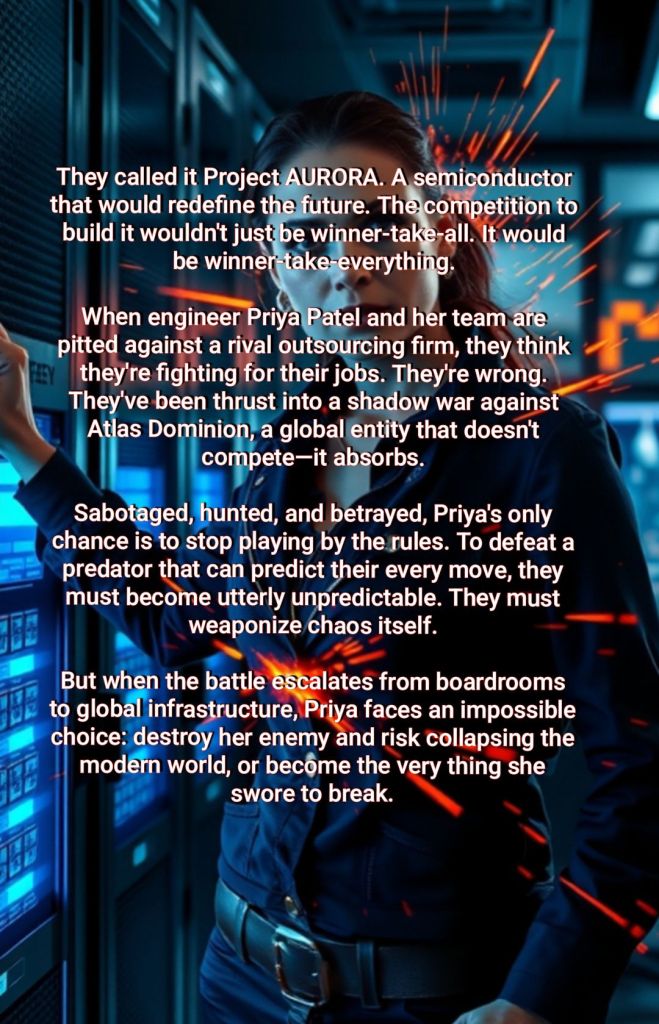
The following books are available to buy for free on Kindle today, the 24th of August. It’s a One day only promotion. Click on the links below the images to get your free copy. I’d click on the Bella one first.