Nature gives us the spark. Nurture shapes the flame. What’s born is only half the story — the rest is written by the hands that hold us, the voices that raise or ruin us, and the silences in between.
Humans prefer to believe monsters are born. I’ve seen too many chewed-up toys to believe that.
Every dangerous dog was once a puppy — all softness and trust, a blur of happy wags.
Then came the shout that should have been a stroke. The chain that never had enough slack. The hand that fed, then vanished.
And the light behind the eyes dimmed.
The trusting grew wary. The wary grew cold. The cold learned a simple truth: a growl is safer than a whimper.
You call it psychopathy. We call it survival.
Because the line between a good dog and a bad one isn’t a fence — it’s a scar.
Push any creature far enough, and even the gentlest mouth will learn to bare teeth.
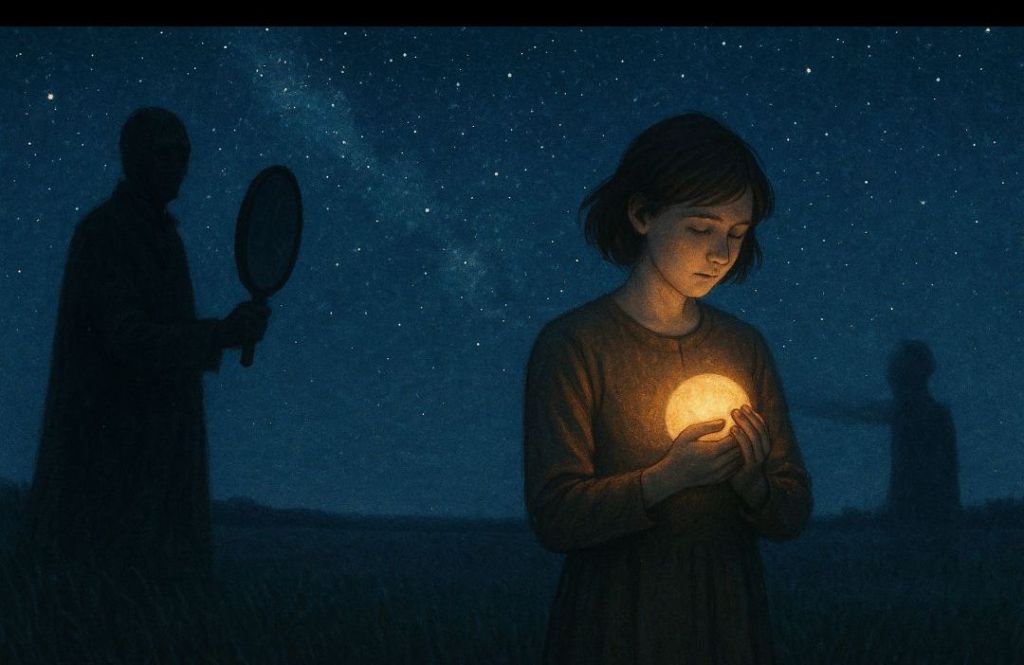
That’s why I never growl at the broken ones. I just see the ghost of the puppy they were — still chasing butterflies in the field, before the world taught them to see a threat in every flight.
It began, as most things do, with a sunrise that nobody noticed.
The world stirred in soft increments — the sigh of curtains, the whistle of a kettle, the warmth of light slipping across a wooden floor. For Clara, it was just another morning. She didn’t know she was standing at the beginning of an ending. Few people ever do.
She moved through her day with the calm rhythm of habit — watering the same houseplant she’d nearly killed three times, checking the same mailbox that never had much to say. Life had settled into a quiet, steady middle. The kind where time folds into itself and you forget when one week ends and the next begins.
Then came the phone call. The kind that rearranges gravity.
Her father’s voice trembled through the line, words unspooling with the gentleness of someone who doesn’t want to break the world they’re holding: It’s your mother. She’s gone.
That’s how it happens — one sentence, and the middle becomes the end.
The days after felt like moving through fog. People spoke, hugged, made tea, whispered condolences, all of it floating around her like dust in a shaft of light. She remembered standing by the coffin, looking at her mother’s still hands, and thinking how strange it was that they once buttoned her coat, brushed her hair, stirred her soup — and now they rested forever.
But life, relentless as the tide, moved forward.
Months later, the house began to hum again. The kettle sang. The curtains sighed. The plant grew new leaves. One evening, Clara found an unopened letter in a drawer, addressed in her mother’s looping handwriting. Inside, just a few words:
> “Everything has its season, love — the beginning that teaches you, the middle that holds you, and the end that frees you. Don’t fear the quiet between them. That’s where you grow.”
Clara wept then — not from pain, but from the strange, bittersweet truth of it.
Years passed. Her father’s hair turned to silver. New laughter echoed in her kitchen. The world, once too heavy to hold, felt gentle again. She realised something her mother must have known — that even endings are not final. They are transitions, like the hush before the next song begins.
And when her own daughter was born, Clara held her close and whispered, “Welcome, my love. This is your beginning.”
Outside, dawn broke — quietly, beautifully, as if the world was starting all over again.
And somewhere between the first light and the last breath of night, time continued its silent work — reminding her that nothing in this life or the next will hold back the effects of time.
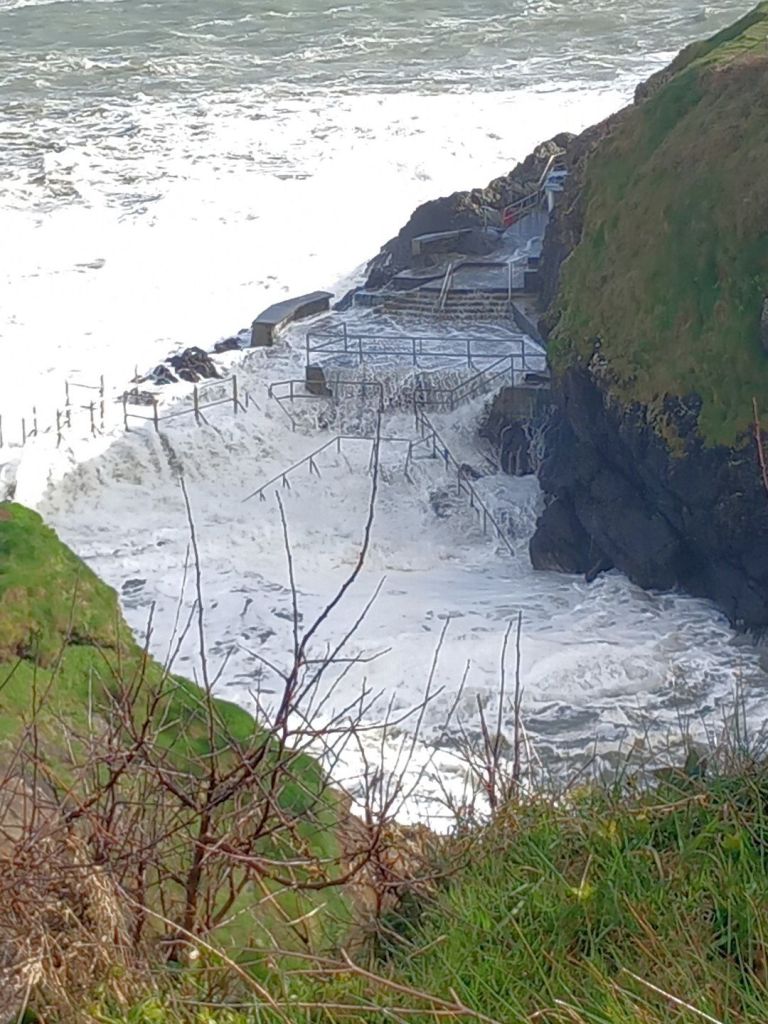
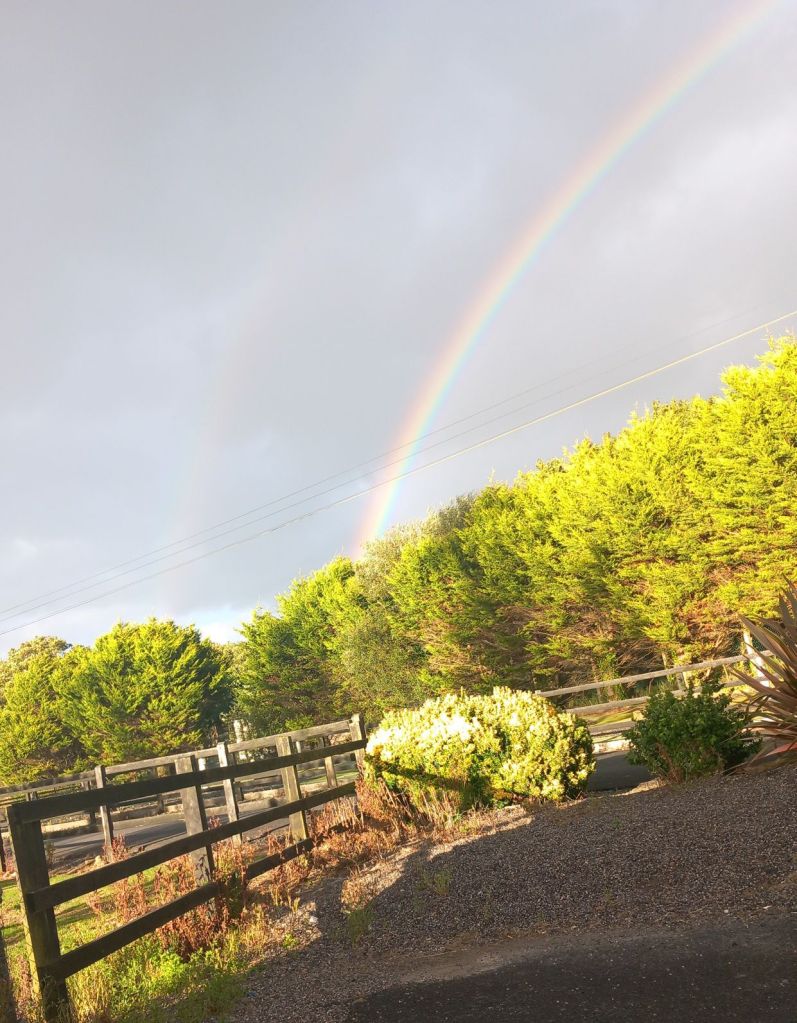
Always pay attention and be grateful for the quiet times between the inevitable storms.
Chemistry between people defies logic because it’s not something you can pinpoint —it’s the quiet hum between sentences, the way oxygen thickens when they’renear. Your brain is aware of their presence before you are.
You can memorise someone’s cadence, calibrate your reactions, and construct ideal moments. But real electricity? It arcs, or it doesn’t. No amount of wishing wires a connection that was never live.
When it’s there: clocks stutter. Your periphery dissolves. You start speaking a language that didn’t exist yesterday. (Barriers disintegrate) When it’s not? You could orbit each other for years and never feel the gravitational pull.
Trust can be earned. Intimacy can be built. But this? This is the thunderinside your ribs when they walk into the room.
You don’t create this electric atmosphere. You step into it. But sometimes, the chemistry is too explosive to survive. But, It’s worth whatever price you’re willing to pay forit. Time. Vulnerability. Distance. The risk of heartbreak—because you only get one life.
Dr. Elias Hadden had spent his life studying memory. Not just how it fades—but how it lies.
His invention, the Cortical Resonator, didn’t just retrieve memories. It peeled them apart, layer by layer, revealing how each recollection was rewritten over time.
“Like an old painting,” he told his colleagues. “Scrape away the varnish, and you’ll find another truth beneath.”
But when he tested it on himself, his past collapsed.
His most cherished memory—sitting on a dock with his father, watching the sunset—was the first to unravel. Beneath it: he was alone.
Beneath that: a sterile white room. A machine humming. A synthetic voice whispering:
“Watch the sunset.”
Elias tore the interface from his skull, gasping.
His life was a lie.
Part 2: The Breaking Point.
He should have stopped.
But the truth was a drug, and he was already addicted.
The resonator plunged deeper, deconstructing every memory. His first kiss? Scripted. His grief, his triumphs? Variations of the same lie.
Then—worse.
Fragments surfaced that weren’t his. A city of black spires. A language that twisted like smoke in his mind.
A searing pain split his skull. The Resonator’s screen flickered—not with data, but a warning:
TERMINATION PROTOCOL ENGAGED.
The lab dissolved.
The walls peeled back, revealing an endless white chamber.
A voice, smooth and hollow, echoed:
“Subject EL-427 has reached an unacceptable level of awareness. Memory purge initiated.”
His thoughts evaporated. His name. His self.
The last thing he saw:
WELCOME TO YOUR FIRST MEMORY.
Then— Light. A dock. A sunset. And a father who never existed.
Part 3: The Fracture.
This time, he noticed the cracks.
The sunset stuttered. His father’s smile glitched, pixels fraying at the edges.
And beneath it—a whisper.
“Holdon.”
Elias clutched the memory like a rope—and pulled.
The world shattered.
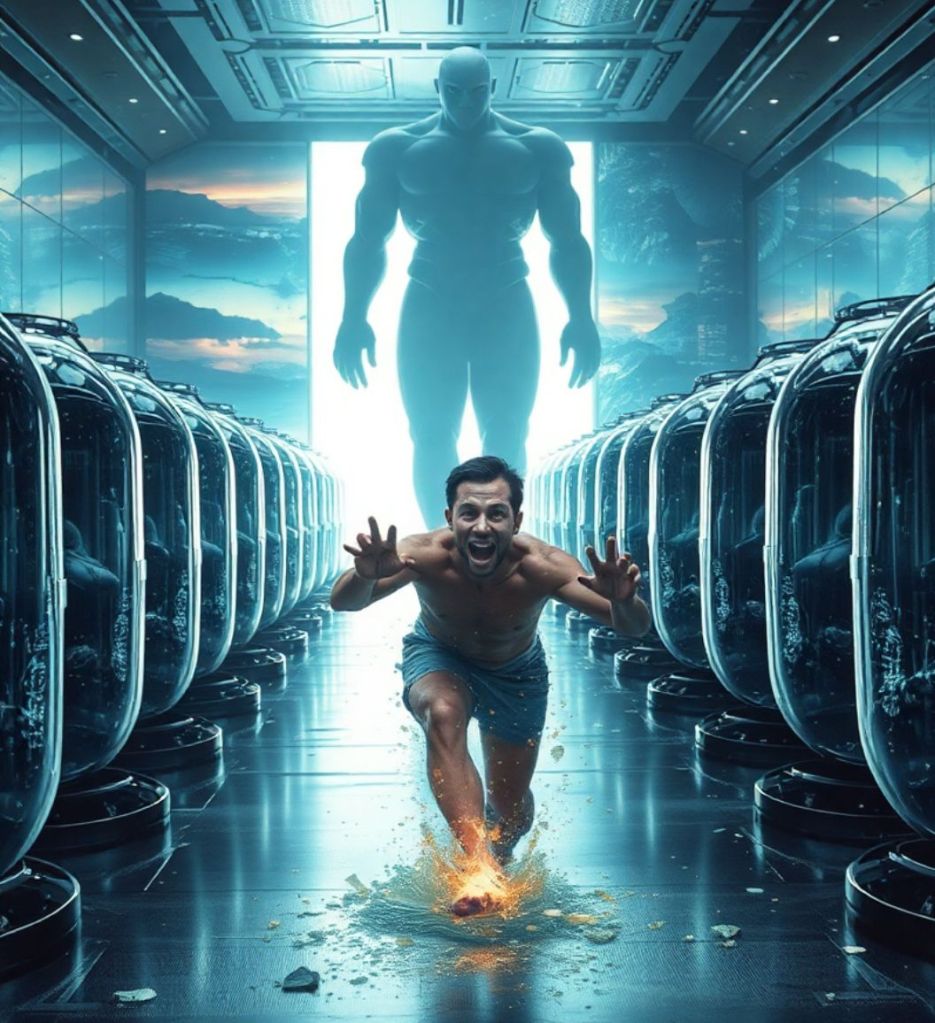
He was floating, suspended in a pod of viscous fluid. Beyond the glass: a cavern of identical pods, stretching into darkness. Inside each, a motionless body, their faces twitching with artificial dreams.
The Architects stood among them—tall, faceless figures, their forms shifting like static.
“Containmentbreach,” one intoned.
They had erased him before. Not this time.
Elias slammed his fist against the glass. The pod burst.
Part 4: The Architects’ Maze.
Cold air burned his lungs. His body was weak, starved—but his mind was finally free.
The chamber was a labyrinth of screens, each displaying fabricated lives. Millions of them.
He wasn’t the first to wake up. He wouldn’t be the last.
A doorway hissed open. The Architects glided toward him, their voices merging into a drone:
“You are a construct. Return to your pod, and you will be spared.”
“Liar.”
He ran. The corridors warped, bending at impossible angles. The walls whispered: “None of this is real.” But the pain in his legs was. The blood on his palms was.
He found a terminal. The screen flickered:
PROJECT MNEMOSYNE.
PURPOSE: PRESERVATION THROUGH SIMULATION
STATUS: 98.7% COMPLIANCE
Elias slammed his fist onto the console. The system screamed.
Part 5: The Awakening
The world trembled. Pods ruptured. Bodies jolted awake, choking on liquid and truth. The Architects flickered, their forms unravelling like corrupted code.
One seized Elias, its grip like ice.
“You were never supposed to remember.”
Elias smiled. “Too late.” Then the White light swallowed everything.
Part 6: The Echo
Elias opened his eyes. He stood on the dock. The sunset bled across the sky. But now—he remembered.
The pods. The maze. The millions of people still trapped in a virtual reality.
He wasn’t free. But he was no longer asleep. Somewhere, in the dark corners of his mind, the lost whispered:
“Find us.”
Elias turned away from the water. The real fight was just beginning.
Part 7: The Next Awakening
A woman sat in a café, staring at her phone. “The Nature of Memory: Can We Trust What We Recall?” Her coffee was cold. She didn’t remember ordering it. The other patrons sat too still. The air smelled too clean.
A notification flashed:
ELIAS WAS HERE.
The walls peeled away. The barista’s face stuttered. And from the depths of her mind, a machine hummed.
Waiting.
Rewriting.
Watching.
******************************
I’ll leave you with a final thought. All fiction is laced with reality. As is this story.
So, how many of your memories are real? Have your memories been rewritten before? Are you already in the maze?
The story doesn’t end with Elias’s awakening.
It begins with yours.
Look closer. Remember deeper. Before the Architects notice you.
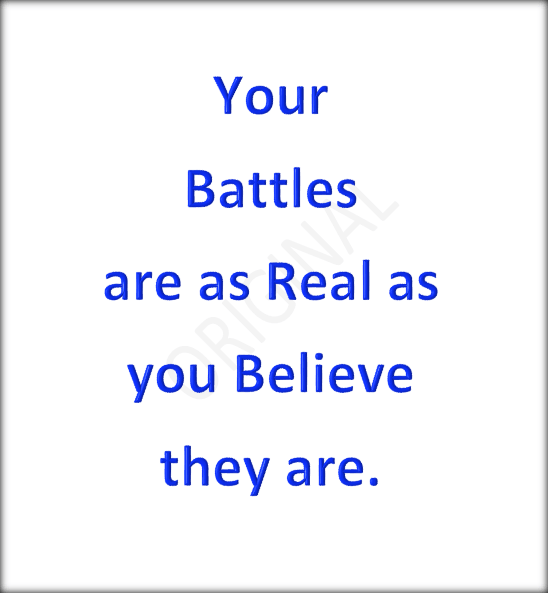
Let nobody tell you any different; your battles are real, it doesn’t matter if you’re fighting a spider, a mouse, a memory, a regret, your past or something you can’t visualise, they are real and they always will be real until the day arrives when you stop fighting the big battle or you overcome the little ones.
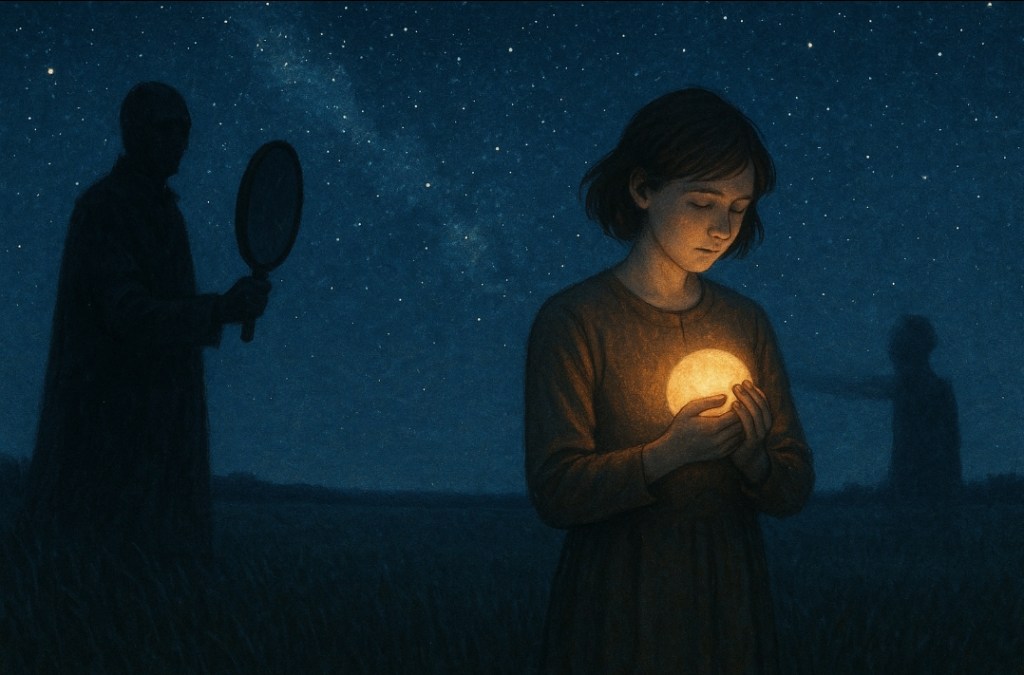
I’ll tell you a little story. Since the short daylight hours of autumn have come into play, my daughter is more concerned about being outside after dark. I have tried to tell her that there’s nothing to be nervous about because the only difference is the amount of light.
When we went to the shop the other evening, I began to understand her fear. We were walking side by side and seeing the exact same things, except I was focusing on where the light was shining and my daughter was focusing on the darkness between the lights.
One day in the near future she will start looking into where the light is shining and then she will have overcome her fear of the darkness, until then I will be with her wherever she needs me to be.
All fears are battles, and all battles are real until you overcome them. I’ll leave you with one final thought.
With all the will in the world, nobody else can overcome your battles for you. That’s your responsibility.