Category: Positive

  • There was a time when I wanted the right label.

    The right type. The right box. The right IQ.
    The right explanation that would finally explain who I was.

    From Concrete to Glass

    So I took the tests. I read the descriptions. I nodded along when parts fit and quietly ignored the parts that didn’t. For a while, the labels felt comforting. They gave shape to the fog.

    But life kept happening.

    And with every season lived, something shifted.

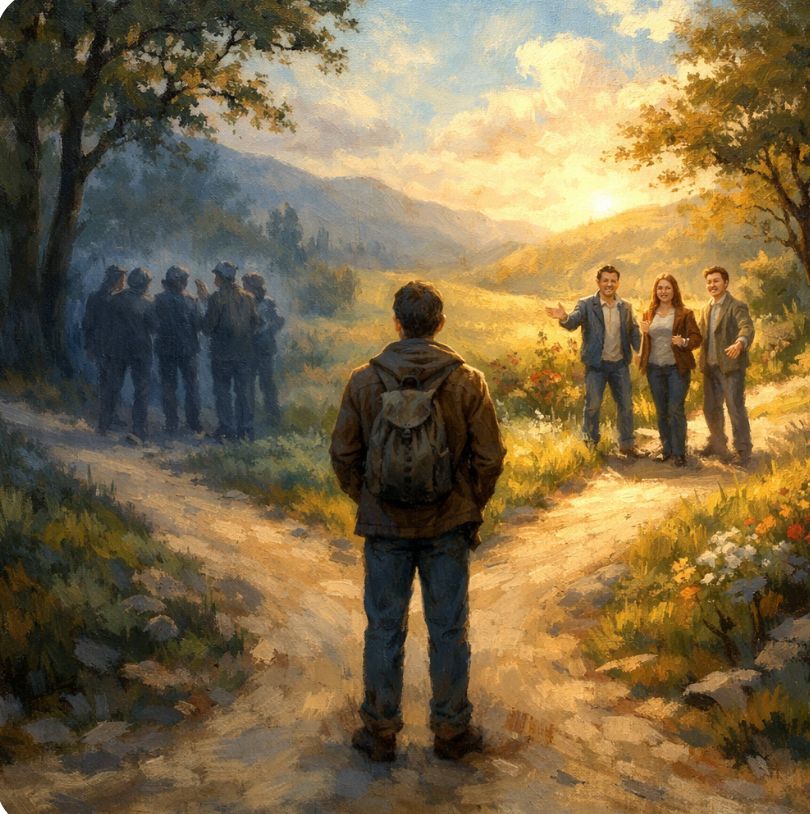
    I noticed that the person I was at twenty could not be measured by the same questions at forty. The answers changed—not because I was inconsistent, but because I had grown. Travel does that. Loss does that. Love does that. And so, does sitting alone long enough to hear your own thoughts without interruption.

    What once felt like personality turned out to be position—where I was standing in life at the time.

    The mistake we make is assuming growth should look tidy. Linear. Predictable. As if becoming wiser means becoming more fixed.

    In reality, the opposite is true.

    The more experience you gather, the harder it becomes to stay contained by simple definitions. You integrate contradictions. You soften sharp edges. You develop empathy without losing clarity. You learn to hold questions instead of rushing toward answers.

    This isn’t instability.
    It’s depth.

    Growth is not about discovering who you are once and for all.
    It’s about learning how to move with who you are becoming.

    That’s why rigid labels eventually feel uncomfortable. They freeze a moment that was never meant to be permanent. They describe a snapshot, not the unfolding story.

    And maybe that’s the quiet truth beneath it all:

    You are not here to be defined.
    You are here to evolve.

    To adapt.
    To revise.
    To surprise even yourself.

    So if you no longer fit the version of yourself you once understood, that’s not a problem to solve.

    That’s life working exactly as it should.

    Growth is fluid.
    And you are allowed to flow.

    Click on the link above to read my latest exploration of life and its meaning.

  • Forgive yourself for the words you spoke and the actions you took before you had the knowledge to know better.

    This is a profoundly compassionate reminder—one that speaks directly to the heart of growth.

    We are not static beings. We are always evolving, always learning, always integrating new understanding. To judge our past selves by the wisdom of our present is to deny the very journey that shaped us.

    The person you were, spoke those words and took those actions with the tools they had at the time. With the awareness available to them. With the emotional capacity they had managed to build by then. They were navigating life using the only map they’d been given.

    The fact that you see it differently now is not evidence of past failure.
    It is proof of present growth.

    Self-forgiveness is not about excusing harm or dismissing responsibility. It is about acknowledging the complex reality of being human. And when we allow it, something important happens:

    We integrate the lesson instead of carrying the shame.
    We release the anchor of self-judgment that keeps us tethered to the past.
    We grow more patient—not just with ourselves, but with others still finding their way.

    This kind of forgiveness becomes a bridge.
    Between who you were and who you are becoming.
    Between regret and wisdom.
    Between survival and choice.

    It’s not weakness.
    It’s an act of honesty.
    And it’s one of the quiet ways we honour our own becoming.

  • Every morning, the world arrives as it is.

    Not polished. Not resolved.
    A mix of light and shadow. Old residue and new possibilities.

    And before the day asks anything of you, there’s already a choice to be made:
    whether you will meet it with resistance or with care.

    This isn’t about loving a perfect world.
    That kind of love collapses the moment reality intrudes.

    Perfection turns life into a constant audit — what’s missing, what’s broken, what should have been different. It trains the eye to subtract. Over time, subtraction hardens into exile.

    Nor is this a call to romanticise suffering. There are conditions no one should be asked to accept — injustice, domination, and deprivation. Love requires dignity. Without that foundation, “acceptance” becomes a quiet cruelty.

    The real work lives in the middle ground.

    To love the world you wake up in is to tend a garden in soil you didn’t choose. You don’t deny the stones. You don’t wait for ideal conditions. You kneel anyway. You move what can be moved. You plant around what cannot.

    The result will never resemble the catalogue image.
    But it will be alive. And it will be yours.

    This daily love is attention. It’s the willingness to hold complexity without numbing out — to notice the troubling headline and still hear laughter in the next room. To see cracks in the pavement and recognise the courage of whatever grows through them.

    Loving the world doesn’t mean declaring it finished.
    It means deciding it’s worth engaging with.

    So start simply.

    Be grateful for the un-owed things: breath, heartbeat, another morning. Accept imperfection as a texture rather than failure. Then, locate your sphere of influence — however small — and tend it.

    Mend one thing.
    Listen fully to one person.
    Say one sentence that’s true.

    Loving the world does not require its perfection.
    It requires your presence.

    Wake up. Let the imperfect light spill across the floor. Feel the weight of reality — and your agency within it. And choose, again, to meet this patchwork, struggling, magnificent world with courage and care.

  • Before you burn your bridges, make certain you are standing on solid ground on the other side.

    We often speak of burning bridges as an act of courage: a declaration of independence, a refusal to tolerate what no longer fits. And sometimes, it’s exactly that.

    But more often, bridge-burning happens in moments of exhaustion rather than clarity—when frustration feels like truth and escape masquerades as growth.

    A bridge is not merely a path back. It is also a record of how you arrived. Burning it does not erase the journey; it only removes a route.

    Solid ground is not a certainty. It’s not a guarantee that the future will be easier, kinder, or quieter.

    Solid ground is stability of self.

    It’s knowing why you’re leaving, not just what you are leaving behind. It’s being able to stand alone without turning your departure into a performance. It’s choosing separation without needing destruction to justify it.

    There’s a difference between moving on and running away; between setting boundaries and scorched-earth endings; between closing a chapter and tearing the book in half.

    Sometimes, the bravest thing is not burning the bridge, but walking across it one last time with awareness—grateful for what it carried, honest about where it can no longer take you.

    And sometimes, yes, the fire is necessary. But fire should come after footing, not before.

    For bridges can be rebuilt. Reputations can recover. Relationships can soften with time.

    But if you leap without ground beneath you, you do not land in freedom. You fall into reaction.

    Move forward when you can stand still without anger. Leave when you no longer need the leaving to prove anything. Choose the next shore not because it is different but because it’s true.

  • The following is not a collection of books about fixing yourself.
    It is a collection about remembering yourself. CLICK on any of the links to read a free sample.

    Each book here was written with the understanding that growth is not linear, clarity is not constant, and strength does not always announce itself loudly. We do not arrive at wholeness through force or perfection, but through attention, honesty, and the courage to sit with our own experience long enough to learn from it.

    These books are filled with pages that are not designed to rush you forward or shame you for where you are. They are meant to walk beside you—to offer a different perspective when your path feels unclear, gentleness when the world has been hard, and language for experiences you may have felt but never named.

    You will not find rigid formulas or hollow optimism here. What you will find are reflections, invitations, and quiet recalibrations—ways of seeing yourself and your life with more compassion, agency, and trust.

    You don’t need to read these books in order. You don’t need to agree with everything in them. You only need to arrive as you are. And, that is enough.

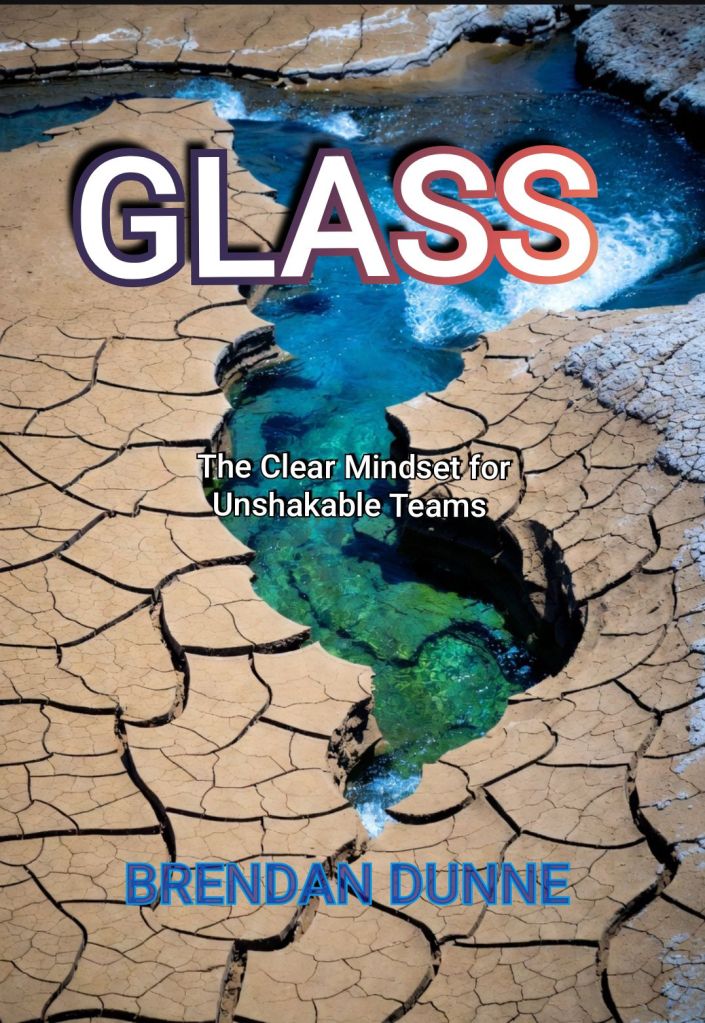
    Barriers moving yours From Concrete to Glass

    There are moments when life feels solid, immovable, and closed in—when the future looks like a wall rather than a window. Barriers Moving Yours From Concrete to Glass is about learning how perspective changes what we believe is possible.

    This book explores how small internal shifts—attention, interpretation, courage—can transform confinement into clarity. It is not about denying difficulty but about discovering transparency where you once saw only obstruction.

    Leave the Darkness Behind You

    This is not a book about pretending the darkness never existed.
    It is about releasing the weight of carrying it forward.

    Leave the Darkness Behind You, speaks to those who have survived chapters they never expected to endure—and who are ready, gently, and on their own terms to stop letting those chapters define the rest of their story.

    The Light Inside You

    Long before confidence, achievement, or approval, there was something quieter: a steady internal light that didn’t need permission to exist.

    This book is a reminder of that presence. The Light Inside You invites you to reconnect with the part of yourself that remains intact beneath doubt, comparison, and exhaustion—and to trust it again.

    https://amzn.eu/d/bNaTSPb

    The Can-Do Compass

    Motivation fades. Willpower fluctuates. Direction matters more.

    The Can-Do Compass is about orienting yourself when certainty is unavailable. It focuses on practical inner navigation—how to move forward without needing perfect confidence, perfect plans, or perfect conditions.

    Progress, here, is measured by alignment rather than speed.

    Where the Lightness Lives

    Not all wisdom is heavy. Not all growth requires struggle.

    This book explores the overlooked power of ease, play, and relief. Where the Lightness Lives is an invitation to stop equating seriousness with depth—and to recognise joy as a legitimate, sustaining force in a meaningful life.

    Where New Beginnings Are Born

    Beginnings rarely arrive with clarity. They begin in discomfort, ambiguity, and quiet resolve.

    This book is for those standing at thresholds—between who they were and who they are becoming. Where New Beginnings Are Born honours the courage it takes to start without certainty, and the patience required to let something new take shape.

    The Positive Ripple

    You do not need to change the world to matter.
    You only need to affect what you touch.

    The Positive Ripple explores how small choices, attitudes, and acts of integrity extend further than we realise. It is a reflection on influence without ego, contribution without burnout, and impact without noise.

    The Unlabelled Self

    Before roles, diagnoses, expectations, and identities, there was you.

    This book gently questions the labels we inherit, adopt, and cling to—and asks what becomes possible when we loosen their grip. The Unlabelled Self is about reclaiming authorship over who you are, beyond definitions that no longer fit.

    The Quiet Way

    Not everything important announces itself.

    The Quiet Way is written for those who move thoughtfully through the world, who feel deeply, and who may have mistaken their subtlety for weakness. This book reframes quietness as a form of strength—and offers a path that honours sensitivity without shrinking from life.

    A Thankful Conclusion

    If you have reached this point, thank you—for your time, your openness, and your willingness to turn inward with honesty rather than haste.

    These books exist because of readers who are brave enough to pause, reflect, and question the narratives they’ve inherited. If even a single page helped you breathe a little easier, see yourself more kindly, or take one gentle step forward, then they have done what they were meant to do.

    Wherever you are on your journey, may you continue with compassion for who you’ve been, patience for who you’re becoming, and trust in the quiet wisdom that has been with you all along.