Clarity and practical value are at the heart of everything I’ve created.
“For fourteen years, I wrote in fragments—observations, reminders, questions. Not as a teacher, but as someone trying to understand what makes a life feel lighter, freer, and more meaningful.
My books are what happens when those fragments are finally allowed to speak to each other.”
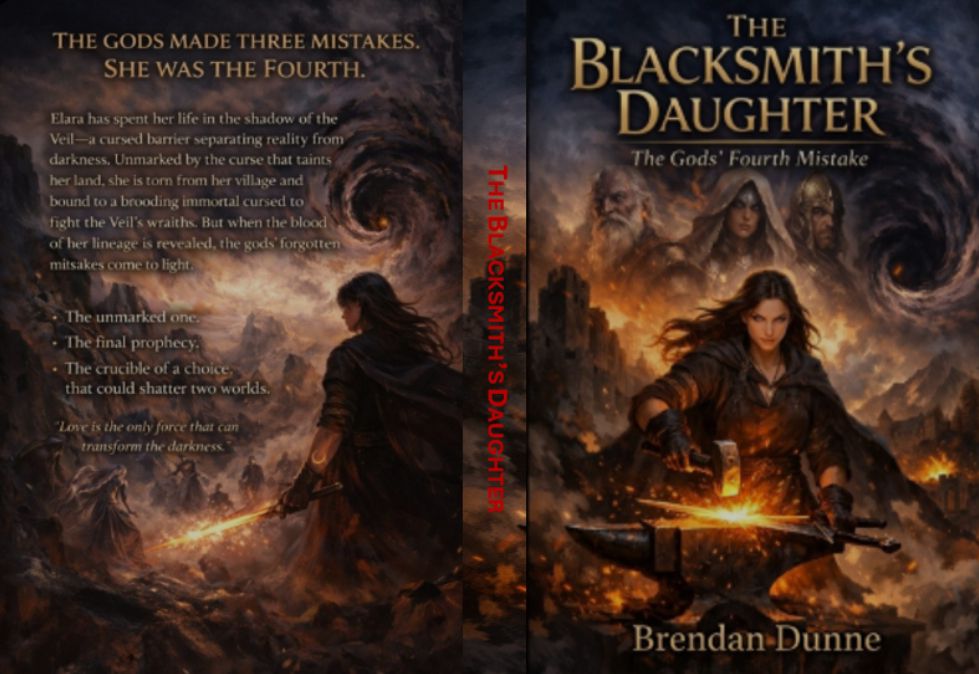
The Blacksmith’s Daughter: The Gods’ Fourth Mistake
Introduction
It’s a love story for people who love stories.
You know who you are. You’re the one who stayed up past midnight reading under the covers. Who named a pet after a fictional character. Who has cried over a book and then immediately pressed it into a friend’s hands saying “you HAVE to read this.”
This one’s for you.
The gods made three mistakes.
First, they loved mortals—too deeply, too desperately, too much. They poured their divine hearts into fragile beings and watched them break.
Second, they tried to stop loving. They built a Veil between worlds and stuffed their hunger inside, hoping distance would cure what connection had caused.
Third, they cursed the world to carry what they could not. The mark of the gods’ own loneliness, passed down through generations, turning lovers into monsters and desire into destruction.
Shewasthefourth.
Elara Voss is a blacksmith’s daughter. Unmarked. Untouched. The only mortal in a century who has never felt the curse’s pull. She’s spent her whole life hiding in shadows, waiting for the world to end.
Then Kael Draven finds her.
He’s everything she should fear—a Starborn general, last of the First Marked, a man who hasn’t slept in a century and can’t die. They say when he looks at you, he sees the exact moment your soul will break.
But when he looks at Elara, something else happens.
The bond between them ignites. Every touch burns. Every secret shared unravels the lies they’ve both lived under. And the Veil between worlds is cracking faster than either can outrun.
Some prophecies aren’t destiny. They’re a death sentence.
The gods made three mistakes. Elara is the fourth—and she might be the only one who can save them all.
Or destroy everything.
This is a love story for people who love stories.
It has:
· A heroine who hides until she can’t anymore · A hero who’s been frozen for 140 years and doesn’t know how to thaw · A bond that hurts to touch and hurts more to break · Gods who made mistakes and are terrified to admit it · A void that learns to create flowers · A hunger that becomes a mother · An orchard planted one tree at a time · Letters written across decades · A daughter with a too-loud laugh and storm-grey eyes · An ending that will make you cry and smile and immediately start reading again
If you’ve ever believed that love is the only thing that survives, even death.
If you’re ready to meet two people who will live in your heart long after the last page—
Turn the page.
The gods made three mistakes. She was the fourth. This is her story. In the end, she became the bridge that connected everything.
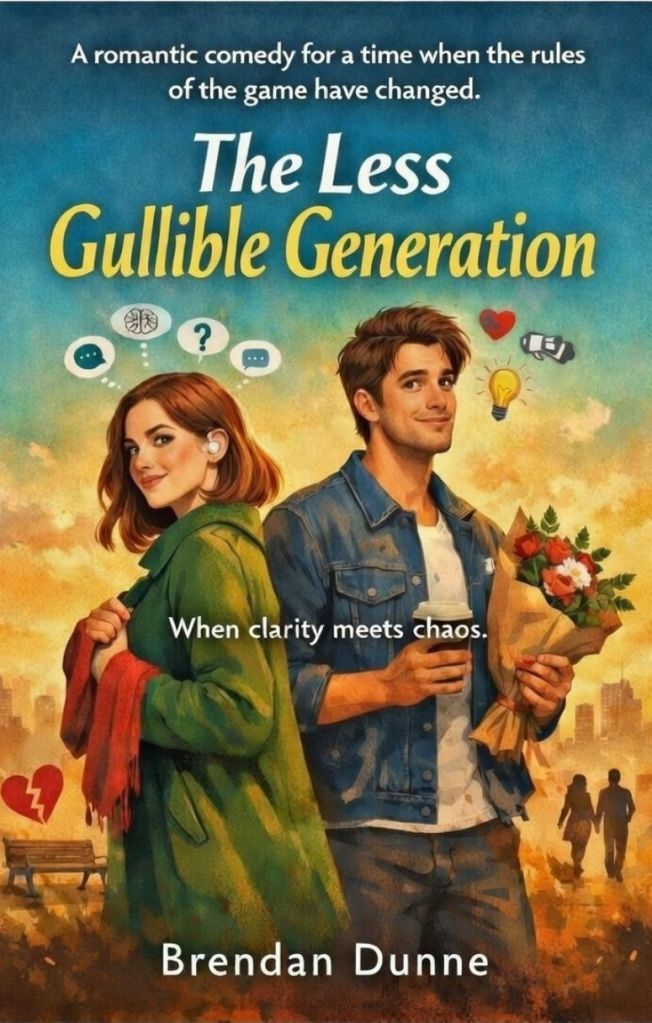
It’s a romantic comedy for a time when the rules of the game have changed.
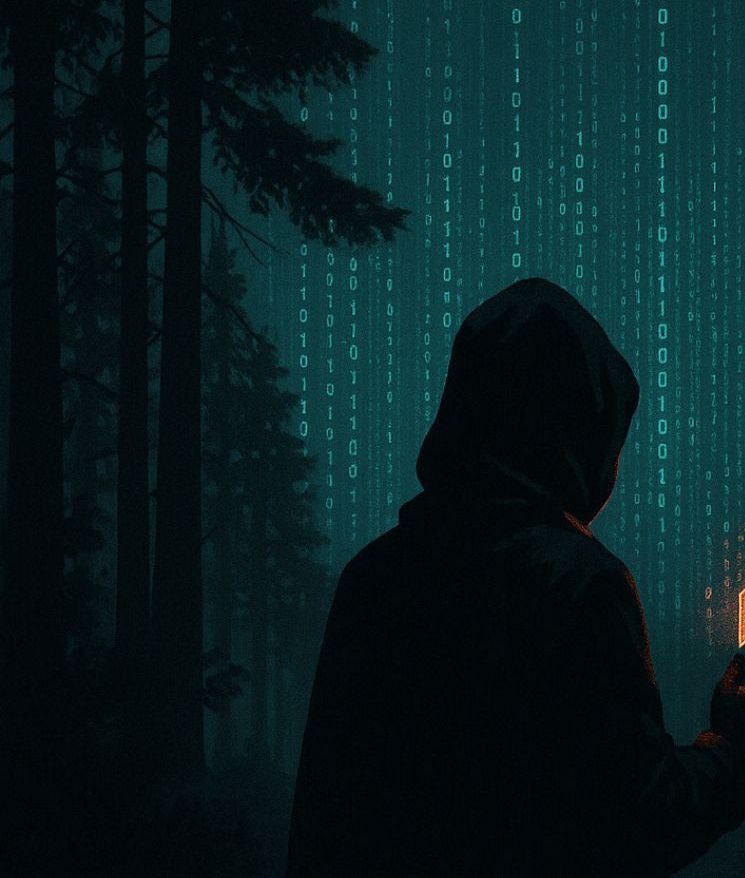
She has a neural implant designed to prevent self-deception. He runs a wellness startup, specialises in grand gestures, and has absolutely no idea what he’s actually feeling.
They meet when he steals her scarf.
In a world where everyone has a Companion nudging them to question their thoughts, misunderstandings are rare. Projection is inefficient. Drama is exhausting.
Falling for lies is almost impossible.
Falling for someone? That’s more complicated.
The Less Gullible Generation is a romantic comedy about what happens when clarity meets chaos, when scepticism meets longing, when the most self-aware generation in history attempts the one thing that still requires a little irrational belief.
It’s for anyone who has ever analysed themselves into paralysis. Anyone who has ever been called “too much” or “not enough.” Anyone who has stood at the edge of love and thought:
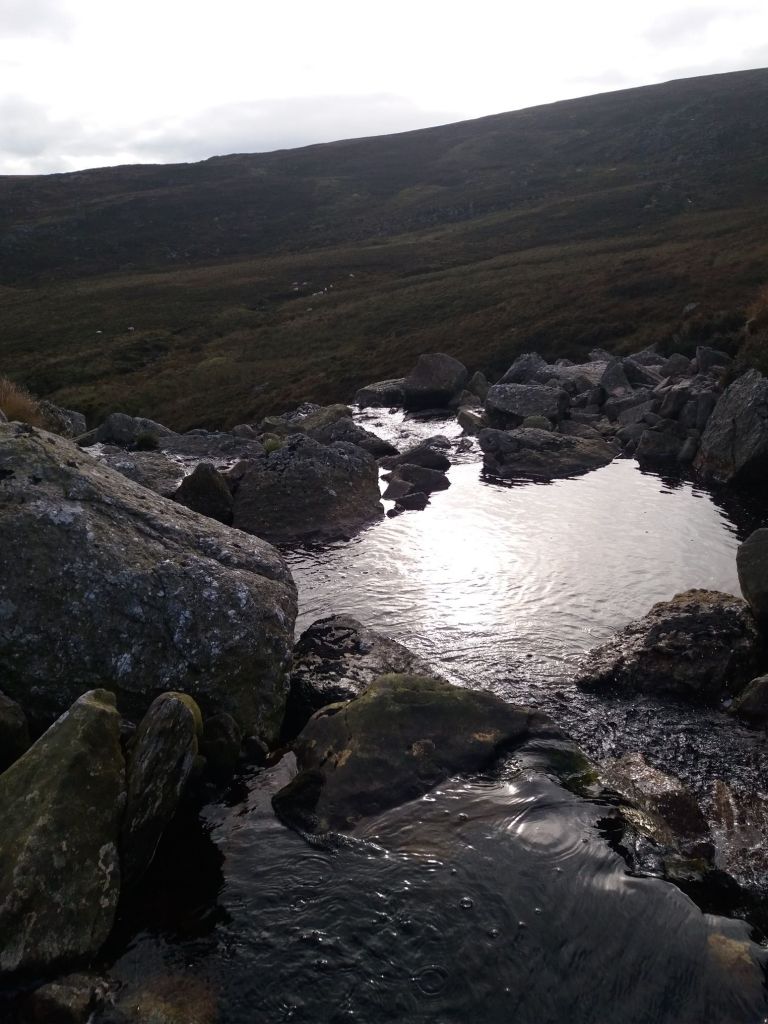
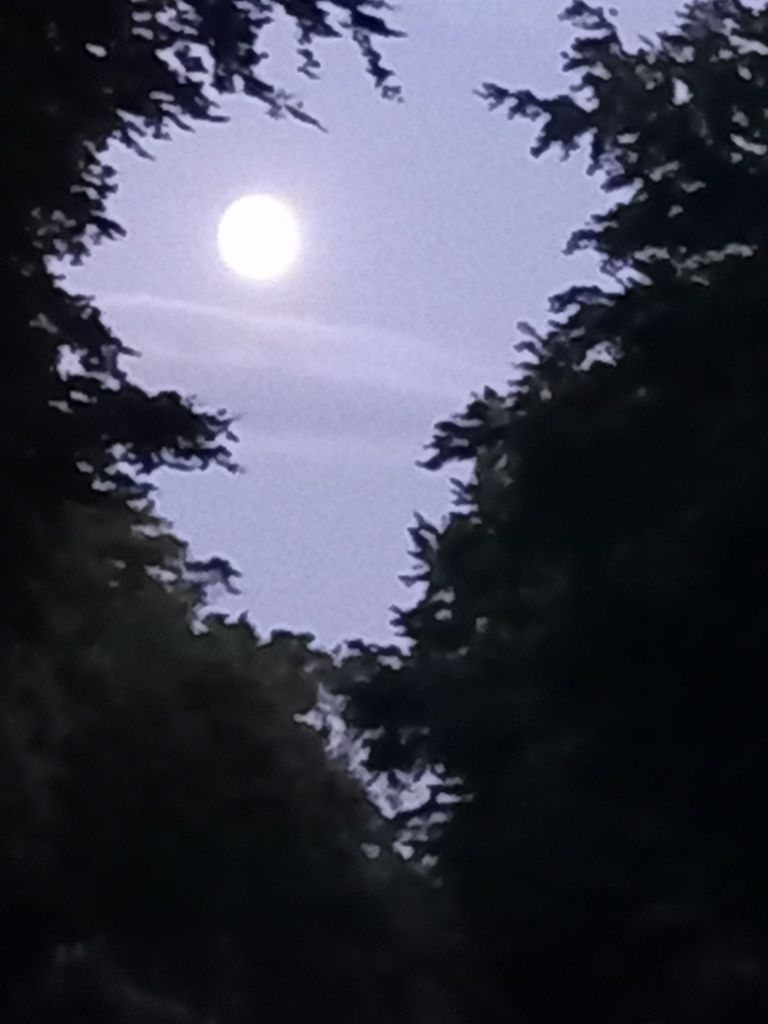
As the day bled into a soft Irish dusk, Jack began to have second thoughts about his decision to go hiking in the hills of County Kerry by himself. Every sound, once familiar, was now filtered through the old tales his Granny used to tell by the turf fire when he was younger. His logical mind was losing ground to a deeper, more superstitious part of himself.
At first, it was just the wind—a harmless whisper sliding through the gorse and tall grass. But as the shadows lengthened and the purple heather turned to black, the whisper grew teeth. It became the soft, relentless padding of unseen footsteps, but also something more: a faint, rhythmic rustle, like the dragging of old shrouds. It put Jack in mind of the Sluagh Sí, the host of the unforgiven dead, said to fly in from the west to carry away the souls of the dying.
He increased his pace, the name of the phenomenon uncoiling in his mind like a cold mist.
Then came a single crack of a twig, sharp as a gunshot in the quiet. Jack’s mind, armed with his Granny’s stories, offered explanations he didn’t want: a púca shapeshifter, or worse, the two small eyes he imagined glinting from the hedgerow—first gold, then red, then a sickly, unearthly green.
A low moan drifted across the valley as the wind funnelled through a rocky pass. It wasn’t the wind to Jack anymore. His imagination, steeped in lore, filled the gaps effortlessly. It was a woman. She was keening. The sound was too melodic, too full of a deliberate, ancient grief to be anything but the Banshee. It seemed to wrap around his name, pulling it into her lament, a lost voice carried from a place the living didn’t go.
He tried humming a Pogues tune to drown it out, but the melody shook with his uneven breath.
By the time he reached the fork in the path, night had fallen completely. The landscape had become a giant inkblot, shapes shifting as his torch flickered. Jack’s terror now had a specific form. He didn’t just imagine tall figures; he imagined the funeral procession of the Sluagh Sí—pale, wraith-like forms gliding just beyond his torch’s reach, carrying an empty shroud meant for a soul not yet collected. Each time he blinked, they seemed to drift a little closer, their silent march steady and inescapable.
“Get a grip, ya eejit,” he whispered to himself, the familiar Irish chastisement doing little to steady the quiver in his voice.
Finally, he crested the last hill, and the sight below washed his fears clean: the warm, electric glow of Killarney, tiny and comforting, a defiant scatter of golden light pushing back against the ancient dark.
With every step toward home, the imagined horrors melted back into the rational world. The phantom footsteps became the wind again. The glowing eyes became dew on leaves catching a distant light. The Banshee’s keen returned to the low, familiar sigh of the countryside settling into night.
By the time Jack reached his cottage door, he managed a shaky laugh. He wasn’t in danger. He wasn’t being shadowed by the Host. He wasn’t being called by a death omen.
He’d simply spent too much time alone with the one creature capable of conjuring the old world from the shadows—
His own mind, stocked from childhood with the ghosts of Ireland.
And as he closed the door behind him, the bolt sliding home with a comforting thunk, Jack promised himself one thing:
Next time, he’d bring a friend.
Or at the very least… a bigger torch, and a flask of whiskey strong enough to quiet both the wind— and his Granny’s stories.
On this day, Daniel O’Connell’s planned “Monster Meeting” at Clontarf was banned by the British government. Thousands of Irish men and women had gathered peacefully to demand the repeal of the Act of Union. Troops and gunboats were sent to suppress them. No blood was shed — only silence, vast and heavy — and that silence became Ireland’s quiet defiance. —
The rain had not yet fallen, but the sky was a promise of it — a low, bruised ceiling of cloud pressing down upon the shore.
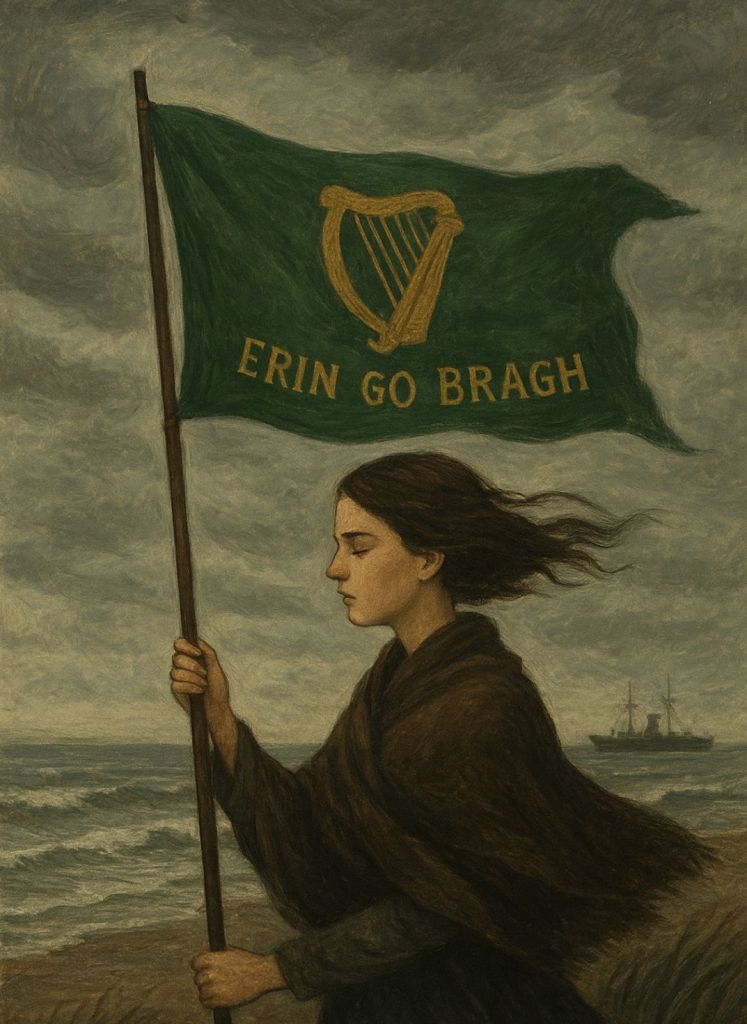
From the window of her cottage near Dollymount Strand, Niamh Byrne watched the world hold its breath. In her hands, the green silk banner was a cold weight. Three nights she’d spent over it, her needle stitching the golden harp, the words Erin go Bragh. A labour of love for the Monster Meeting — for the day Daniel O’Connell would shake the foundations of the empire with nothing but the weight of their numbers.
But the empire had answered with its own weight.
Redcoats. A scarlet weed choked the road to Clontarf, their bayonets a row of sterile thorns. Further out, the dark hulks of two gunboats rested on the slate-grey water, and their cannons like blind eyes turned toward the empty field. They were not there for peace.
Her father, Seamus, had left at first light. His back was a rod of defiance, but his eyes held the ghosts of ’98. “They can ban a meeting, Niamh,” he’d said, his voice gravelly with a past she only knew from his nightmares. “But they cannot ban a man from standing on his own land.”
She had clutched his arm, the proclamation’s words echoing in her mind: treated as traitors. He had patted her hand — a gesture meant to comfort that only frightened her more. “This time, it’s with words, not pikes,” he’d said. “This time, we win with silence.”
The news arrived not with a shout but a sigh — a rumour slipping under doors and through the damp air: Cancelled. O’Connell has called it off. The hope, so carefully stitched, began to unravel.
By noon, Seamus returned. The fire in him was quenched. He moved like a man carrying a great, invisible burden, his shoulders bowed under the weight of a speech never given. He sank into his chair by the cold hearth.
“They came,” he whispered, not to her but to the memory. “Thousands of them. From the hills and the bogs. They came because their hearts had already spoken.” He looked up, his eyes hollow. “And when they saw the guns, the red line… they turned. All of them. Not a curse, not a rock thrown. Just… a great, turning away. A silence louder than any cannon.”
Niamh looked down. A drop of rain had found its way through a crack in the window frame and landed on the banner. The gold thread of the harp began to blur, the green silk to darken.
“What will we do with it now, Da?”
He had no answer. The silence of the thousands had stolen his words.
That night, while the cottage slept fitfully, Niamh took the banner. The rain was a soft, persistent shroud. The tide was far out, leaving the sand exposed and dark — a blank page. She did not look like a revolutionary, just a young woman in a worn shawl, planting a stick in the sand.
She thrust the pole deep into the wet earth. The wind caught the silk instantly, snapping it taut — a vibrant, foolish, beautiful declaration to the empty sea and the watching gunboats. The golden harp shimmered in the gloom.
“Let them ban their meetings,” she said, her voice steadier than she felt. The words were not a shout but a seed. “Ireland is not a place on their maps. It is a memory in here.” She pressed a hand to her heart. “And it remembers.”
She left it there, a lone sentinel against the incoming tide.
By dawn, it was gone. No pole, no silk. But as the weak sun broke through the clouds, it caught the edge of the retreating wave, and for a moment, the water seemed to glitter with a thousand scattered threads of gold.
The rebellion had not been drowned. It had been dissolved — absorbed into the very landscape, waiting to be breathed in again by the land and its people.
Unseen. But not undone.
P.S. Ireland’s defiance has always been more than rebellion. It is memory made flesh — a refusal to let silence mean surrender.